 London Film Festival, 2013
Terry Gilliam’s “The Zero Theorem” is the kind of film that raises so many important and intriguing questions that it’s entirely possible to forget some of them along the journey. This oblique tale, bordering at times on the absurd, stuns with the sheer density of the thematic issues that Pat Rushin’s screenplay can pack into 100 minutes.
The film grapples with conundrums as timeless as the meaning of life, the nature of happiness, and the imminence of death and nothingness. At the same time, “The Zero Theorem” also has its finger on the pulse of many modern malaises, such as screen addiction, the fading appeal of observable reality in relation to virtual reality, and the electronic mediation of human connection.
We explore these through the work of a computer programmer known as Q, played by Christoph Waltz, as he attempts to solve humanity’s conundrums. In a change of pace from the two silver-tongued Tarantino characters that won him a pair of Oscars, Waltz sits back and delivers a largely reactive performance. As he attempts to unlock the zero theorem and get to the core of human existence, Q doesn’t instigate events so much as he lets them happen. Because we’re less focused on a conventional narrative, “The Zero Theorem” can easily delve into the realm of the existential and philosophical.
 This summer, Adam Sandler made a few headlines for admitting a fact that shocked many but surprised few: his movies are essentially
 It seems hard to believe now, but there was a time when Ryan Gosling was not a movie star. Plenty of people acknowledge his Mickey Mouse Club days with Britney Spears and Justin Timberlake, just as others recognize how hilarious he is in “Remember the Titans.” But most seem to think that he just came out of nowhere, like a gift from God, to steal their hearts in 2004’s “The Notebook.”
 If there was any doubt that we’re reaching the point of supersaturation with dystopian YA adaptations, “
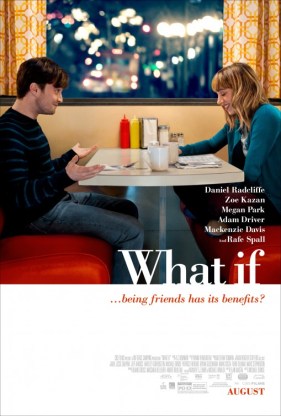 Romantic comedies have been all but abandoned by major studios since 2011’s “
 Craig Johnson, director of the upcoming Kristen Wiig vehicle “The Skeleton Twins,” remarked that even in her funniest moments, there’s a certain sadness to the characters Wiig portrayed. I had never really thought of the comedienne in such a way, so I scoured YouTube to examine her work through such a lens. Sure enough, the undercurrent is there in everything from her bit part in “
 London Film Festival, 2013
 “War leaves a mark,” states Jonathan Teplitzky’s “
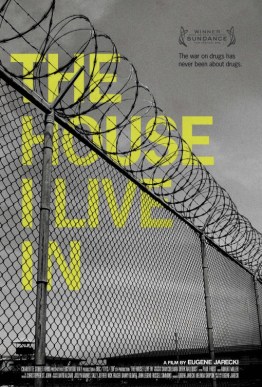 It’s often easy to put a good deal of distance between ourselves and the Holocaust. In no way am I promoting this as a good development, but the continuous passage of time only amplifies our sense of removal from the era of mass extermination. Moreover, Americans in particular can see themselves as the liberators in such a genocidal scenario, not as perpetrators.
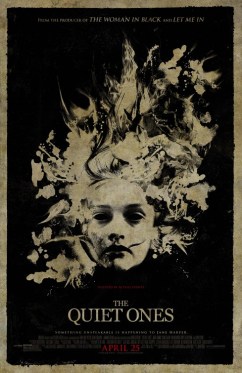 I don’t quite know what I was expecting when I followed a group of friends to see “

 Marshall and the Movies
Recent Comments