REVIEW: Horrible Bosses

6 07 2011

We are now inhabiting the post-“Hangover” world, and in case you needed any proof that studios are looking to locate the success gene in the hit comedy’s DNA, I submit “Horrible Bosses” as evidence.  It really shouldn’t surprise you; it’s a page straight from the television networks’ playbook.  As soon as Fox premiered “American Idol,” every network wanted a singing competition.  After ABC had a big hit with “Dancing with the Stars,” every network suddenly had a dancing show.  We live in a culture of thinly veiled rip-offs that barely bother to disguise their ever-so-slight variations from the original success story.

The good news for Seth Gordon and the “Horrible Bosses” team is that, at least at this moment, I still find the formula amusing and funny.  The next movie shamelessly pressed from the “Hangover” mold, however, will probably not be in my good graces, so at least they got the timing right on this one.  But the fact that some movie other than the sequel has tried using a similar blueprint for high cash and laugh returns signals a foreboding era in comedy.  (Then again, I said the same thing last summer about “Iron Man 2” being the first of many “The Dark Knight” rip-offs, and nothing seems to have materialized there.)

The film invites these comparisons by using what may be the most recognizable aspect of “The Hangover” for laughs – the Wolfpack.  From now on, any comedy that has a ragtag alliance of three thirtysomething guys will inevitably have to be measured against the ridiculously high standard set by Bradley Cooper, Ed Helms, and Zach Galifianakis.  Unfair?  Probably.  Justified?  Definitely.

Read the rest of this entry »


OPINION: The Cinema of Casey Anthony

5 07 2011

I know that I’m a movie blogger by name, but if you’ll allow me a brief aside, I’d like to address a different field altogether.  I, like many Americans this summer, have been following the developments in the trial of Casey Anthony.  Today, to the shock (and disgust) of many captivated American television watchers, she was acquitted of murdering her two-year-old daughter, Caylee.

I will inevitably catch heat for this, but I do not sit in front of my computer typing this post in dismay.  Just a day after 311 million Americans celebrated the preservation of the inalienable rights of life, liberty, and the pursuit of happiness that so many men have died for, the trial by jury guaranteed to all citizens in the Bill of Rights produced a verdict of not guilty.  Regardless how much Nancy Grace or Bill O’Reilly told us she is guilty, or will continue to tell us she is guilty, we have to trust the American legal system here.  We have to trust that these jurors listened to the evidence and made the right call.

But this post isn’t about the woman in the courtroom, it’s about the people that watched her courtesy of the courtroom cameras.  I learned a lot about how Americans view concepts of justice, vengeance, and entertainment, three ingredients that can make be quite poisonous when mixed.  Quite frankly, what I’ve seen over the past month should have the Founding Fathers rolling over in their graves.  This cannot be the America they wanted to create.

Just last Christmas, “True Grit” was an unprecedented success, grossing $171 million, scoring nearly unanimous critical support, and raking in 10 Academy Award nominations.  The Coens’ film grapples with the tricky question of revenge; in the movie, Hailee Steinfeld’s spunky 14-year-old Mattie Ross embarks on a journey to kill Tom Chaney, the man who murdered her father in cold blood.  She is seen as the hero of the film, and when she ultimately succeeds, the audience cheers.  The character representing justice, Matt Damon’s LeBoeuf, is a clown that is mostly mocked by the audience.

While the Coen Brothers likely expected this to play mostly for their usual niche audience, the excellent film wound up entering the mainstream and playing well into February and March in most theaters.  Not to insult the average moviegoer, but I don’t think that many of them understood that “True Grit” is supposed to be a meditation on the merit of retribution, not a vindication of it.  The movie is just ENTERTAINMENT, and the Coens deliver a cinematic vengeance that excites inside a theater.  But outside that theater, we aren’t meant to feel inspired to deliver payback in such a dramatic fashion.

Which brings me to the matter in question here, the Casey Anthony trial.  How does an ordinary 25-year-old mother from Orlando, Florida become “The Social Media Trial of the Century,” according to Time?  How does she grace the cover of People alongside Brad Pitt, Angelina Jolie, and Jennifer Aniston?  Simply put, people want VENGEANCE.  They want to see the death of Caylee Anthony avenged, and they want blood to pay for it.

How do I feel so confident in making this statement?  Because most people didn’t need a trial or the deliberations of a jury to reach their own verdict; they just went ahead and pronounced her guilty.  Bill O’Reilly even said, “She is as guilty as they come.”  Although it is not specifically codified in the Constitution, it is considered a part of common law and an American virtue that someone is presumed innocent until proven guilty.  Everyone has the right to due process of law.  Everyone has the right to a trial by jury.  It is not up to people watching the trial on Fox News from their couch, nor is it up to those catching glimpse on CNN from the water-cooler.
But how can Americans have strayed so far from the ideals of our Founding Fathers?  In my opinion, it’s the means of information that induce such expectations for violent ends.  It’s a tired argument, I know.  Let’s blame the media and putting cameras in courtrooms for everything!  But in this case, the drive for ratings and good television has muddled the distinction between justice and vengeance by adding entertainment to the mix.  We have become convinced that the American legal system is only doing its job when it’s convicting people because there is too much crime in this country for punishment to be spared.

All of those title cards for coverage of the Casey Anthony trial, no matter what channel you watched, read “JUSTICE FOR CAYLEE.”  But it was never about justice for them, it was about retribution for her.  They found a woman who represented all sorts of bad parenting and immoral behavior, two things they could prove without a trial.  They made the trial about the condemnation of a woman more for her lack of scruples and less for her action since the case was based largely on circumstantial evidence.  They wasted no time calling her a representative of all evil in society.

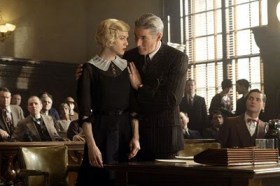
This, to any well-versed film watcher, echoes the message of “Chicago,” Rob Marshall’s 2002 Best Picture winning musical movie.  Richard Gere’s Billy Flynn is a master of the media; in the number “We Both Reached for the Gun,” he is shown manipulating everyone literally as marionette puppets, holding their strings and making them dance.  He is the best lawyer in Chicago because he can turn the tide of public opinion in favor of his merry murderesses, thus providing a nice complement to evidence that suggests, but doesn’t prove, their innocence.  Billy has a mastery of the courtroom too and manages to get false acquittals for Roxie Hart (Renee Zellweger) and Velma Kelly (Catherine Zeta-Jones) because he knows one fact: “This trial … the whole world … it’s all … show business.”

Here is a perfect study of opposites: Roxie is a victim of culture’s evils, while Casey Anthony was made to represent them.  The media tried to make her trial a proxy trial for her behavior.  But it’s not; it’s about her actions, and the jury could not find in evidence that her actions included murdering her daughter.  It makes for good television to focus on her unscrupulous behavior in the wake of her daughter’s disappearance, but it does not make for a trial in the American judicial system.

While I’m indulging in pessimism at the moment, I don’t believe this condemnation is a final verdict on America’s fate.  Now perhaps more than ever, I think “12 Angry Men” rings true and relevant.  The movie revolves around a twelve man jury deliberating a case based on reasonable doubt, not unlike the Casey Anthony trial.  When they enter the deliberation move, it seems that all will vote guilty.  However, one juror known as #8, played by the noble Henry Fonda, votes in dissent.  Over the course of Sidney Lumet’s movie, #8 tries to convince the other jurors that their mental picture of the defendant is not enough to justify a vote.  As he so eloquently puts it, “It’s not easy to raise my hand and send a boy off to die without talking about it first …We’re talking about somebody’s life here.”

With the death penalty on the table for Casey Anthony, she found herself in a position very similar to that of the Puerto Rican man in the movie.  But thanks to one noble juryman, he was saved.  As #8 struggles to change the rest of the jury’s mind, they take a second look at the evidence that seems to tell one story yet find that it tells another one – a story where the defendant is innocent.  When there are only three holdouts, #8 makes this speech that gets straight to the heart of the trial that has been the center of American attention for months:

“It’s very hard to keep personal prejudice out of a thing like this. And no matter where you run into it, prejudice obscures the truth. Well, I don’t think any real damage has been done here. Because I don’t really know what the truth is. No one ever will, I suppose. Nine of us now seem to feel that the defendant is innocent, but we’re just gambling on probabilities. We may be wrong. We may be trying to return a guilty man to the community. No one can really know. But we have a reasonable doubt, and this is a safeguard which has enormous value to our system. No jury can declare a man guilty unless it’s sure.”

Perhaps Casey Anthony is guilty.  That’s what many Americans still think in spite of this verdict.  But how many of us have come to this decision based on piecing together the evidence presented in court?  I’m going to guess very few of us have.  However, whatever notions I may have had about Casey Anthony thanks to Fox News or CNN have been wiped clean today with the jury’s verdict.  I’m not sure if the deliberations played out like “12 Angry Men” or if they took on another shape or form entirely.  Yet I am going to trust that however they came to their verdict, it is the right one.  And if you believe in the justice system that our Founding Fathers envisioned is morally right, then you must scorn notions of retribution and entertainment and believe in their verdict too.


REVIEW: The Way Back

5 07 2011

Long, grueling journeys requiring great endurance can make for great cinema.  Peter Weir, the director of the fantastic Best Picture nominated “Master & Commander,” does a great job portraying the struggle of man against a hostile environment in “The Way Back.”  However, following on the coattails of 2008’s “Defiance,” the Edward Zwick helmed film about survival in the Polish forests after World War II, the movie feels like it’s treading tired ground.

Sometimes movies are all about the timing, not just in regards to what’s on the screen but also in regards to when it comes on the screen.  “Defiance” took a genre that can be a really hard watch and made it a rewarding and meaningful in a way that I hadn’t seen in quite some time.  I didn’t judge “The Way Back” right out of the gate, but given that it too followed an eclectic group of people escaping a totalitarianist regime in the 1940s and fleeing into the forests, the comparison was inevitable.  In the end, they just feel too similar – and I only want to watch “Defiance” once.  Like a “Schindler’s List,” these movies show human beings dropped to sickening lows to survive.  While good ultimately triumphs, the journey there is so painful that I rarely want to relive it.

So perhaps if “The Way Back” was a 2007 release, I would respond much more positively to it.  Weir’s film is certainly not without its merits, however.  It boasts two very nice performances from Ed Harris and Saoirse Ronan, although Jim Sturgess and Colin Farrell just didn’t really do much for me.  The below-the-line elements are superb, including some captivating cinematography and marvelous makeup work that was very much deserving of the Oscar nomination that it received.

The script is also nicely done and captures the triumph of the human spirit and will over any obstacle.  However, Weir’s insistance on filming on such a grand scale hampers the movie, making it slower and more prolonged.  We end up feeling less because he wants to give us so much more.  “The Way Back” can’t be on an epic level with a movie like “Master & Commander” because it has to rejoice in the little moments of human strength and dignity that can be found trudging through the wilderness.  Given that the movie was based on a true story, I probably should have felt a lot happier that they triumphed, but dealing with such subject matter is difficult.  I’m not going to pretend like I could have done any better making the movie.  B / 


REVIEW: Hall Pass

4 07 2011

It’s a shame that “Hall Pass” doesn’t have a less contrived script or a bit more maturity.  If it had these things, it would be one heck of a comedy.  But alas, it doesn’t, and what we are stuck with is a few decent laughs held together by a string of ridiculous events.

It could be worse, though, as Owen Wilson and Jason Sudeikis play off each other pretty well.  Their sex-crazed babbling combined with a blooming barely-adolescent brain and the libido of a retirement home patient re-entering the game is absolutely outlandish.  Yet as childish as practically every line and situation was, I would find myself chuckling in spite of it, mostly along with Sudeikis.  Maybe it’s because he’s used to finding nuggets of gold inside of crap at “Saturday Night Live,” but whatever it is, the man is some kind of funny.   Wilson, on the other hand, feels past his prime with humor quality receding almost as precipitously as his hairline.

But these two hopeless husbands get a chance to live out their dreams in order to relieve their woebegone wives (played by Jenna Fischer and Christina Applegate).  In the words of Joy Behar, it’s a “hall pass.”  The movie never really cashes in on the high concept, just as Wilson and Sudeikis’ helpless sex drive leads them nowhere while their wives, in the words of Justin Timberlake, “get their sexy on.”

The stupid shenanigans distract from anything meaningful that “Hall Pass” might have to say about marriage.  I’m doubting there actually was anything in the way of commentary as the characters sure don’t seem to have any scruples about the messed-up events of the movie.  It’s definitely a far cry from The Farrelly Brothers’ “There’s Something About Mary.”  As for the conclusion of this review, I’m not really sure whether to steer you towards or away from the movie: it’s just another middling, forgettable comedy that I couldn’t feel more ambivalently about.  C / 


REVIEW: Submarine

3 07 2011

While sitting in “Submarine,” a coming-of-age dramedy import from our Welsh friends across the pond, there were moments when I thought I was going to give the movie unequivocal praise.  It had the eye-catching look and the quirky feel of a Wes Anderson film.  With its simple, geometric shots, clean editing, and eccentric characters navigating through some hilariously mundane situations, it could be the long lost foreign cousin of “Rushmore” (or a very flattering imitation).

And coming out of high school, I definitely felt that Craig Roberts’ protagonist Oliver Tate, despite our cultural differences, was one of the freshest portrayals of the confusion and the jumble of feelings that is growing up.  With his anthropological observations on the high school food chain and the social sphere in general crackling with wit, he reminds us how out of touch the cinematic visions of this age really are.  His quest to lose his virginity for a variety of underlying social factors is absolutely hysterical without ever losing touch with reality or authenticity.

But as the film shifts gears from this burst of postpubescent energy, this submarine begins to sink.  The emotions become more reserved, and the film’s energy goes along with it.  I can understand the cinematic reasons for the tonal shift: it doesn’t seem appropriate to have the same pop when dealing with the failing marriage of his parents (Noah Taylor and Sally Hawkins) and the potentially terminal illness of his girlfriend’s mother.  On the other hand, there is a way to convey those emotions without losing the joie de vivre that was so vibrant in the beginning.

Considering that “Submarine” is the directorial debut of Richard Ayoade, I’ll just chalk up some of the tonal problems and the resultant tinges of boredom to being rookie mistakes.  But I will echo the critical consensus – look for great things from this director in the future.  Once he gets a few more films under his belt, the things Ayoade can do so brilliantly will shine brightly.  B- / 


REVIEW: Cars 2

2 07 2011

Your favorite Pixar characters are back … and not a moment too soon!  In a fun-filled laugh riot, all your old friends remind you of the magic and charm you are supposed to feel while sitting in a movie.  There’s that characteristic Pixar wit that you just know will still be funny years from now with a nice helping of heart.

Oh, I’m sorry, did you think I was talking about “Cars 2?”  My apologies, that opening paragraph was referring to “Hawaiian Vacation,” the short film before the movie featuring the characters from “Toy Story 3.”  The latest Pixar summer outing brings back some of the most forgettable characters in their vast universe of animation, Lightning McQueen and the down-home American cars from Radiator Springs.

Thankfully, “Cars 2” feels like less of a letdown that it should following Best Picture nominees “Up” and “Toy Story 3” because it only has to live up to a prestigious brand name, not a beloved original.  In fact, it may be the rare summer sequel that is just as good as (if not better than) its predecessor.  Neither have the heart or storytelling prowess of the Pixar classics, but watching John Lasseter and pals do sub-par work is better than watching most other animated movies nowadays.

Read the rest of this entry »


F.I.L.M. of the Week (July 1, 2011)

1 07 2011

Back at the end of 2009, my first year of blogging, I caught some heat for including Tony Gilroy’s sophomore directorial venture, “Duplicity,” among my top 10.  To quote directly, “Duplicity? Really?”  There was also a slightly more detailed explanation of someone’s distaste for the movie, with that blogger describing the film as “dull.”

So now, with Julia Roberts headlining “Larry Crowne,” I have the perfect opportunity to defend the movie that charted as the 7th best movie of 2009 for me as the “F.I.L.M. of the Week.”  For my money, “Duplicity” was a fun, sleek, and stylish spy thriller that kept you on your toes every step of the way.  Coming after the flop that was “Quantum of Solace,” espionage was desperately in need of a facelift.  And at the beginning of 2009, originality wasn’t exactly plentiful at the theaters.

And in addition to being insanely well-written as an espionage movie, it also doubles as a romantic comedy with a dynamite couple in Julia Roberts and Clive Owen (who shared the screen as lovers in Mike Nichols’ “Closer,” a past F.I.L.M.).  The two play all sorts of games with each other, but since they are both corporate spies, all the lying, cheating, and stealing is for their job.  As the movie cuts back and forth between their history as lovers and their current scheming, it keeps us wondering where the line between work and play is drawn by these two spies.  Do they draw it at the same place?  What happens when this line is crossed?  By mixing the two genres, Gilroy gets us more engaged than ever in the business of these spies.  (Not to mention he cuts out all the contrived mumbo-jumbo we’ve been told to tolerate time and time again by Hollywood.)

Owen’s Ray Kovacks and Roberts’ Claire Stenwich are fascinating to watch unfurl courtesy of their nuanced portrayals.  First spies for competing governments, then from competing corporations, their alliances are never completely evident nor are their motives fully crystalline.  But as their quest to be the smartest guys in the room takes them on a crazy path that only a brilliant screenwriter like Tony Gilroy could imagine, their worlds and minds begin to unravel, ultimately laying them bare.  Some might call the movie’s never-ending plot twists excessive and ultimately self-destructive, but in the current Hollywood climate, “Duplicity” doesn’t have enough to compensate for the lack of complexity in a calendar year.  The twists can be electrifying if you choose to let them shock you, and the movie’s ride can be tremendously rewarding for those with the commitment to follow it.


REVIEW: The Tree of Life

30 06 2011

I saw “The Tree of Life” almost three weeks before publishing this review, and ever since, I’ve been so conflicted as to how I would approach reviewing it.  While I definitely wasn’t the biggest fan of the movie (more on that later), I didn’t want to insult those who loved it – and there were many of those, including the majority of critics.  As an amateur blogger, I’m straddling a delicate line between critic and average moviegoer, and I’m usually seen as standing on one side or the other.  But speaking as both, I recognize that writer/director Terrence Malick endowed his latest movie with a lot of meaning: for me, however, that meaning was hollow and ultimately didn’t parallel the amount of ambition on display.

I don’t care who you hear talking about how much they understand “The Tree of Life” or how much they realize every moment of the movie – unless they have a Ph.D. and have seen the movie multiple times, there is simply no way they can.  The movie is too overwhelming in scope for anyone to fully digest, much less comprehend.  Every frame is deliberate in its own right, and every image (except mopey Sean Penn) is endowed with an undeniable beauty by its creator, Terrence Malick.

But where I separate with the general critical consensus is that while I see the rapture of each shot, I don’t see them as contributing to the work as a whole.  To borrow an expression, the whole was less than the sum of its parts.  I have no doubt that in Terrence Malick’s head, this is an absolutely sublime movie, a thoughtful meditation on some of the biggest questions of humanity and religion.  Yet somewhere between his mind and what my eyes saw on the screen, there was a great disconnect.

Read the rest of this entry »


REVIEW: Larry Crowne

29 06 2011

The recessionary spirit has started to manifest itself in American cinema at full force, and thanks to “Larry Crowne,” it has entered mainstream romantic comedy.  While it’s less like “Up in the Air” and more like a double-length sitcom episode, the movie works as a reminder that dignity, integrity, and the will to work are three powerful weapons against the tough times facing our country.  This commentary mostly takes a backseat to the been there, done that genre tropes – but just the fact that it has subtext makes it deeper that just about every romantic comedy in the past decade.

Say what you will about the declining power of movie stars, but I don’t think this movie would have worked without its marquee names, Tom Hanks and Julia Roberts.  We’ve all seen the good-natured person melt the cold exterior of someone else, although “Larry Crowne” does invert it by making the man nice and the woman chilly.  The characters are one-dimensional; Hanks’ Larry being an embodiment of good while Roberts’ Mercedes Tainot representing a heart hardened by a bad marriage and the frustrating public education system.

Yet it’s watchable, even fun, because our heads process it as Erin Brockovich falling in love with Forrest Gump.  The romance isn’t good enough to be cared about if we were watching two no-name indie actors, and we accept it because we have a history with these two actors and we trust them.  We aren’t watching Larry Crowne; we are watching Josh Baskin, Andrew Beckett, Joe Fox, and Chuck Noland.  Similarly, we aren’t watching Mercedes Tainot; we are watching Vivian Ward, Julianne Potter, Maggie Carpenter, and Anna Scott.  Where the script lacks, the decades we have spent having these two actors entertain us compensates.  (So if you aren’t a fan of either of the actors, maybe it’s best to steer clear.)

When it’s not quietly extolling American virtues, “Larry Crowne” is light, breezy, and warm.  Its titular character meets an interesting cast of characters at the local community college, explores new hobbies and passions, and confronts the changes in his life with determination and willpower.  While I expect a little bit more from Nia Vardalos, the woman who had me in tears of laughter with “My Big Fat Greek Wedding,” in the way of humor, the movie has a sort of pleasant wit to it.  Combined with the likability factor of Hanks and Roberts, the movie makes for a nice and decently satisfying watch.  B / 


REVIEW: Transformers: Dark of the Moon

28 06 2011


Oh, Michael Bay, what on earth are we going to do with you?  The director’s latest venture, “Transformers: Dark of the Moon,” reminds me why I use his name metonymically to represent all that is wrong with modern Hollywood filmmaking.  I have come to believe that the director’s ambition is to make movies akin to hitting your head against a wall: that is, both should be experiences to kill a massive amount of brain cells.

To call the movie thinly plotted is a vast overstatement; it’s a jumble of events that gives Bay an excuse to blow stuff up.  In fact, using the word plot is insulting to the craft of writing.  If there was any sort of story to the movie, I couldn’t make it out amidst the deafening noisiness.  All I picked up on was some sort of Apollo 11 conspiracy that brings back more villainous Decepticons, thus allowing Bay to unleash the Autobots to fight them for prolonged periods of time while Shia LaBeouf’s Sam Witwicky runs around like he just escaped from an insane asylum and the new Megan Fox, Victoria’s Secret model Rosie Huntington-Whitley, stands there looking hot while managing to still have a perfectly unscathed face amidst the disaster around her.

It’s hard to believe now that this series used to be good.  The first “Transformers,” which came out four years ago, was a fun mix of action, humor, and excitement.  Since it did so well at the box office, Bay seems to have assumed it was only because of the action and dialed down every other aspect of the series to make the one non-stop.  I don’t mind watching buildings explode or bullets fly, but it gets old when you get pounded by it ceaselessly.  For this reason, the first sequel “Revenge of the Fallen” was a total disaster and one of the worst movies released in 2009.

Read the rest of this entry »


REVIEW: Life As We Know It

27 06 2011

It took me four days to finish the crummy dram-rom-com “Life As We Know It.”  Translation: I fell asleep watching it not once, not twice, but THREE times.  So not only is it bad, but it’s agonizingly boring.  Give me corny and derivative before boring because at least those movies are bearable.

The movie isn’t even worth me doing a Wikipedia search to be reminded of the plot and the characters.  From what I can remember, it revolves around the misadventures of Katherine Heigl and Josh Duhamel trying to take care of a baby, and they are totally incapable of doing so.  They aren’t married; they aren’t even together – it was some sort of cruel joke in the will of their mutual friends.  It’s a good thing they get to play repulsion most of the time because Heigl and Duhamel have about as much chemistry as a toilet seat and a pair of butt cheeks.

So if there’s no romance in this dram-rom-com, there must be some drama and comedy, right?  If you count sappy melodrama that soap opera actors could do better than Heigl and Duhamel, then sure, there’s drama.  And if you count Katherine Heigl having a big poop on her face, then there’s a minuscule shred of comedy.  But hey, speaking of poop, have you heard of “Life As We Know It?”  D / 


HITCHCOCKED: “Dial M For Murder” (1954)

26 06 2011

The perfect murder is always the perfect scenario for a Hitchcock movie.  “Dial M for Murder” is then by definition a quintessential Hitchcock, and watching it would give anyone a taste of the director’s style and methods.  In fact, all it’s missing is some Jimmy Stewart.

The perfect murder here is planned by former tennis player Tony Wendice (Ray Milland), who hires the perfect stranger – or old friend – to execute it for him.  Through blackmail and clever thinking, Tony coerces a Cambridge acquaintance, C.A. Swann (Anthony Dawson), to murder his cheating wife Margot (Princess Grace Kelly).  He has the perfect alibi to save him from any suspicion; while Swann commits the murder, he will be at the gentleman’s club.  Yet things go haywire thanks to a pair of scissors, and Tony has to cover his tracks to avoid being discovered.

Hitchcock makes this single-room thriller compelling and suspensful, which shouldn’t be a surprise to anyone who has seen “Rope.”  The only real complaint I could lodge against this one is that at times it feels a little too theatrical (the movie is based on a play) and less cinematic, almost as if he filmed it a live performance on a Broadway stage.  But I have no problem with live theater, nor do I have a problem with Hitchcock, and this elaborately plotted murder mystery ranks up there with the best of them.


REVIEW: The Tillman Story

25 06 2011

Many documentaries explore worlds we hardly know, exposing us to vast injustices and unimaginable horrors.  These are undeniably eye-opening, but they often don’t shock quite as much as documentaries that pull back the facade on stories we think we know.  “The Tillman Story” is in a class with the latter type of documentaries, showing us the truth about Pat Tillman’s life and death that the military didn’t want us to see on ESPN.

I remember being 11 years old and hearing the news that Pat Tillman, the man who gave up a career in the NFL to serve in the army for the love of his country, had been killed in Afghanistan.  Here was a man that was a symbol of patriotism, a banner for all the good in America.  I remember my dad telling me that Pat Tillman was a true American hero, and I think countless other parents told their kids the same thing.

Because of that, when Pat Tillman died in Afghanistan, the military saw the perfect martyr to regain some confidence in their mission and to give heroism a face that America could rally around.  They simply covered up the fact that he actually died by friendly fire (shot by his own men, for those unfamiliar with military jargon) and exalted him like a saint.  Little did they know that Pat’s family was not going to sit back and accept their version of events.  Motivated by justice and truth, two very American values, his mother Mary Tillman and various others pursue accountability from the military and acknowledgement of the reality of Pat’s death.

It’s hard to reexamine a story like Pat Tillman’s since it had become like a truth for me.  Now, we have to adjust the events in our mind: he can remain a hero for the choice he made, but he can no longer be seen with the same heroism in death.  Better yet, Amir Bar-Lev, with his fascinating “The Tillman Story,” doesn’t stop at asking us that question.  He challenges us to think about how much we need a hero or an inspiring tale.  Will we go so far as to accept fiction or ignorance to get it?  B+


F.I.L.M. of the Week (June 24, 2011)

24 06 2011

Documentaries often criticize institutions and expose corruption, garnering the genre as a whole a sort of muckraking infamy.  However, not all fit the stereotype.  Take, for example, “The Most Dangerous Man in America: Daniel Ellsberg and the Pentagon Papers,” a Oscar nominated documentary that’s my pick for this week’s F.I.L.M.  The movie celebrates the First Amendment right to the freedom of speech against the backdrop of an infamous incident in American history, focusing on one man who made a stand for the rights of American citizens to be informed.

Daniel Ellsberg is not your average Pentagon worker during the Vietnam War.  After becoming gradually disillusioned with the country’s mission after seeing the war both from a combat and administrative perspective, he began working at a think tank called RAND.  However, he still contributed to a study covering the conduct of the war; the documents would later be classified top-secret and known as “The Pentagon Papers.”

Knowing that these papers would implicate the Johnson administration in deliberately lying to the American people about the Vietnam War, Ellsberg decided to make copies of the Pentagon Papers and leak them to the media.  To the fury of Nixon and his staff, excerpts were published in The New York Times in June 1971.  The fallout eventually led to a Supreme Court case, which upheld the right of the newspaper to publish classified material without government censure.

“The Most Dangerous Man in America” also provides a very interesting portrait of Ellsberg himself, showing us what psychological forces led this man to take such drastic action in order to inform the American citizens of what their government was really doing.  But the beauty of the documentary is in the questions that it raises: what is the role of the media in maintaining transparency of the government?  Of the citizens?  Do we have a right to know everything the government does?  These questions are especially relevant now with WikiLeaks and their publishing of American defense secrets.  While the movie gives you Ellsberg’s answers, it also lets you ponder your own response to these big ethical questions all while celebrating the liberty our Constitution so vigorously protects.


REVIEW: Unknown

23 06 2011

Half “Taken” and half “The Bourne Identity,” Liam Neeson’s latest thriller “Unknown” lacks the scintillating sizzle of such like-minded thrillers but will pass for decent entertainment.  If you want a rental that offers a tiny bit of mental involvement, a fair bit of thrills, and beautiful women named Diane Kruger and January Jones, this might be a decent way to spend a Monday movie night at home.  You won’t complain or be disappointed; you’ll just be content.

The high concept thriller follows Martin Harris (Neeson), who awakes from a coma after a car wreck in a Berlin taxi driven by Gina (Kruger) to find that his wife Liz (Jones) doesn’t recognize him.  In fact, there is nothing other than a lost passport to prove his identity.  In order to get his life back, Martin must get to the source of this deep running conspiracy, and he will stop at nothing to reclaim what was once his.

It’s really an intriguing premise, and if you watched the trailer (or saw it a million times in theaters during December 2010), you can basically skip the first hour.  The set-up was done perfectly in two minutes there, and it was a little unnecessary to prolong the trailer.  The second hour is where things get interesting, yet by the time the movie’s “twist” comes around, I was just ready for it to end.  The movie squanders an opportunity to really cash in on the idea, which is a little disappointing, but at least it doesn’t totally tank.  There are much worse thrillers than “Unknown;” then again, there are also much better.  C+ /