At some point during the seemingly interminable carousel of trailers prior to “Avengers: Infinity War,” a thought occurred to me: I should probably do a quick Google to see if there’s any information I need to know before the movie starts. I’d done the legwork of seeing the previous installments (“Thor: The Dark World” excepted because everyone tells me I didn’t miss much), but they linger in my system like a flat, lukewarm draft beer in a plastic cup. As Marvel click-chasing as the Internet is these days, there was plenty of service journalism on page one to fill me in.
The more I read, the more I saw information about infinity stones. What they were, who had them, what happened the last time we saw one. I’m not such a passive viewer that I had no concept of these whatsoever, but, to be honest, I had stopped giving them much thought a few years back. Infinity stones were like excess information from a high school history lecture – you have some vague sense that these tidbits might show up on the final but not enough to scare you into paying full attention.
Imagine showing up for the final and having it be only those bits of knowledge you considered superfluous. That’s “Avengers: Infinity War.”
The analogy actually doesn’t fully compute because it puts far too much responsibility on me, the audience member, for keeping up. Over the past five years, after correctly sensing the audience could sense Marvel’s formula, head honcho Kevin Feige implemented a new strategy to avoid brand complacency. He brought in accomplished directors with a real sense of style and personality – no offense to Favreau, Johnston and others who can clearly helm a solid studio action flick. A handful of rising talents got the chance to play with a massive toolbox to make largely personal films on nine-figure budgets. Better yet, they essentially got to treat these infinity stones like MacGuffins, items whose actual substance matters little since they serve to move the plot and provide a goal for the hero.
Think about these films from late phase two and early phase three, as the canonically-minded Marvel fans would say. James Gunn’s “Guardians of the Galaxy” films aren’t memorable because of their quest for Power Stone; they’ve endured because of the joyous rush of a stilted man-child who gets to live out his Han Solo fantasies to the tunes of his banging ’80s mix-tape. Ryan Coogler’s “Black Panther” has far more interesting things to say about black identity, heritage and responsibility than it does about the Marvel Cinematic Universe. Taika Waititi was still playing into the future of the studio’s master plan, yet he got to toss out much of what had been done with the God of Thunder in “Thor: Ragnarok” and cast him like the offbeat protagonists of his Kiwi comedies to find humor and heart where there had previously been little.
“Avengers: Infinity War” is a feature length “Well, actually…” from Marvel. The Russo Brothers are here to deliver the bad news that those infinity stones were actually the only thing that mattered the whole time. Silly you for thinking the studio cared about things like artistry and personality!
 The kind of auteurism favored by most today places a high priority on repeated patterns and frameworks within a director’s body of work. I, however, tend to prefer filmmakers who can produce a consistency of mood, tone and experience without ever allowing themselves to be easily pinned down. There is perhaps no better example of this than Joel and Ethan Coen, the writing, directing and editing duo who can bounce across genres and budget sizes without skipping a beat.
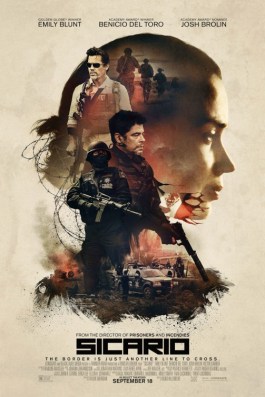 In Denis Villeneuve’s “
 Towards the end of the lengthy expository section of “
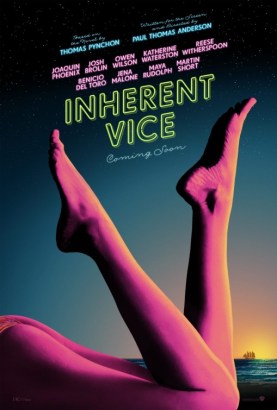 New York Film Festival
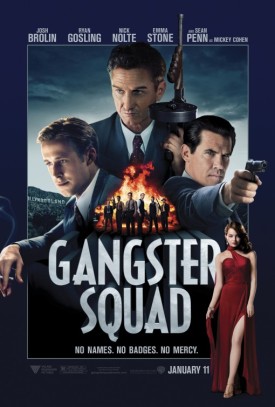 There were two clear paths to success for “


 Unlike “The Fighter,” which seems Academy-appealing on premise, “True Grit” is appealing on pedigree. It comes courtesy of the Coen Brothers, who each have three statues thanks to their work producing, writing, and directing “No Country for Old Men” in 2007 and another for writing “Fargo” in 1996. Including the nominations they have received for editing under the alias Roderick Jaynes, Joel and Ethan Coen have each received a whopping
  Bridges isn’t the only threat the movie has in the acting categories. Two-time nominee Matt Damon looks to make an entry into the Best Supporting Actor category, as does prior nominee Josh Brolin. The race still has no clear frontrunner (hard to believe), and either of them with enough buzz when the movie screens around Thanksgiving could lead to a major shake-up.
 Brolin, on the other hand, has only recently emerged as an actor to be reckoned with thanks to roles in “Milk,” which earned him an Oscar nomination for Best Supporting Actor, and “No Country for Old Men,” the Coen Brothers’ Best Picture winner which earned him a SAG Award for Best Ensemble. He has a more volatile personality, and this could harm him. In “True Grit,” he plays the outlaw Tom Chaney, another villainous role that he has gained so much notoriety playing. Unlike the Best Supporting Actress category where double nominees from the same film are common (see the
  But perhaps the movie’s biggest wild card is the spunky teenaged heroine Mattie Ross, played by newcome Hailee Steinfeld. She will be a more central figure in the 2010 version of “True Grit” since the novel focused more on her perspective. Still, Steinfeld will likely be campaigned for Best Supporting Actress where the field is thin and the category is more hospitable territory for young actresses. In the past decade, 13-year-old Saiorse Ronan and 10-year-old Abigail Breslin have been nominees for “Atonement” and “Little Miss Sunshine,” respectively. The category has also seen pint-sized winners like Tatum O’Neal for “Paper Moon” at the age of 10 and Anna Paquin for “The Piano” at the age of 11.

 Marshall and the Movies
Recent Comments