F.I.L.M. of the Week (September 8, 2016)

8 09 2016

year-of-the-dogAs someone who lives with two canine companions, I can certainly sympathize with Molly Shannon’s Peggy in “Year of the Dog.” Relationships with humans are tough. How dare they do this, but they actually want something in return from us. They make demands of our time and thought. Dogs like Peggy’s beloved Pencil simply live to please us, offering love and affection no matter our mood or deeds that day.

But, as every child in a film about a dog knows, we almost always outlive our dogs. Peggy faces this lesson sooner than expected when Pencil gets into some toxic chemicals and cannot be saved by a veteran. What comes next for someone who puts all her eggs into the basket of her beloved animal makes for quite a melancholy comedy from writer/director Mike White.

Rather than using her period of mourning to deepen or enrich her relationship with neighbors, coworkers or family members, Peggy entrenches herself even further into animal advocacy and obsession. She becomes a vegan, brings home abused shelter dogs by the carful to save them from euthanasia and even “adopts” farm animals in lieu of holiday gifts. It’s decidedly odd turn of events, yet Molly Shannon resists playing her character as some kind of lunatic. The performance resembles a quieter, more mellow version of her notorious “Saturday Night Live” characters – all of their insecurities without all the theatricality to mask the wounds.

“Year of the Dog” is my choice for “F.I.L.M. of the Week” not only because of Shannon’s raw performance but also because of where Mike White takes it. While he shows compassion for everyone, White is not afraid to steer the film into dark and bittersweet territory. He is unafraid to suggest that Peggy might not need the human connections we expect her to develop over the course of the film. She might just need the certainty of her own convictions and the courage to follow the path she thinks will bring her the happiness she seeks.


REVIEW: Cameraperson

7 09 2016

camerapersonSXSW Film Festival

Towards the outset of Kirsten Johnson’s “Cameraperson,” we see a beautiful shot of a raging storm in Missouri – and then hear a sneeze out of frame. This is a clip repurposed from the raw footage of another documentary for which Johnson shot footage, though it’s the kind of moment that never makes the final cut of a documentary. Non-fiction films might reference the presence of a director hovering outside the scene, molding our perceptions after the fact, but they rarely acknowledge the cameraperson who makes innumerable important decisions in the moment that contribute to our notion of reality.

When writers describe cinema, we often filter it through the lens of auteur theory – that pie-in-the-sky idea which puts faith in the genius and willpower of a single visionary artist whose indelible stamp appears in every aspect of the film. But if the director is the brain of a given project, they need hands to execute their vision in a collaborative medium. Johnson, in her role as cameraperson and director of photography for nearly a quarter-century in documentary filmmaking, serves as those hands. This boundary-defying filmic memoir achieves the impossible by both isolating her technical contributions and illuminating her own artistry as the authoritative presence capturing moments as they unfold.

Johnson’s impeccable non-fiction Rolodex features Laura Poitras, Kirby Dick and more, all of which granted her permission to reshape the raw footage from their completed documentaries into this new, living interrogation of the role of the cameraperson. On occasion, the scenes reflect back on the directors themselves, showing who views her as an artist and who sees her as a mere technician (*COUGH* Michael Moore). But the majority of “Cameraperson” shows how we can apply to Johnson the language traditionally reserved to describe the body of work of a director.

Through the gentle flow of scenes edited to a thematic rhythm, we come to learn how Johnson’s subject position as a woman, a mother weighs on what she shoots and doesn’t. We begin to notice emerging themes, such as the placid and straightforward presentation of sites where atrocities occurred. We see, through the juxtaposition of her own childhood prayers with prayers at a mosque, how she relates to subjects on different continents. We witness her evolution as an artist, observing how she comes to makes the call on how to portray a subject – impressionistically, or with standard establishing shots.

In reclaiming the previously shot footage to tell her own story, Johnson also comes in control of sound and montage. While we come to know her by the images she captures, we also come to realize that no craftsman or artist on a film works in a vacuum. Any great work of filmed art represents the sum of the efforts of its many collaborative elements. “Cameraperson” is more than just an autobiography. It’s an ontological document of the cinema itself. A-3halfstars


REVIEW: Other People

6 09 2016

other-peopleSundance Film Festival

Chris Kelly’s “Other People” was the first film I saw at the Sundance Film Festival in 2016. Had it also been the only film I saw, I think I could have left Park City feeling wholly satisfied.

This personal, deeply felt tale about a struggling writer (Jesse Plemons’ David) who comes home to take care of his cancer-stricken mother (Molly Shannon’s Joanne) contains everything people have come to expect from a quote-unquote “Sundance movie.” It’s a dramedy with real heart, surprising performances from a vast ensemble and a little something to say about the constant battle to claim one’s identity. David, an openly gay twenty-something who still has yet to receive approval from his stern father (Bradley Whitford’s Norman), marks a refreshing change of representation. He’s allowed to be defined by something other than his sexuality without denying him romance.

But “Other People” goes beyond delivering the expected. It reminds you why we love these kinds of movies to begin with, why we’re willing to sit through countless half-baked similar films to get one this moving.

You will marvel at how much the people in this film bear a resemblance to someone in your own life. You will feel that you lived a year with this bereaved family, not just watched scenes about them for under 100 minutes. And shockingly, you will come to like – and probably cry to – Train’s “Drops of Jupiter.” Not just during the movie, either. Let’s just say you heard it at the gym. It might make you emotional there. (What, who? Me? Was that me?)

Oh, and you will weep. GOSH, did I weep during the screening. The crowd at the post-show Q&A I attended essentially posed no questions. It just featured people who tearfully ran through stories of their own tragic losses and how “Other People” resonated with them. Had I been able to gain composure amidst the veritable lake of tears surrounding my chair, I likely would have done the same.

I saw the film just days after losing a friend my own age – just 23 – to the same kind of cancer that afflicts Joanne. I remained stoic in the days following her passing, almost in disbelief that she just wasn’t here anymore. “Other People” played a crucial, cathartic role in helping me finally feel what happened. The film gave me a space in which I could work through the conflicting sets of emotions and make sense of what seems so unfair and yet so inevitable. While I could write impersonally about Kelly’s work and describe some kind of generalized viewer, it does a disservice to experiencing the film. This affected me because these tragedies affect us.

Read the rest of this entry »


REVIEW: Bad Moms

5 09 2016

We’re at a cultural moment where parents are more stressed and confused than ever as they try to prepare children for a newly competitive world while also imparting the requisite cultural norms necessary for survival. (Never mind having any time for their own personal happiness and satisfaction.) It’s the perfect time for a movie like Jon Lucas and Scott Moore’s “Bad Moms” to come along and assure audiences that there is still value in just being a good, decent person. If only it were a little bit funnier, the film would be a cultural touchstone for generations to come.

Lucas and Moore’s background writing “The Hangover” shows as the film’s key trio bears a striking resemblance to the Wolfpack. Mila Kunis’ Amy has her act most together but struggles to find satisfaction amidst the demands placed on her by a louse of a husband (think Bradley Cooper’s Phil Wenneck). Kristen Bell’s Kiki is a meek, sexually naive mother of four who mistakes her ignorance for happiness (see Ed Helms’ Stu Price). Kathryn Hahn’s single swinger Carla proves a wild card in any scenario (sounds like Zach Galifianakis’ Alan Garner).

As they fight back against societal pressures to maintain the image of perfection, enthusiasm and optimism, these moms’ antics are more likely to spark discussion groups in sociology seminars than set social media ablaze with a killer line. Their candid conversations, easily more memorable than their Top 40-scored romps of bad behavior, are notable for the way the women speak to each other. They speak less as characters or friends and more as field workers looking for answers to research questions about modern motherhood.

Never fear, humor-seekers: Lucas and Moore always provide a joke line as a response. But “Bad Moms” doesn’t need a sequel so much as it needs a sitcom. In that format, the creators might really be able to delve into the issues that so clearly concern them without succumbing to the pressure for a giant comedic set piece on such a consistent basis. B-2stars


INTERVIEW: Paolo Sorrentino, writer/director of “Youth”

4 09 2016

In the social sciences, published literature carries a bias of statistical significance. If a journal accepts a given study or finding, it rises to the level of carrying less than a 5% likelihood of occurring due to chance. What that leaves out of the record is what doesn’t work – an equally valuable set of knowledge for anyone looking to do similar research.

What does any of this have to do with my interview of Paolo Sorrentino, writer/director of last year’s “Youth” and Academy Award winner for “The Great Beauty.” Well, aside from some notable cringe-worthy interviews that can play for laughs, we seldom see interviews with talent that don’t go well. As much as I’d like to say everyone can form rapport with their subject in an exchange, it doesn’t always happen.

And let’s just say my talk with Sorrentino wasn’t pretty. It’s been almost 10 months since I recorded this 10 minute phone interview, and I’ve been too scared to listen to it again. I don’t know what all went wrong. I was the last interview of the day, so was he tired from a long day of talking? We had to speak through an translator, so did something get lost in Italian? Could he tell that I just didn’t feel passionately about his movie?

Whatever it was, I feel compelled to revisit my pain on the occasion of Sorrentino’s mini-series “The Young Pope” premiering at the Venice Film Festival. Perhaps it will provide someone with the tools to avoid a similarly awkward interview. The talk definitely taught me to be careful about assuming autobiographical links, even when a film like “Youth” featuring an aging director makes the temptation too irresistible. Here we go…

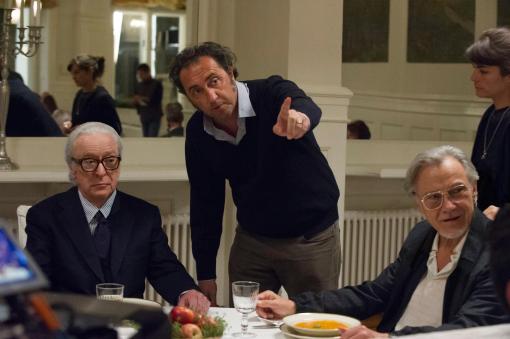
Paolo Sorrentino directing Youth

Read the rest of this entry »


REVIEW: Under the Gun

3 09 2016

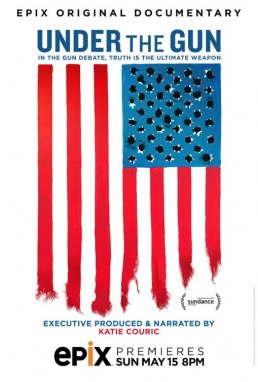
Under the GunAnyone amendable to hearing other sides in the gun safety debate probably knows a lot of the basic talking points in Stephanie Soechtig’s “Under the Gun.” Especially considering that the film is narrated by newscaster Katie Couric, the documentary feels like a cobbled-together series of the news reports we must endure following the latest mass shooting. Some new aspect of the struggle to keep guns out of the hands of dangerous men comes to light based on the circumstances of the murder and/or murderer.

The film runs through many established talking points and issues of contention readily established in the national conversation – background checks, mental health, stymied research – in its first half. When Soechtig and Couric finally introduce some more novel concepts towards its close, “Under the Gun” has already created a lull from a familiar rhythm. It tries to score more points, perhaps at the cost of making them all effectively.

Still, the loophole allowing anyone to buy a gun if their background check cannot clear in 72 hours, or the fact that the ATF can only inspect a gun dealer once per year, or that 5% of bad apple dealers sell 90% of the guns responsible for firearm deaths ought to rattle a few cages.

As always, with each problem raised, the common sense solution appears so simple yet so frustratingly out of reach. “Under the Gun” is not about the vilification of gun owners, instead focusing its anger on lobbying class and the corporate interests of gun manufacturing that hold the entire nation hostage. At the end of the day, so much of the continued pain in this country comes from the NRA acting on behalf of these industrialists and peddling misguided fear of government arms seizure to their members – most of which support obvious safety measures.

“Under the Gun” does struggle with an uneasy give and take between anger at the enablers of the malefactors and the sympathy for the families left devastated by these senseless killings. Yet even so, the film is highly literate and competent in the kind of premium cable documentary activism that has become so prevalent in the streaming era. Now the question is whether this changes the right hearts and minds. B2halfstars


REVIEW: The Brothers Grimsby

2 09 2016

In 2006, Sacha Baron Cohen wrote and starred in “Borat,” one of the most prescient and hilarious satirical films of the millennia. Fast forward to 2016, and he has stooped to the level of taking elephant ejaculation to the face in “The Brothers Grimsby.” There’s no context that makes this sound smart or redeemable. The film is just giddy about the idea of a sight gag involving a giant pachyderm penis.

It has been quite frustrating to watch Cohen evolve backwards over the past decade, growing less socially engaged and more juvenile with each successive film. “The Brothers Grimsby,” admittedly, might have some more local flavorings lost on American audiences. Cohen stars as Nobby Butcher, a low-class British football (soccer) hooligan with little intelligence and a high blood-alcohol level. His long-lost brother Sebastian (Mark Strong) leads a completely opposite life as an MI6 agent, a suave operator who fashions himself a real-life James Bond.

The two improbably link up as Sebastian investigates a crime syndicate intent on launching a bioweapon and end up on the run together. Their misadventures take the duo to South Africa and South America, but no matter the location, Nobby manages to run amuck of the rules of engagement – as well as common sense. It’s a role imitated by Cohen outside the film, too. He’s proving once again to be the master of the gross-out moment, though it feels like he’s only intent on proving this to himself. The disgusting humor produces a quick groan at the given scene and never gets rerouted into a larger concept or idea that should draw a more existential disgust.

Everyone knows Cohen can do so much more than “The Brothers Grimsby.” Why he seems intent on doing so little just baffles the mind. C2stars


F.I.L.M. of the Week (September 1, 2016)

1 09 2016

Winter in WartimeWith the start of a new festival season, it has once again become that time of the year when I catch up with the old works of directors newly feted on the circuit. For whatever reason, a lot of acclaimed movies simply slip through the cracks for me. Gatekeepers like Venice, Telluride, Toronto and New York Film Festivals help highlight directors whose new work demands you examine their past films.
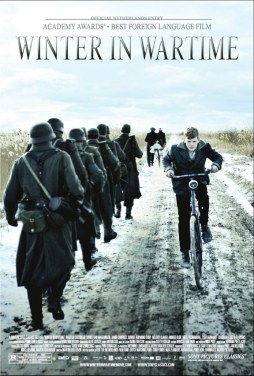
With his new film “Brimstone” landing a coveted premiere on the Lido for the Venice Film Festival, Dutch director Martin Koolhoven now has a new rarefied status attached to his name. With that, I decided to check out his last film, “Winter in Wartime.” Surely I was aware of the film when it entered the 2010 Oscar race as The Netherlands’ Foreign Language submission or when Sony Pictures Classics released it in 2011. While I missed it then, I’m glad to have caught up with it now.

“Winter in Wartime” is my choice for the “F.I.L.M. of the Week” because Koolhoven finds fresh life in the World War II homefront tale and morality play. Certain aspects recall “The Book Thief,” but this coming-of-age story has plenty to offer all of its own. The film really excels in capturing how young Michiel, a Dutch teenager enduring the bitter end of Nazi occupation in 1945, grows frustrated with the adults who try to rationalize or find gray areas in their situations.

To Michiel, anything except active resistance to their German captors serves to help them. His father, the mayor of their town, tries to placate the Nazi troops by maintaining deference for the people’s safety. He sees it as strength; Michiel, as cowardice. Rather than simply express his disgust, Michiel channels it into action by helping the Dutch resistance evacuate a downed British RAF pilot, Jack. His quest for liberation sticks it to the Nazis, sure, but it also doubles as rebellion against the wavering morality of the older generations who have grown content with a stalemate. Though I will not venture a direct comparison to the defenders of Hitler, there’s something quite liberating watching “Winter in Wartime” as a young American in 2016 when many elder statesmen lack the courage to abhor demagoguery, bigotry and authoritarianism.


REVIEW: The Light Between Oceans

31 08 2016

There are no battle scenes in Derek Cianfrance’s “The Light Between Oceans,” but it is undoubtedly a war movie. One need not see the dispiriting, demoralizing trenches of World War I when their effects are so clearly visible in the blank expression of Michael Fassbender’s Tom Sherbourne. All vestiges of his personality must reside permanently buried in some European forest because shell shock has left a shell of a man, one so eager to extricate himself from human contact that he volunteers for a solitary position tending to a lighthouse off the Australian coast.

Tom’s isolated assignment recalls the kind of lonely confinement afforded Jack Torrance in “The Shining.” While he might not suffer a psychotic break or murderous episode, the location exacts a toll in its own, quiet way. In the wake of the Great War’s devastation, Tom attempts to maintain the mirage of a moral universe by upholding order on the smallest possible scale. “The Light Between Oceans” never uses the oft-elided interwar period to foreshadow the next looming conflict, a decision that lends weight to his inner agony.

Alone, Tom’s illusion seems faintly sustainable. The notion begins to crumble, however, when his sorrow gives way to genuine affection for Alicia Vikander’s Isabel Graysmark. Their flirtations begin with only the faintest of sparks, and they do not generate any more heat in the bedroom. That’s on purpose – for Tom, physical intimacy is something he approaches with trepidation since the last bodies he came into contact with were likely dead ones.

Isabel wants a baby, yet several failed pregnancies make the prospect seem implausible. Their thwarted attempts at birth feel quite reflective of the post-war Western world, trying to create a brighter future but stillborn efforts contribute to a growing sense of dread that life will never bloom again.

Read the rest of this entry »


REVIEW: Sausage Party

30 08 2016

Sausage Party” may begin with an amusing ’90s Disney-esque opening ditty – with help from “The Little Mermaid” and “Beauty & The Beast” composer Alan Menken, to boot – but Seth Rogen and Evan Goldberg have far more than obvious parody. (Besides, 1999’s adult animated “South Park: Bigger, Longer and Uncut” took care of that pretty well.) Using a supermarket as a microcosmic playground for the world, the sly writing/producing team continue their thematic exploration of pressing social and existential issues.

That’s not a joke, and yes, “continue” means that this thread has been present in their past work. 2013’s “This Is The End” was, among many things, a fascinating exploration of how public figures come to deal with their mortality and the afterlife in the face of a seemingly inevitable apocalypse. Playing a lightly fictionalized version of himself, Rogen and his celebrity comrades united to satirize the lack of self-awareness among self-important actors.

Much of that same gang reunites for “Sausage Party” to play the voices of processed or packaged foods ready for consumption. The elaborate ritual laid out in the opening song deludes them into thinking “the gods” have destined them for some kind of heaven once placed in the grocery cart. But once a returned jar of honey mustard offers a chilling vision of what lies beyond the automatic doors, hot dog Frank (Rogen) and his sweetheart bun Brenda (Kristen Wiig) bring it upon themselves to discover the truth. Neither realizes the answer will shake up everything they thought they knew about life after purchase – provided such a thing even exists.

Along the way, they journey with Kareem the lavash (David Krumholtz) and Sammy the bagel (Edward Norton) and start to solve the Israeli-Palestinian crisis. They bump into Firewater (Bill Hader), a Native American liquor bottle, and bump up against the complications of colonial displacement of indigenous peoples. Rogen and Goldberg, along with “The Night Before” co-writers Kyle Hunter and Ariel Shaffir, take advantage of how ripe animated films are ripe for social commentary given how much an audience has to project humanity onto the objects.

Oh, and all the food eventually comes together in a raucous orgy. Just as the apocalyptic monster in “This Is The End” had disturbingly large anatomy, the “Sausage Party” participants’ sexual drive serves as an outsized reminder that Rogen and Goldberg come from a place of absurdity, imagination and crass humor above all else. Don’t take any of this too seriously, their flourishes seem to cry out, because the authors themselves don’t. They know their places as comedians and entertainers above all else, although Rogen might soon vault to Mel Brooks status for a new generation. The combination of his boundary-pushing comedy with trenchant, socially attuned subject matter certainly makes him an obvious contender to assume the vanguard. (Without saying too much, try not to think of “Blazing Saddles” during the finale.) B+3stars


REVIEW: Southside With You

29 08 2016

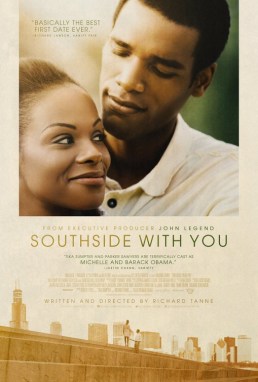
Southside with YouIt feels almost too good to be true that America’s first non-white president took his future wife to see Spike Lee’s provocative race-relations drama “Do the Right Thing” on their first date … yet it happened. Barack Obama’s years in the White House, particularly in regard to questions of racial identity, often seem to tie into that film – who does the right thing? And for whom?
But when extrapolating the lessons from Barack and Michelle Obama’s first romantic outing and applying them to the presidency, where do you stop drawing the line? Richard Tanne’s “Southside With You,” a gentle and conversational recounting of that fateful day, seems to suggest that virtually every detail can serve as a foreshadowing one.

From their first conversation, Barack Obama (Parker Sawyers) and Michelle Robinson (Tika Sumpter) come across as two strong-willed people who can deftly navigate through verbal volleying until they can find a hole through which to push their point of view. The two are united in their passion for helping issues that hit close to home for black Americans but get frustrated with having to achieve those ends through a white-dominated system that implicitly treats them as second class citizens. Michelle in particular articulates her double consciousness of being a person of color as well as a woman and how it affects every move she makes – including only the most tentative embraces of Barack.

At times, though, the parallels come across as a little too stretched. At about the midpoint of “Southside With You,” Barack gives an off-the-cuff address to a community meeting. He rattles off brilliant, poetic lines about turning self-interest into mutual interest. Few can deny the power of his rhetorical prowess, but this oration has the prepared exactitude of a speech delivered to the DNC, not the front row of a half-empty church. And is it really so fortuitous that the presentation contains many of the major themes that propelled him to the presidency? (It could be, just so we’re clear.)

The film ends on an entirely appropriate note: the two seem locked not primarily in romantic bliss but rather somber anticipation of the tough road ahead. There is absolutely love, but there is also a partnership, a meeting of the minds. A pairing of two like minded, change-oriented fighters determined to make a difference together. Perhaps the real first date of “Southside With You” is that of Barack and Michelle Obama with destiny. B2halfstars


REVIEW: Holy Hell

28 08 2016

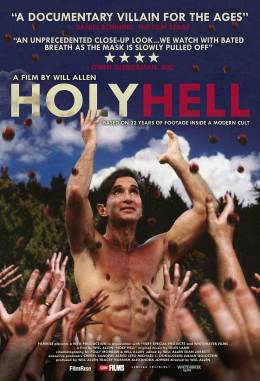
Holy HellI’ll spare you the clichéd “truth is stranger than fiction” line when talking about Will Allen’s documentary “Holy Hell,” but only because it does not apply in the slightest. Cult-related narrative features like “Martha Marcy May Marlene,” “The Master” and “The Sacrament” (just to name a few) wring tension and intellectual rigor out of their plotted adventures. Allen’s pieced-together footage from his own experiences in the Buddhafield cult, on the other hand, feels like a collection of oddities presented for an audience’s marveling.

Culling from over decades of raw material, Allen provides a comprehensive portrait of the new religious movement into which he was swept. Like many who fall prey to the allure of fringe communities, he was lost and in need of some overarching value system to provide him meaning and belonging. (It’s no coincidence that the group achieved critical mass in Hollywood, a place where the fragile and insecure tend to congregate.)

But all these videos, interesting and compelling though they might be, ultimately lose their luster once it becomes clear that scant commentary will come along with it. Save the comforting and catching up with wounded ex-members towards the close, “Holy Hell” almost never reflects backwards. It’s almost like watching an actual found footage flick about the cult head Michel Rostand, a charismatic leader in a speedo who looks like the kind of figure that the object of a teen girl in an ‘80s movie. With years to distance himself from Buddhafield and process what happened, it’s disappointing that Allen’s filmic memoir is so bland. B-2stars


REVIEW: Equity

27 08 2016

EquityIn the lead-up to the series finale of “Breaking Bad,” actress Anna Gunn penned an essay for The New York Times entitled “I Have a Character Issue.” In it, she said the following about fan reactions to her character, Skyler White: “My character […] has become a flash point for many people’s feelings about strong, nonsubmissive, ill-treated women. As the hatred of Skyler blurred into loathing for me as a person, I saw glimpses of an anger that, at first, simply bewildered me.”

Gunn’s role in the new film “Equity” represents a feature-length doubling down on this curiosity about how American society views powerful women. As high-powered Wall Street banker Naomi Bishop, she continues probing the perils of feminine assertiveness in the workplace. She must deal with the continued frustration of being judged on her reputation, not by her results. Virtually every move she makes entails a dual calculation – first on her professional instincts, and then on how the powerful men around her will perceive it.

Virtually every scene of Meera Menon’s has this built in conflict perspective about women in business. Be it Naomi, her newly expectant underling Erin (Sarah Megan Thomas) who reluctantly draws power from her seductive wiles, or the ruthlessly committed attorney Samantha (Alysia Reiner) on their trail, no female is exempt from feeling the weight of the patriarchal power system. At certain points, the existing dynamic even pits apparent allies against each other.

“Equity” gets monotonous at times due to its unilateral interpretation of events, but the perspective remains so underrepresented that it never becomes tedious. Menon never opts for the easy resolution of any situation, even ending on a harshly cynical note to make her points. With Gunn bringing her own experiences to the table, however, the film adds a level of informed, impassioned weight that elevates invective to the level of a great discussion generator. B2halfstars


REVIEW: Trapped

26 08 2016

TrappedActivism-based documentaries run into a few common problems – favoring sermonizing over conversations and preaching to the converted. It’s tempting whenever engaging in discourse about the facts to presume you are completely right and that everyone should agree with you. (Welcome to Internet film criticism 101!)
Thankfully, Dawn Porter’s urgent documentary “Trapped” manages to avoid the standard pitfalls. Her most valuable weapon are the many unconventional interview subjects of her film. For obvious reasons, the devoutly Christian abortion provider stands out from the pack. Watching him wrestle with the tenants of his faith and belief not to compartmentalize but to actually justify and compel his work feels revelatory, in part because media tends to entrench the idea of two starkly divided camps on the issue.

“Trapped” shows a diverse coalition of men and women committed less to the principles of free choice (however nebulously one chooses to define the concept) and more to the necessity of keeping women safe. Closing facilities for women’s health may or may not reduce the number of abortions. But what it does do is increase the risk that women resort to unregulated, unsanitary facilities that put their lives in danger. Watching these medical professionals attempt to steer vulnerable, scared girls into making prudent decisions about their bodies ranks among some of the more wrenching conversations captured in non-fiction cinema this year. B2halfstars


F.I.L.M. of the Week (August 25, 2016)

25 08 2016

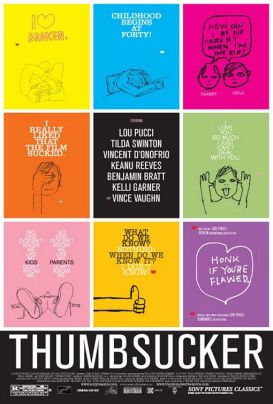
ThumbsuckerMuch of Mike Mills’ “Thumbsucker” treads fairly standard young adult coming of age territory. Lou Pucci’s Justin Cobb, the protagonist whose titular habit serves an effective metaphor for his juvenility, must undergo familiar trials that provide him confidence and self-worth. He has to learn public speaking skills and romantic graces with a decidedly modern twist – Justin has just added medication for his recently diagnosed ADHD that totally transforms his personality.

But there’s something more to “Thumbsucker” that makes it my “F.I.L.M. of the Week.” Mills, working from a novel by Walter Kirn, does not stop the coming of age with Justin. As it turns out, his emotionally stilted parents have plenty of growing up to do in their own right. The film is just as much about their own slow maturation process as their son’s.

Vincent D’Onofrio’s Mike insists that Justin refer to his parents by their first names since the terms “mom and dad” make him feel old. He serves as the manager of a large sporting goods store while still nursing bitterness and resentment over a knee injury that thwarted his football career. His family serves as a daily reminder of what his life is not.

Meanwhile, his wife, Tilda Swinton’s Audrey, handles all the love and affection for their two kids. She’s genuinely curious and attuned to Justin’s issues. But Audrey cannot shake a girlish fascination with a soap opera actor Matt Schramm. The infatuation reaches levels that embarrass her children; they do not think she would literally cheat on their father, though she is not exactly quick to dismiss the possibility of her fantasy.

“Thumbsucker” shows everyone fumbling through this thing called life together in their own way, and that even includes Justin’s zany, hypnosis obsessed dentist Perry Lyman (played by none other than Keanu Reeves). With over a decade of distance since release, it feels very reflective of a mid-2000s suburban malaise that already feels like a time capsule. Mills is earnest in his explorations of what causes people’s unshakeable, throbbing sensation of vague discontent with their current situation. The sincerity goes a long way in making these unsatisfied characters ones that are worth spending time with to probe their pain.