Andrew Bujalski’s comedy “Results,” which revolves around a number of characters in the fitness business, recalls far too many of my own workouts. That is to say, it starts strong with a big burst of energy that fizzles out fairly quickly and then plods along at a moderate pace.
Bujalski primarily follows three characters: rich schlub Danny (Kevin Corrigan), who wants to gain the ability to take a punch, hires hardcore trainer Kat (Cobie Smulders) from a gym owned by the toned Aussie Trevor (Guy Pearce). Their relationships are in constant flux, moving well beyond provider-client and boss-employee over the course of “Results.” Individual scenes are well-written and directed, but they fail to unify because Bujalski never decides on a protagonist.
Bujalski is far more successful at finding hilarity in mundanity than he was in 2013’s “Computer Chess,” and he certainly demonstrates an incisive understanding of how ulterior professional and romantic motivations cloud judgment and communication. Even as it sags somewhat in the back half, “Results” still entertains with these moments of insight into its characters and how their appearances reflect but also belie their personalities. B /
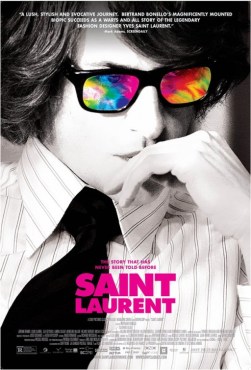
Bertrand Bonello goes to war with the biopic genre in “Saint Laurent,” his portrait of iconoclastic French fashion icon Yves Saint Laurent. Anyone hoping for a highlight reel or a filmed version of his Wikipedia page need not apply here. In fact, prior to the final segment of the film, where an older incarnation of the designer appears and reflects back on his past, I would be hard pressed to name a single accomplishment of Saint Laurent.
In a sprawling yet highly constricted two and a half hour odyssey, Bonello (with the help of screenwriter Thomas Bidegain, a frequent collaborator with Jacques Audiard) presents scenes from Saint Laurent’s creative zenith of 1967-1976. Nothing shown meets conventional standards for worthiness of inclusion when portraying a “great man,” however. What plays out on screen in “Saint Laurent” often feels like the scenes that might immediately precede the big, important dramatic centerpieces of a flashier biopic.
The problem, though, is that these scenes sometimes feel selected with all the curated purpose of an iPod shuffle. Bonello directs many a great episode within “Saint Laurent,” but if these moments were tiles, they would not add up to a mosaic. In some sense, this is likely his aim by bucking the established conventions for treating real people in cinema. Can any life be reduced to some kind of contrived narrative?
The big problem of the film is that it never seems to be about anything. Bonello tightens the focus of time, but not necessarily the subject matters he sets out to cover. Is the film about his artistry? His business savvy? His success coinciding with some of the biggest French political crises of the modern era? His sexual libertinism with swinging lothario Jacques de Bascher (Louis Garrel)? Gaspard Ulliel embodies Saint Laurent with confidence, but Bonello far too often has his star just “be” instead of “do.”
Nonetheless, “Saint Laurent” amount to something radical and worthwhile by painting a titanic figure with evocative, rather than demonstrative, strokes. Bonello poses quite a challenge with his film, one that he might not solve here. Yet his call to redefine our ways of seeing public figures as human beings could inspire greatness in a keen filmmaker that can more cogently articulate a thesis or takeaway. B- /
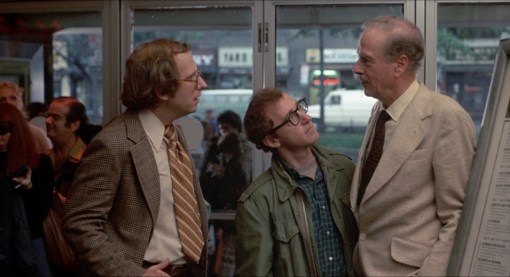
For my thousandth published review on Marshall and the Movies, I thought it would be appropriate to review an all-time favorite rather than just another disposable, forgettable current release. I ultimately settled on what could very well be my #1, Woody Allen’s “Annie Hall.” I wrote this piece as an application for the Telluride Film Festival’s student symposium last year; the prompt was, “If you were being sent into the distant future, and you could take just one film with you, what would you take, and why?”
If I were sent into the distant future with only one film, there is no question in my mind that I would bring a copy of Woody Allen’s “Annie Hall.” I cannot think of another film that better encapsulates all the potential of cinema. If film had ceased to exist in this hypothetical future society, “Annie Hall” could single-handedly regenerate the art form and produce a remarkable diversity of movies in the process.
As the late Roger Ebert stated, “Every great film should seem new every time you see it,” and “Annie Hall” can be watched through any number of lenses producing wildly different viewing experiences. Allen brilliantly builds in many layers to his film, allowing it to speak to anyone who approaches it.
“Annie Hall” is not so esoteric as to preclude it from functioning as entertainment; someone would have to be quite a stoic not to enjoy the misadventures in love of Allen’s Alvy Singer and Diane Keaton’s Annie Hall. Watching Annie swerve dangerously through traffic or Alvy sneeze away cocaine is undeniably enjoyable when seeing it for the first or fiftieth time.
Yet “Annie Hall” is most certainly not limited to this dimension of pure diversion. Allen, like many before him, recognizes that the possibilities for film to exist as art are manifold. Rather than confine his film to one narrow definition of what he believes cinema to be, Allen experiments with how they can interact in a brilliant pastiche that serves as a valentine to all the pioneers before him and a template for all those after him. “Annie Hall” explores many different styles of filmmaking, employing each when appropriate to convey his message and somehow maintaining cohesiveness.
What Allen pieces together in “Annie Hall” is not merely the story of Alvy and Annie but also the story of how cinema can satisfy the creative impulse. To him, film can function as a second draft of history, a way of commenting on the clarity that can be achieved through art but proves unattainable in life itself. Throughout “Annie Hall,” characters literally revisit their past in their present states, both as passive observers and active participants. By employing this technique, Allen explicitly demonstrates the retrospective qualities of film, exposing it as a tool for grappling with our own histories.
He further reveals the abstract qualities of film by visualizing that which is often relegated to the realm of the conceptual. “Annie Hall” subversively undermines the notion that film can only present the visible surface of photographic reality. Rather than telling us that Annie is having an out-of-body experience during sex, Allen shows us by literally having Annie’s “spirit” leave her physical body and observe from outside the act.
Moreover, he transforms the cinematic image of Alvy to represent the Hasidic Jew that he believes Annie’s family sees when they look at him and turns Annie herself into the animated Wicked Queen for whom Alvy subconsciously perceives himself to be falling.
Perhaps most strikingly, Allen presents subtitles that contradict the words uttered by Alvy and Annie, instead expressing their hidden innermost emotions. Film, in the hands of an astute observer like Woody Allen, becomes an incredibly powerful tool to comprehend the complexities of human communication and interaction.
However, for all the technical and intellectual proficiency present in “Annie Hall,” its greatest strength might very well be the simplicity of its story. It wields some of cinema’s greatest artistic weapons dexterously, but the film is also a beautiful tale about two fully realized characters navigating the treacherous straits of life and love. Humans have always told narratives to make sense of the world, and film is just the latest means to express that need. “Annie Hall” is a brilliant manual for grappling with reality, making its case so effectively through creative exploration of film’s capabilities as a medium.
Struggle is an inevitable, unavoidable part of creating art and living life. But in Bill Pohlad’s “Love & Mercy,” an unconventional two-panel biopic of Beach Boys lead singer Brian Wilson, struggle is practically the whole story. Rather than running through his entire life, writers Oren Moverman and Michael Alan Lerner take a pair of cross-sections featuring Wilson’s breakthroughs and breakdowns.
The 1960s Wilson, as played by Paul Dano, struggles to break his band out of their disingenuous surfer boy marketing gimmick. To do so, he sets out to create a record that will redefine the capabilities of rock and make The Beatles quiver. Observing Wilson hard at work fine-tuning the iconic tracks of the Pet Sounds album, which includes such staples as “God Only Knows” and “Wouldn’t It Be Nice,” provides an undeniably joyous sonic rush. (It was almost enough to make me forget I was watching Paul Dano.)
Fast-forward to the 1980s, and a middle-aged and overmedicated Wilson is now played by John Cusack. The lights are on, but the person at home is hard to pin down. “Love & Mercy” might be the first time since “Being John Malkovich” that Cusack does not play some variation of himself, and it proves devastating to watch a helpless soul squirm under the oppressive thumb of exploitative psychologist Eugene Landy (Paul Giamatti, angry as ever). Thanks to some tender love and assistance from the kindly soul of Cadillac saleswoman Melinda Ledbetter, played by an absolutely ethereal Elizabeth Banks, Wilson finally manages to get some relief.
Prior to “Spy,” Melissa McCarthy was one lumbering burlesque of a physical performance away from entering Adam Sandler or Will Ferrell territory. This land, beyond typecasting, is a dump of sneering self-parody churned out at breakneck speed. After breakout success in “Bridesmaids,” roles in “Identity Thief” and “Tammy” reduced her to little more than a one-dimensional punchline (not to mention a bit of a punching bag as well).
Thankfully, maestro Paul Feig arrives with Susan Cooper, a part that provides a well-timed reminder of McCarthy’s remarkable comic agility and versatility. As an unlikely secret agent tracking down a rogue nuclear weapon on the black market, Susan often has to shift gears into new – and often unflattering – identities on the fly. While playing a character who goes from shy and sheepish to brash and outspoken within a matter of minutes, McCarthy never appears anything less than completely confident.
Unfortunately, Feig’s script for “Spy” reserves all the surprises and range for its star. In his past collaborations with Melissa McCarthy, Feig worked with screenplays from other comediennes: Kristen Wiig and Annie Mumolo (“Bridesmaids”) as well as Katie Dippold (“The Heat“). When tasked with creating the humor he has to orchestrate, Feig falls into rather predictable patterns that often feel one-note.
In great works of narrative storytelling, an expertly crafted first line should set the tone for what lies ahead. Whether “It was the best of times, it was the worst of times” or “In my younger and more vulnerable years my father gave me some advice…,” these purposeful pieces of prose prepared readers properly.
The same goes for film, too. And while the filmic brand extension of television’s “Entourage” is far from great, its creator Doug Ellin certainly knew how to kick off the movie. As Vincent Chase’s posse approaches his supermodel-filled yacht off the coast of Ibiza, Johnny “Drama” giddily remarks, “I could jerk it before we get there!”
The whole movie resembles masturbation, a series of self-serving pleasures delivered on demand. For an hour and 45 minutes, a pornographically extreme string of celebrity cameos decks out a contemporary “Lifestyles of the Rich and Famous.” Ellin reunites the entourage for an orgy of wealth, fame, and fully exposed breasts. So, in essence, nothing changed from show to movie.
I am certainly not immune to the pleasures provided by such a film, but I have to acknowledge that such a masturbatory form of pleasure is juvenile, easy, and even a little lazy. It’s hollow. Ellin presents no compelling reason to resuscitate these dormant characters except to have them revel in the same debauched antics that occupied them for eight seasons (and are a mere Google search away for everyone else).
George Miller certainly trusts his audience. 30 years after the last entry in his cult franchise, he throws us into a fully realized dystopian society with little spoon-fed exposition in “Mad Max: Fury Road.” It’s a nice gear shift in the Marvel Cinematic Universe age, where the minutiae of everything require spelling out in excruciatingly explicit terms.
He also respects his audience, giving them plenty of what they want: high-octane, well-choreographed motorized action. Miller, no doubt aided by the spectacular lensing of John Seale and the precise editing rhythms of Jason Ballantine, conducts an orchestra of crashing contraptions in the desert sands. These complex sequences flow effortlessly, and only when the following scene began in silence did I realize how rapidly and loudly Miller made my heart beat.
These thrilling sequences also gain some emotional heft since “Mad Max: Fury Road” gives them actual human stakes within the narrative. For once, a film does not equate adrenaline with testosterone – “men’s rights” activists be damned. Despite the character’s name in the title, Tom Hardy’s Max Rockatansky hardly sits in the driver’s seat to guide the film forward. That honor belongs to Charlize Theron’s Furiosa, a warrior fleeing the tyrannical kingdom to lead several of the leader’s concubines to freedom.
Strength through silence is a fairly common method for males to assert dominance on screen, though it only works partially for Hardy here. Perhaps my limited knowledge of “Mad Max” lore plays into this, but Max’s ambivalence seems rooted in a lack of character development and background. Miller doles out flashes of Max’s clairvoyant mental state here and there, although the uninitiated like myself are left to wonder if they are alluding to the past or setting up future installments.
With Eddie Redmayne now in official talks for “Fantastic Beasts and Where to Find Them,” a spinoff of the “Harry Potter” series, I figured now was as good a time as ever to turn a long-gestating list into a published post. (This has been a note in my iPhone for almost four years now!)
It is easy to forget that the “Harry Potter” series, among its many accomplishments, offered fine roles to a number of talented British thespians. Pooled together, the cast has amassed 31 Oscar nominations – a number that seems mightly low when you consider the names who graced the eight films. Kenneth Branagh. Julie Christie. Gary Oldman. Ralph Fiennes. Maggie Smith. Emma Thompson. (Alan Rickman is not included because he has somehow never been nominated for an Oscar.)
Recently, a number of stars have expressed remorse that they were not a part of the series. Martin Freeman got sad about it with Jimmy Fallon…
…while Eddie Redmayne briefly lamented it before launching into a hilarious story about bombing his audition for “The Hobbit” films.
But just because it did not happen for Redmayne does not mean I cannot imagine a few recastings that incorporates some more talented British actors. Maybe some roles will have to make cameos in the new trilogy, after all! And, heaven forbid, Warner Bros. might actually reboot the original books one day.
So, as the title of the list suggests, here are 10 British actors overlooked by the “Harry Potter” casting directors and the roles they could have played brilliantly.
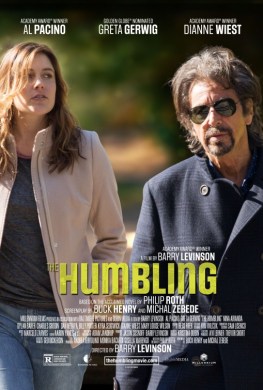
Imagine the script for “Birdman” fell into the hands of Woody Allen and then got made by a lesser director, and you essentially have what plays out in “The Humbling.” Al Pacino, seemingly on a preemptive farewell tour, stars as Simon Axler, a self-absorbed chatterbox of a thespian who starts seeing his craft and the world a little too honestly. Naturally, he cracks up.
But don’t worry, in the most Allenesque twist, the neurotic protagonist gets a salvo in the form of a friend’s younger daughter, Greta Gerwig’s Pegeen Mike Stapleford. She reenters Simon’s frazzled life post-breakdown as a self-identified lesbian, but that does not last long as she finds herself seduced and destroyed by the sexual prowess of an older man that can “educate” her.
No matter what you think about Woody Allen’s off-screen relations with women of a certain age, he’s often able to present it as fairly normal in his films. (Or at the very least, it seems like a non-issue.) In “The Humbling,” writers Buck Henry and Michal Zebede make the Pegeen and Simon relationship feel condescending, cocky, and perhaps even a little insensitive.
The film boasts any number of colorful characters parading across the screen, including Pegeen’s mother Carol, played with justified scorn by Dianne Wiest. But director Barry Levinson never seems to orchestrate this circus well, leaving the brunt of our attention directed towards Pegeen and Simon’s core story. Normally, drawing attention towards the centerpiece of the film would be a good thing, but it only compounds the problems for “The Humbling.” C /
“I’m really starved for a new Kevin Hart vehicle,” said no one in the year 2015. But the market gets what it wants, so moviegoers get five Kevin Hart films in fifteen months. The fourth of these to see release, “The Wedding Ringer,” will likely only feel satisfying for those only getting their first piece of Hart.
This uninspired, unimpressive comedy takes the premise of “I Love You, Man” and somehow manages to make it a dull slog. Josh Gad, a hilarious physical comedian in his own right, gets neutered of his talents to play the friendless schlub Doug Harris. With just a week before his wedding to the gorgeous and shallow Gretchen (Kaley Cuoco-Sweeting), Doug has unbelievably neglected to procure a single groomsman. A mistake that big takes him, in our eyes, from lovable loser to indisputable idiot.
Thankfully, their wedding planner steps in and suggests hiring a boutique outfit run by Hart’s Jimmy Callahan: The Best Man, Inc. For a nice fee, Jimmy can throw together a fake wedding party and successfully fool all the guests into thinking his actors are actually lifelong friends of the groom. The enormity of Doug’s request, however, hardly provides a proportionate helping of laughs. Jimmy’s merry band of misfits provides more cringes than laughs, and any hilarity comes with a side order of guilt or shame.
Hart and Gad mostly find themselves reduced to gags about their distinctive body types and voices, a real waste of their considerable comedic gifts. The lazy scripting from Jeremy Garelick and Jay Lavender certainly gives them no material to help them shine. When all is said and done, whether “The Wedding Ringer” is a bigger waste of time for its stars or its audience might be the only pressing question raised. (If you can stick it out until the end, though, fans of TV’s “Lost” will get the last – and biggest – laugh.) C /
In Emmanuelle Bercot’s road trip drama “On My Way,” the viewer gets treated to not just one but two separate automotive journeys with Catherine Deneuve’s aging beauty queen Bettie. Each has its own narrative arc with separate, compartmentalized motivations. Bercot, working from a script she co-wrote with Jérôme Tonnerre, pivots from the first to the second so suddenly that it takes a while to realize the film has entered a new phase.
The two sections of “On My Way” feel so tenuously connected that Bercot and Tonnerre might as well have Scotch taped them together. The first section, a short film where Bettie walks out on her responsibilities and duties to find cigarettes (but really a deeper meaning to her life), makes for the kind of pondering philosophical piece rarely thrown to actresses of Deneuve’s age. Though, to be fair, those kinds of movies scarcely get made anyways.
Then, the bulk of “On My Way” follows Bettie extending her road trip to transport her grandson, born to an estranged daughter, to visit the paternal grandfather. In this section, which could stand alone as its own curt narrative, Bercot hits all the expected beats of the family drama with little to no surprises up her sleeve. Nothing ever falls flat, yet the film inspires ambivalence since nothing soars.
“On My Way” essentially provides two movies for the price of one, though the ticket is hardly worth buying unless it’s cheap. The film’s first thirty minutes of introspection might have been half-decent had they not been followed up by over an hour of a rather standard issue story. C+ /
Seeing as how she got her start on “Saturday Night Live,” Kristen Wiig is certainly no stranger to satire. While her work on that topical comedy show often brilliantly pointed out human error and ridicule, most of it pales in comparison to her scathingly incisive new film, “Welcome to Me.” Eliot Laurence’s script cuts deep to probe some of our society’s deepest insecurities and fears.
He pinpoints that these collective anxieties find assuaging in the self-help gospel preached by daytime talk show hosts like Oprah Winfrey. Take away the free car giveaways, though, and the program really just sold herself as a product. (Who other than Oprah has ever graced the cover of O Magazine?) “Welcome to Me” takes this narcissism to its logical extreme, following Wiig’s Alice Klieg as she uses her millions in lottery earnings to mount a show about her, for her.
Her talk show/broadcasted therapy session is not made by her, however. To get on the air and look impressive, Alice requires the talents of producers at a local television studio. At Live Alchemy, she finds the perfect blend of dead airspace, crushing company debt, and morally bankrupt executives willing to indulge her every desire.
Led by the slimily obsequious Rich (James Marsden), the station caters to each of Alice’s increasingly bizarre whims, even when they cross the line into literal slander and figurative self-flagellation. It’s not hard to imagine similar board room meetings taking place at E! debating the Kardashian family. Alice suffers from a clinically diagnosed personality disorder and manifest her symptoms rather clearly, yet no employee seems willing to protect her from herself so long as the checks keep cashing. Consider it a less violent first cousin to “Nightcrawler” (or dare I even say, the golden goose that is “Network”).
In a matter of days, Todd Haynes will unveil his latest film under the bright lights of the Cannes Film Festival’s red carpet. Just a quarter of a century ago, however, Haynes operated on the fringes of cinematic culture but emerged onto the indie stage with a bang thanks to “Poison.” This early Sundance winner sparked what critics often call the New Queer Cinema with its fearless embrace of gay themes and stories.
In a way, “Poison” almost feels like it merits inclusion under the banner of my “Classics Corner” category since the film is such a touchstone for decades of audacious work. While it assumes the status of a revered cultural object to knowledgable viewers, “Poison” still works as a pick for my “F.I.L.M. of the Week” (which stands for First-Class, Independent Little-Known Movie). Decades later, this artistic triumph still maintains an edginess and avant-garde aura about it.
Haynes tells three tales in one with “Poison,” each taking place in a different era and involving different characters. They are not short films, either; he intercuts them with increasing frequency and rapidity once he establishes their tempo. (Not to be outdone, Haynes would later weave together double the narratives in his unconventional Bob Dylan biopic “I’m Not There.”) While every section has its own aesthetic and genre styling, too, Haynes does something renegade to disrupt our expectations.
All three threads running through “Poison” circle themes of alienation, repressed identity, violently passionate outbursts, and the lingering stigma of past incidents. Whether a scientist in a 1950s style pulp film discovering the key to sexuality, a prisoner in the 1910s trying to maintain a masculine facade, or a child in the 1980s only spoken about in vague anecdotes by those left reeling in the wake of his shocking violence, each fascinates with compulsion and repulsion in equal measure. To say much more spoils the sensation and the surprise, so just know that “Poison” is completely worth swallowing.
If you mentioned the phrase “my generation” to people my parents’ age (straddling the Baby Boomer/Generation X boundary), they might start humming that hopelessly catchy song by The Who. Ask millennials like myself what those two words signal and a combination groan and eye-roll will likely follow.
By this point, I have learned to take bulk criticism of people my age in stride, though biting my tongue on the gloom-and-doom predictions made about us does bother me quite a bit. So long as there have been independently minded youth, there have been an older vanguard of adults sneering at the perceived ruin brought about by change to the establishment. The lyrics may change over time, yet the melody remains the same.
“While We’re Young,” from writer/director Noah Baumbach, arrives whistling that tired tune fearing the slow-dawning apocalypse of those darned kids these days. What looked like a fascinating examination of intergenerational differences, rivalries, and friendships wound up playing like a cranky old relative or professor erecting a soapbox for themselves to rant about their monolithic conception of millennials.
Whether a running gag about a younger character not offering to pick up a check or Adam Horovitz’s Fletcher ranting about cell phone dependency, Baumbach barely conceals his personal disdain behind the veneer of his fictional creations. His stance seems to imply the twentysomethings of today are uniquely self-involved, duplicitous, and dishonorable. Has he forgotten that the Greatest Generation and the older end of the Baby Boomers said the same things about his cohort? Rather than let his age provide a vantage point of wisdom on the issues he explores, his advanced years appear only to ensconce his bitterness.
If the primary purpose of a documentary is to inform the viewer, then Robert Kenner’s “Merchants of Doubt” passes with flying colors. This blistering look at the semantic tactics used to stifle meaningful action on climate change and other matters of public health serves as a valuable toolkit to become a more critical consumer of the news. Not content to merely expose hypocrisy, Kenner provides the skills necessary for audiences to go out and see it themselves.
“Merchants of Doubt” begins by answering the when question, starting with the public relations firm Hill and Knowlton used dubiously ethical techniques to convince the American people that tobacco was not harmful or cancerous in the 1950s. This led to the creation of a “playbook” of sorts that was widely generalizable to other industries facing backlash towards their products from the scientific community.
Be it flame retardants or DDT, casting doubt on scientists – even amidst overwhelming consensus – has proven sadly effective for decades. The new golden goose of the movement, of course, is climate change and man-made global warming. Through the exploration of this specific cause célèbre, the why question gets addressed. It all comes back to preventing government regulation of industry, much of which comes from Soviet-hating Cold Warriors.
“Merchants of Doubt” gets perhaps most infuriating when it explores the who behind the scenes, starkly juxtaposing the intelligent but poorly communicative scientists like James Hansen with the enticing spinsters like Marc Morano. (The academic side clearly needs a lot more Bill Nye types!) Meanwhile, somewhere in between stands Naomi Oresekes, a historian of science who went through all the research on climate change and found zero dissenting opinions on the issue. Consensus was not just overwhelming; it was unanimous.
 Andrew Bujalski’s comedy “Results,” which revolves around a number of characters in the fitness business, recalls far too many of my own workouts. That is to say, it starts strong with a big burst of energy that fizzles out fairly quickly and then plods along at a moderate pace.
 Bertrand Bonello goes to war with the biopic genre in “
 Struggle is an inevitable, unavoidable part of creating art and living life. But in Bill Pohlad’s “
 Imagine the script for “
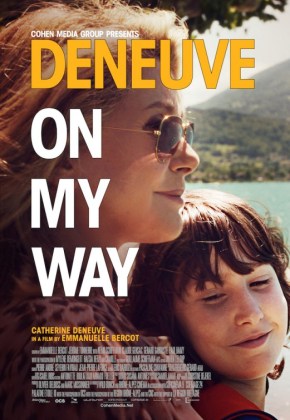 In Emmanuelle Bercot’s road trip drama “
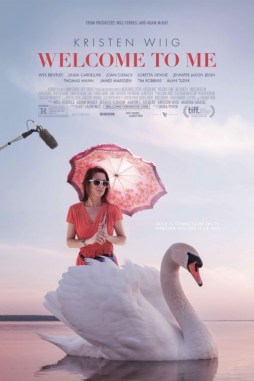 Seeing as how she got her start on “Saturday Night Live,” Kristen Wiig is certainly no stranger to satire. While her work on that topical comedy show often brilliantly pointed out human error and ridicule, most of it pales in comparison to her scathingly incisive new film, “
 In a matter of days, Todd Haynes will unveil his latest film under the bright lights of the Cannes Film Festival’s red carpet. Just a quarter of a century ago, however, Haynes operated on the fringes of cinematic culture but emerged onto the indie stage with a bang thanks to “Poison.” This early Sundance winner sparked what critics often call the New Queer Cinema with its fearless embrace of gay themes and stories.
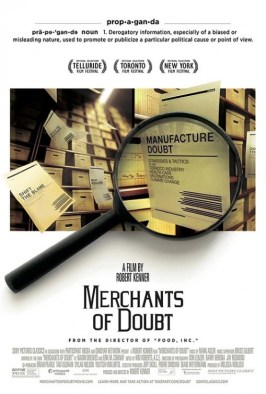 If the primary purpose of a documentary is to inform the viewer, then Robert Kenner’s “

 Marshall and the Movies
Recent Comments