REVIEW: Contagion

3 01 2012

While talking to a friend who was on the fence about seeing “Contagion,” I threw out the following selling point without really even thinking: “It’s a Steven Soderbergh movie.”  Then I recoiled for a second and actually thought about what that meant.  Granted, I haven’t seen his watershed indie “Sex, Lies & Videotape,” but when I look back at his filmography, I wouldn’t label many of them directorial triumphs.  “The Informant!” succeeds mostly because of Matt Damon, “Erin Brockovich” is 100% Julia Roberts, and the slickness of the “Ocean’s” series is what made them popular.  “Traffic” is, I suppose, although I don’t think I would recommend that.

So a Soderbergh movie with a cast of eight Oscar nominees (so many that two didn’t even make the poster) had no shot at being a director’s movie … or so I thought.  Surprisingly, this is a movie where Steven Soderbergh is the biggest and most brightly shining of all the stars.  He’s in total control of this vehicle, setting the mood from the first frame and then keeping it an even-keeled movie even when Scott Z. Burns’ script goes a little haywire.

In a time where hyperlink cinema has become a hackneyed plot device, Soderbergh, one of the pioneers of the style with “Traffic,” reminds us why it’s even around in the first place.  These stories can be linked across countries because technology and globalization has made us linked into a common destiny. Yet in the decade since “Traffic,” several events have linked us as well: 9/11 and various disease threats, such as SARS and the swine flu scare.  A thin thread of paranoia connects us all, and Soderbergh gently reveals to us that this link exists in the opening stages of the film.  And then he proceeds to vibrate that thread at pulse-pounding frequencies with his unflinching realism to then make sure we feel that uncomfortable pit in our stomach every single second of the film.

Read the rest of this entry »


REVIEW: New Year’s Eve

2 01 2012

What were you doing this new year’s eve?  I hope you were celebrating with those you love or just celebrating in general.  But if you happened to be at the movie theater, I pray that you were nowhere near the egregious load of crap disguised as a movie called “New Year’s Eve.”  If you were one of those looking to get in the holiday spirit, I surmise you walked out not blissful for the year to come but rather disgusted that movies like this are allowed to exist.

Only see the movie for the following reasons:

1. You for some reason like to watch bad actors doing bad acting.  Yes, Katherine Heigl, you should not have spit in Judd Apatow’s face because he actually gave you a multi-dimensional character.  Now, enjoy being stuck in movies like this and “Life As We Know It” for the rest of your life.  Zac Efron … it’s official, your glory days were in the “High School Musical” era.  And in case you need a reminder, many musicians can’t act – looking at you, Ludacris and Jon Bon Jovi.  Oh, and Lea Michele too, who somehow to forgot how to act between “Spring Awakening” and “New Year’s Eve,” picking up how to be a gratingly obnoxious diva.  (Wait, she got that from “Glee!”  Thanks a lot, Ryan Murphy…)

2. You for some reason like to watch good actors doing bad acting.  Can you count the Oscar wins and nominations on this poster?  13 Oscar nominations and 5 wins.  While we can’t get the Academy to reclaim the statues (and indeed they shouldn’t), we as a public can take away their credibility and prestige.  I just don’t understand why Robert DeNiro can’t seem to stop the out-of-control downward spiral that is his career.  Strangely enough, the most unbearable members of the cast is a horserace between two-time Oscar champion Hilary Swank and three-time Oscar nominee Michelle Pfeiffer.  Any good will for a career comeback after “Hairspray” just went down the drain.

Read the rest of this entry »


REVIEW: The Girl with the Dragon Tattoo (2011)

1 01 2012

Dragon TattooWhile on the path to triumphant Oscar glory last year, Aaron Sorkin made the wise observation that no matter what movie he chose to do next, it would always be seen as “the movie after ‘The Social Network.’” The same could be said for director David Fincher, snubbed of a much-deserved Oscar for a movie he clearly crafted with an intricate and delicate precision. “The Girl with the Dragon Tattoo” is no different as Fincher’s immaculate visual sensibilities dazzle the eye consistently for over two and a half hours; however, it suffers because of its placement in the director’s canon.

Had it preceded the masterpiece rather than succeeded it, there would probably be a river of praise flowing about his adaptation of Stieg Larsson’s international bestseller. But the specter of Mark Zuckerberg lurks insidiously like an elephant in the theater, making any viewer familiar with Fincher’s work consistently aware of the fact that something is keeping the movie from being truly great. Never is there that sense of jaw-dropping, mind-blowing state of total awe that the director has inspired so many times in his previous features. “The Girl with the Dragon Tattoo” may be his first movie that fails to live up to the promise of its trailer. (To be fair, Fincher’s movies always seem to have the BEST trailers.)

That’s not to say there isn’t plenty to marvel at in the movie. The story is incredibly engaging, and it gets a great visceral charge from Steven Zaillian’s faithful script and Fincher’s knack for palatable sadism. Taking a 700-page book and compressing into a single movie is no simple task, and “The Girl with the Dragon Tattoo” is particularly dense on the page with its labyrinthine family structures, concurrent narrative arcs, and taut mystery. Whether it came from Zaillian in the writing or Fincher with editors Kirk Baxter and Angus Wall in the cutting room, the pacing is a marvel of control, never bloated or convoluted. The 158 minutes go by very quickly as the plot moves along at a nice, even clip.

Read the rest of this entry »


It was the best of times … 2011

31 12 2011

As the few minutes left in 2011 quickly wane, I wanted to reflect on all the good that has come from this trying year of 2011.  As Lester Burnham said in “American Beauty” – and I quoted on my senior page in the yearbook – it’s hard to stay mad when there’s so much beauty in the world.

No matter the general consensus of film in a year (and I don’t think it takes an expert to tell you this wasn’t a stellar one), the top 10 list is a reminder to all critics and readers that there will always be something to celebrate.  Even amidst all the chaos of the year, we found reasons to be happy … and thus a way to be happy.

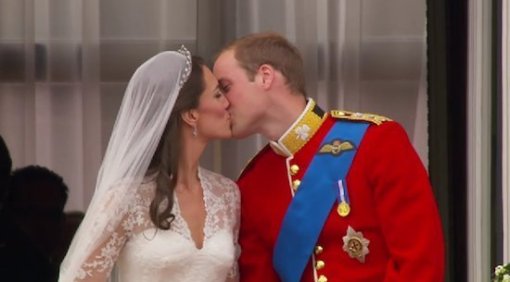
Much was said about high profile divorces – Demi and Ashton, Sinead O’Connor, Kim Kardashian – but the whole world tuned in for the Royal Wedding.  Even with the American divorce rate soaring and half of all marriages are unable to last, it was love that brought us together.

Much was said about our military’s inefficacy in Iraq as we pulled out the last troops in December, but Seal Team Six gave Americans something to be proud of as they flawlessly took down the elusive Osama bin Laden.  Failure and cynicism may make for an interesting editorial page, but it was success that captured the attention and the heart of America.

Much was said about the dumbing down of youth with mindless blockbusters like “Transformers” grossing a billion dollars worldwide and mindless literature like “Twilight” flying off the shelves.  Yet the young generation – my generation – proved it was hardly an empty one by turning out in record numbers on the opening day of the final “Harry Potter” movie.  If you couldn’t feel a real magic from the movie, you had to take comfort in seeing that the experiences of reading a book and going to a movie theater, thought be many to be endangered, were alive and well.

So while our president may have abandoned hope and change for 2012, I, for one, am full of it.  I am confident that all will pan out for the future, especially given how willing filmmakers were in 2011 to tackle some of the toughest issues facing our society.  In my top 10, you will see movies committed to showing us how to live, how to love, and – most importantly – how to change.  Like Owen Wilson’s Gil Pender from “Midnight in Paris,” living in the past only works as a fantasy.  We have to live in the now; we have to face its challenges; we have to accept pain as a natural part of progress.

So, without further ado, here were the 10 best movies I saw in 2011:

Read the rest of this entry »


2011 … It was the worst of times.

31 12 2011

On New Year’s Eve, this year as always, we stand teetering unevenly between the past and the future – one eye looking forward, the other looking back.  However, this particular day more than any in recent history, people seem to be casting all sight and all hope towards the future because 2011 brought them more pain than pleasure.  Indeed, while there was plenty to celebrate, this year seemed to highlight the worst in all of us, emphasizing our shortcomings rather than our strengths, reminding us that we could be better … but for some reason we weren’t.

Politically, the year started with such promise as we looked to put an end to inflammatory and hateful dialogue in the wake of the horrific shooting in Tuscon that nearly took the life of Arizona congresswoman Gabrielle Giffords.  In a horrifyingly ironic twist, Sarah Palin had put her district on a map with a shotgun sight on it a few months earlier, drawing attention to the overuse of words like murder and kill in the vernacular.  The tragedy shamed us all, although apparently not nearly enough.

In this age of uncertainty, Washington moved towards its idealogical poles, only drawing attention to their vast differences instead of our many similarities.  We are all committed to having a government that functions (and functions with less debt), yet the parts nearly came to a screeching halt as politicians disagreed as to the machine’s output.  We all want to get out of this economic slump, but the inability to find common ground may have only added to the problem.  And amidst it all, you heard the same kind of hateful speech that we wanted to eradicate back in January.  Much of it was directed at the Tea Party: Rep. Maxine Waters said they “can go straight to hell,” Vice-President Joe Biden called them “terrorists,” and perhaps worst of all, Teamsters President Jimmy Hoffa issued a rallying cry to “take the sons of b*tches out.”  We could be better … but for some reason we weren’t.

It was also a year of scandals that highlighted the inability of men to handle the power granted them by society.  Rep. Anthony Weiner was forced to resign after moronically tweeting nude pictures of himself to young women (the icing on the cake was his wife’s pregnancy coming shortly thereafter).  It likely went unnoticed amidst the debt ceiling drama, but Rep. David Wu also vacated his position after an alleged sexual assault.

The most sickening, though, was the Penn State child sex abuse drama that resulted in the termination of much of the football staff including the legendary coach Joe Paterno.  As if 2011 needed any other humiliating debacle, Jerry Sandusky’s use of his charity for at-risk children to fulfill his perverse sexual desires (read the grand jury report if you want to gag) makes everything else look tame.  Yes, even you, lovechild bearing governor Arnold Schwarzenegger, accused rapist and IMF head Dominique Strauss-Kahn, or philandering former Republican presidential hopeful Herman Cain.  It makes Charlie Sheen look like he actually could be #winning.  We could be better … but for some reason we weren’t.

Look at TIME’s Person of the Year and you can deduce the prevailing emotion of the year: anger.  Protesters throughout the world channeled their distrust and disapproval of government, of institutions, even of people into the streets.  Some were organized, like the Arab Spring through social media and around a particular message, such as Egypt’s demands that Mubarak needed to resign for the sake of freedom and posterity.  Others, like Occupy Wall Street and its various offshoots, just inspired people to bring whatever grievance they had in a display of civil disobedience.  While the topics of income inequality, corporate greed, and the government influence of the financial sector floated into mainstream conversation, the lack of a unified goal has led to frustration, confusion, and inefficacy.  In America, anger has just bred more anger.

And in the tradition of societal tumult, we look for a scapegoat.  For some it was John Boehner’s Congress.  Others blamed President Obama.  But during the summer of our discontent, Americans found an unlikely figure to project their uncertainty and insecurity onto: Casey Anthony, the Florida mother accused of murdering her young daughter.  Here was someone that represented everything wrong with the country – neglecting her duties, failing her children, squelching the possibility of a bright future – yet ironically, she was deemed innocent.

Cue everyone on Facebook and Twitter screaming in all caps “CASEY ANTHONY IS SO GUILTY!”  No one wanted justice, they wanted blood.  An eye for an eye, the perpetrator for the victim.  That misplaced anger showed up once again at Penn State, where students rioted in support of their beloved Coach Paterno, whom they believed to be collateral damage in the fallout of the scandal.  Yet if they had really listened, they would have known that Paterno had not called the police when directly given the information of Sandusky’s sexual misconduct in his facilities.  We could be better … but for some reason we weren’t.

So why are you reading this on Marshall and the Movies?  You probably could have read all the above on CNN.  For one, I have firm belief in the ability of the history (the societal narrative) to affect the biography (the personal narrative), so everything from the shameful scandals to the angry Americans to the partial politics played a role in how we watched (or didn’t watch) movies and how they reflected us.

It was a year of intelligent apocalyptic movies, on a global scale by way of storms (“Take Shelter”), viruses (“Contagion”), planetary collisions (“Melancholia”), technological manipulation (“Rise of the Planet of the Apes”), and financial meltdown (“Margin Call”), all of which tied into the anxieties of living in the now.

There was also an abundance of movies tying into non-apocalyptic but hardly apocryphal personal crises.  Much of it centered around loss  – the loss of a family member (“The Descendants,” “Super 8”), the loss of health (“50/50”), the loss of a job (“Everything Must Go,” “Conan O’Brien Can’t Stop”), or the loss of perspective (“Martha Marcy May Marlene,” “The Beaver”).

However, plenty of these catalysts for change are the result of society, be they from industrial shifts (“The Artist,” “Hugo”), the impact of digital culture (“Shame,” “Page One”), the fallout of economic downturn (“Win Win”), an unfair playing field (“Moneyball”), hatred (“The Girl with the Dragon Tattoo,” “In a Better World”), injustice (“The Help,” “Weekend”), or a general loss of faith in an institution (“Higher Ground, “The Ides of March”).

Just as the movies had a tumultuous relationship with society in 2011, society had a tumultuous relationship with the movies.  Revenues fell again as ticket sales were the lowest in 15 years; you know, when Tom Cruise suited up as Ethan Hunt for the first “Mission: Impossible” movie, “Independence Day” ruled the box office, and “Super 8” star Elle Fanning had yet to be born.  Why so low?  Look to the same distrust of corporations that moved the Occupiers to New York’s Zuccotti Park.

Just like “Inside Job” showed us that the banks scammed America, the preponderance of 3D revealed to most moviegoers that the technology was being used less for art (like in “Hugo”) and more for increasing profit margins (like for “Captain America”).  As Grady Smith of Entertainment Weekly put it, “Consumers balk at the idea of having to pay a regular ticket price PLUS an additional $3.50 for an experience that doesn’t often provide much more than a headache.”  With the growing precariousness of the country’s economic situation, the consciousness of high ticket prices might have kept the public at large from seeing non-essential movies in the theater.

There also seemed to be a paradoxical audience reaction to sequels in 2011 (as if there already wasn’t enough confusion this year).  The top seven movies of the year were all sequels, and the rest of the top ten belonged to some larger franchise.  Only at #12 (“Bridesmaids”) do you get anything original.  However, this sequel success is double-edged as only the last “Harry Potter” film, “Fast Five,” and “Mission: Impossible – Ghost Protocol” were able to outdo their predecessors.  Some fell just short, while others, particularly animated sequels like “Alvin and the Chipmunks” and “Happy Feet” severely underwhelmed.  The success of original films like “Inception” seems to have done little to phase the studio executives, one of which said that spectacle over story is what they count on for success.  Unfortunately, audiences have wised up thanks to filmmakers like Nolan, and traditional strategies now seem more and more out of touch.

Finally, before I reach my 10 worst movies of the year, which are awful for lack of creativity, purpose, ambition, and cohesion, I wanted to end this post on the worst of 2011 on a personal note.  After nearly 18 months of posting every day, I largely fell off the map this year.  I returned to blog all of summer, but in the spring I let festivities of high school graduation overpower my will to blog; similarly in the fall, I let the transition to college life get the best of my writing capabilities.  I never stopped watching movies (I saw a whopping 114 released this year). Hopwever, I did stop sharing my thoughts about them and interacting with the community at large, making all that time spent in front of the screen self-serving.  I could have been better, but I wasn’t.

But just because I wasn’t better doesn’t mean I can’t be better.  Mark my words, I will be better in 2012.  Hopefully, we all will be.

Read the rest of this entry »


Oscar Moment – First Predictions for 2011

29 11 2011

Best Picture

  1. The Artist
  2. War Horse
  3. Midnight in Paris
  4. Extremely Loud and Incredibly Close
  5. The Descendants
  6. The Help
  7. The Girl with the Dragon Tattoo
  8. Moneyball
  9. Hugo
  10. The Tree of Life

If we thought 2010 was a year that people most needed cinema to make them feel good, 2011 looks to be even more so.  That’s why it just seems right for a movie like ‘The Artist” to sweep in and take Best Picture.  It’s got the happy factor, the B&W factor, the silent film factor, and the nostalgia factor all going for it.  I have yet to see it, but even if I were somehow not to like it, I could still be content with this winning Best Picture because it would affirm the power of the prize.  When they reward risky, out-of-the-box movies, Hollywood responds by thinking even more creatively.  When they reward movies like “The King’s Speech,” studios start focus grouping the hell out of their contenders to perfectly calculate Oscar success.

There are other narratives to reckon with too, however.  Perennial Oscar favorite Steven Spielberg charges back onto the scene with “War Horse,” which coupled with box office success could wallop a hard knockout punch.  If audiences and critics decide it’s “Saving Private Ryan” good, I’ll have to seriously reevaluate.  Then there’s also Woody Allen’s “Midnight in Paris,” the biggest hit ever from the workhorse director.  It’s fun and funny while still making you think – the best of both Oscar worlds, if you will.  Right now, I can’t see Best Picture going to any other movie than these three.

However, don’t count out “Extremely Loud & Incredibly Close.”  It has yet to screen for anyone, but that’s one heck of a book.  The delay makes pundits uneasy, but with AMPAS golden boy Stephen Daldry at the helm, Eric Roth with the pen, and a Tom Hanks-Sandra Bullock combo on screen, this would have to be a total bomb not to score with them.

I also expect “The Help” and “The Descendants” to find enough of a base of support to garner a nomination.  And I can’t help but feel that people are severely underestimating “The Girl with the Dragon Tattoo.”  It’s David Fincher.

On the fringe, though, are three movies that could easily break into the field – Martin Scorsese’s “Hugo,” Bennett Miller’s “Moneyball,” and Terrence Malick’s “The Tree of Life.”  Each have their weaknesses, so we’ll just have to see how they hold up through precursor season.  That’s the fun of it!

Best Director

  1. Steven Spielberg, “War Horse”
  2. Woody Allen, “Midnight in Paris”
  3. Michael Hazanavicius, “The Artist”
  4. Stephen Daldry, “Extremely Loud and Incredibly Close”
  5. Alexander Payne, “The Descendants”

Here’s where ballot manipulation will start to muddle the waters.  Michael Hazanavicius, director of “The Artist,” is largely unknown, but Harvey Weinstein will have him making rounds on the circuit to cure lack of name recognition.  He got Tom Hooper a win last year at the expense of widely renowned David Fincher.  If “The Artist” appears headed for a sweep, it will have to take this category too.

But if “The Artist” and “War Horse” have the same group of fans, I see it likely that they honor the latter by voting for the iconic director to take home his third Academy Award for Best Director.  Woody Allen could also benefit from his legendary status, although I would bet they tip their hat to “Midnight in Paris” in the writing categories.  (As for the other two nominees, it’s never smart to bet against Payne or Daldry.)

Best Actor

  1. George Clooney, “The Descendants”
  2. Jean Dujardin, “The Artist”
  3. Brad Pitt, “Moneyball”
  4. Michael Fassbender, “Shame”
  5. Michael Shannon, “Take Shelter”

Can the “he’s a leading man, not a supporting actor” logic prevail to give George Clooney another Oscar?  I think that’s going to be the message from Fox Searchlight, and the starpower may be their only weapon to fend off the irresistible Jean Dujardin in “The Artist.”  I suspect it may already be down to these two, and wouldn’t it be exciting if we had another showdown like Penn-Rourke in 2008?

Meanwhile, I’m starting to think Brad Pitt is a lock for “Moneyball,” and Michael Fassbender’s daring performance in “Shame” will likely pick up some steam with release and exposure (no pun intended).  As for that final slot, I’m going daring and choosing Michael Shannon, who apparently turns in a very flashy performance in “Take Shelter” that I think might overpower Gary Oldman’s purportedly understated work in “Tinker Tailor Soldier Spy.”  But we’ll just have to see.

Best Actress

  1. Meryl Streep, “The Iron Lady”
  2. Rooney Mara, “The Girl with the Dragon Tattoo”
  3. Viola Davis, “The Help”
  4. Michelle Williams, “My Week with Marilyn”
  5. Glenn Close, “Albert Nobbs”

My gut tells me that Streep will take the day here and win her first Oscar in 30 years.  The role is baity enough, the time is right, we may have never appreciated Meryl more.  But the fact that the film won’t open to audiences until next year makes it hard to gain audience support.

That’s why her biggest competitors may be two women headlining huge commercial vehicles, Rooney Mara in “The Girl with the Dragon Tattoo” and Viola Davis in “The Help.”  While Davis has Oprah and a sentimental vote behind her, Mara may be a huge threat because Lisbeth Salander is an intense, grueling role that demands a tremendous amount of physical commitment.  And let’s not forget that Oscar likes his leading women young.

Michelle Williams could make a big surge if “My Week with Marilyn” becomes an audience favorite with expansion.  Ditto for Charlize Theron in “Young Adult,” who has been left off the charts in favor of Glenn Close in “Albert Nobbs.”  If it weren’t for her name and her passion for the project, I would have chosen Theron or Elizabeth Olsen in “Martha Marcy May Marlene” for that final slot.  But Roadside Attractions is going to need to work overtime to revive the Streep vs. Close dialectic this month because it died rather quickly.

Best Supporting Actor

  1. Christopher Plummer, “Beginners”
  2. Patton Oswalt, “Young Adult”
  3. Max von Sydow, “Extremely Loud and Incredibly Close”
  4. Jonah Hill, “Moneyball”
  5. Ben Kingsley, “Hugo”

I have absolutely no idea what to make of this field as everyone, except Plummer, could be totally out by next week.  Could the sentimental lifetime achievement faction of the Oscar voters shamelessly bare their teeth to honor the 81-year-old star?  At this point, that’s my best guess.  However, there could be another emerging storyline that will take over the Oscar narrative.

Could the lifetime achievement award be, in fact, for Max von Sydow in “Extremely Loud and Incredibly Close?”  I see it as extremely likely given that the movie definitely needs one acting nomination with the talent involved, and Bullock could end up falling off the radar.  Patton Oswalt in “Young Adult” could make a case for funnymen who don’t typically do very well in the category.

My last two picks are just educated guesses, more just flinging mud at the wall than anything.  If “Moneyball” is a homerun with Academy voters, Jonah Hill could find himself on base in the category.  Same with Ben Kingsley in “Hugo,” who seems to be emerging late as a serious contender, particularly if the critical masses adoring Scorsese’s latest sound off loudly for him and the movie.

Best Supporting Actress

  1. Bérénice Bejo, “The Artist”
  2. Octavia Spencer, “The Help”
  3. Sandra Bullock, “Extremely Loud and Incredibly Close”
  4. Shailene Woodley, “The Descendants”
  5. Carey Mulligan, “Shame”

I’m counting on big love for “The Artist” to make the unknown Bérénice Bejo an Academy Award winner.  Again, she has to battle unknown status, but her biggest challenger will likely be another unknown, Octavia Spencer in “The Help.”  Since “The Artist” is much more likely to take home the big prize, I think Bejo is more likely to ride on her film’s coattails to victory.  I’d hate to demean her with the term tack-on, but think Jennifer Connelly winning for “A Beautiful Mind” and Catherine Zeta-Jones winning for “Chicago.”  To justify Best Picture, maybe voters will decide it needs an acting win as well.

Two years after winning Best Actress for “The Blind Side,” Sandra Bullock looks to factor back into the Oscar scheme for “Extremely Loud and Incredibly Close.”  If Von Sydow isn’t showy enough, look for her to make a big rise simply due to the power associated with her name.  On the other hand, you have someone like Shailene Woodley who will likely ride in on the strength of her performance and the strength of her movie.  I don’t quite think her CV, consisting almost entirely of ABC Family’s “The Secret Life of the American Teenager,” is going to impress many voters.

For that last slot, I’ve picked Carey Mulligan in “Shame” over the much heralded performance of Vanessa Redgrave in “Coriolanus.”  I will most likely look back and call myself an idiot, but I just get the sinking sensation that people are not taking her seriously enough.  She reportedly bares it all, literally and figuratively, in a role that showcases the talents that wooed voters two years ago in “An Education.”  But just like last year, the picture is very, very unclear.

Best Original Screenplay

  1. Midnight in Paris
  2. The Artist
  3. Young Adult
  4. Win Win
  5. Martha Marcy May Marlene

It’s really a shame that even with the number of really impressive original screenplays this year, the Academy will likely settle for standard fare. I’m still counting on golden boy Woody Allen to pull through here, but if “The Artist” is poised for a sweep, I don’t see how it can not take an award for its writing.  Only three films in the past decade have taken Best Picture without a win in the Screenplay category.

As for the rest of the field, it could fall any number of ways.  I’d say the safest third slot would be for “Young Adult,” which is written by 2007 winner Diablo Cody.  But as for those last two movies, I just picked two of my favorites from this year in the prayer that they have a chance.  I can dream, can’t I?

Best Adapted Screenplay

  1. The Descendants
  2. Extremely Loud and Incredibly Close
  3. War Horse
  4. Moneyball
  5. The Girl with the Dragon Tattoo

Scribe Alexander Payne is an Academy darling, winner in 2004 for his adaptation of “Sideways” as well as nominee in 1999 for his work on the script for “Election.”  I think until otherwise informed, it’s not smart to bet against him.

But there are plenty of other Oscar winners vying for glory here.  Eric Roth, winner for “Forrest Gump” and nominee for three other films, is in the race with “Extremely Loud and Incredible Close.”  Jonathan Safran Foer’s book is quite eccentric and would be a quite a challenge to adapt; even if the movie doesn’t quite hit home with the Academy, I see a nomination here as practically inevitable.  “War Horse” is written by two previous nominees, and while the writing seems to be a lesser component of the movie, a nomination seems assured.

“Moneyball” is written by last year’s winner, Aaron Sorkin, as well as Steven Zaillian, winner in 1993 for his work on “Schindler’s List.”  Zaillian could even pull double duty as a nominee as I’m predicting, on a whim, that his adaptation of “The Girl with the Dragon Tattoo” will also factor into the race.


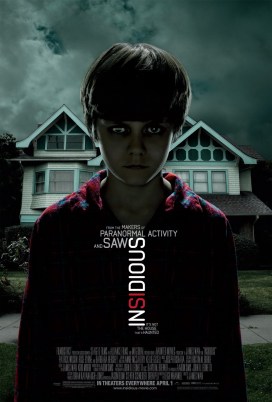
REVIEW: Insidious

13 10 2011

The only kind of horror that has any sort of power over me is ambiental terror, such as “The Exorcist,” “Rosemary’s Baby,” and for a modern example, “Paranormal Activity.”  Any hooligan can orchestrate something to jump out of an obscure spot as an eerie violin slowly vamps to a forte; it takes skill and artistry to craft a lingering sense of foreboding doom.  While “Insidious” would like to join this club, it really falls short of the mark on some basic levels.

It’s clearly aiming for “Exorcist”-level scares with the whole demonic child plot device.  Dalton Lambert winds up in a coma after a freak accident, throwing his grief-stricken parents (Patrick Wilson and Rose Byrne) into distress and panic.  When all sorts of strange and paranormal activities start to occur, they quickly blame the house.  But according to the advice of a spectral expert, the fault is not in their house but in Josh and Renai’s baby.  (Yes, I did just work in references to all three of the movies I mentioned in the opening paragraph.  I had to find some way to make this lackluster movie have some sort of memorable review.)

It won’t take me long to quickly sum up the major flaws of “Insidious” – the exposition is too prolonged and uneventful, the atmosphere is never well established, and the story takes multiple turns towards the ridiculous and absurd towards its finale.  It gets so bizarre that I think Tom Cruise and his Scientologist buddies would even call it far-fetched.  But at least it excels at doing what many sub-par horror movies have to settle for achieving: entertainment.  C+ / 


Classics Corner: It Happened One Night

12 10 2011

According to the American Film Institute, it’s the eighth funniest movie and third best romantic comedy ever.  The Library of Congress has added it to the National Film Registry of movies deemed “culturally, historically, or aesthetically significant.”  It was the first movie to win the “Big Five” Academy Awards: Best Picture, Director, Actor, Actress, and Screenplay.  By all measures, Frank Capra’s “It Happened One Night” is a movie for the books.

So then why was I so unaffected by it?  Is the movie really so seminal that it feels hackneyed and trite in retrospect?

My conclusion is yes, “It Happened One Night” is a movie that contributed so much to the medium of cinema that Frank Capra’s film itself looks so small in comparison.  The fact that the “opposites attract” premise is still the dominant plot point of romantic comedy over 75 years later should serve as testament enough to the movie’s influence.  While my lack of definitive cinematic knowledge prohibits me from declaring with certainty that this is the first movie to introduce the idea, I think the movie’s widespread industry and critical acclaim cemented that the formula was acceptable.

I wouldn’t DARE compare a Frank Capra movie to a horrible Jennifer Aniston movie, but I will say that “The Bounty Hunter” sure did rip off this classic.  The romantic comedy babe, played here by a star of the century, Claudette Colbert as Ellie Andrews, is a spoiled brat running away from her tyrannical father.  The hunk is the great Clark Gable as Peter Warne, a rogue reporter looking for a story … and finds one in her.  The story is amusing enough, but it’s very cut and dry.  I’m happy to call it generational differences because I sure can respect “It Happened One Night,” but that doesn’t mean I have to be head over heels for it.


REVIEW: Your Highness

11 10 2011

OK, don’t get me wrong, I can enjoy immature humor.  And I can be very amused and moved by James Franco.  And I love Danny McBride.  If you’ve read this site at all in the past year, then you know that I REALLY love Natalie Portman.  But man, oh man, did I hate “Your Highness!”

Every aspect of this movie reeks of an imbecilic juvenility, from the ridiculous high-concept to its poor execution.  The whole idea of the movie seems to have stemmed from McBride watching “A Knight’s Tale” when he was just a little too baked.  I’m sure with enough marijuana in your system, the idea of combining the raunchy comedy with the medieval epic sounded awesome.  Heck, it even sounded kind of funny in a synopsis and in a trailer.

But somewhere between McBride’s brain and my laptop screen, whatever connection “Your Highness” had to comedy was lost.  Instead, what I wasted $4 on iTunes for was a comedy in name only, something so void of laughter that I couldn’t even be amused or endeared by its ridiculous vulgarity.  The lack of effort put into the movie was apparent from the first scene when McBride broke his accent no less than five times, and the movie just continued to deteriorate from there.

I’m sorry, but Danny McBride just being Danny McBride isn’t funny; he needs a good script to make him that way.  I’m sorry, but James Franco playing dumb just doesn’t work when he’s done “Pineapple Express” already (and “127 Hours” too).  I’m sorry, but Natalie Portman, between this and “No Strings Attached” in 2011, should really just stay out of comedy altogether.  And I’m really sorry, Hollywood comedy gurus, but you can’t just whip out the phallus of a Minotaur for an easy laugh.  Believe it or not, you actually have to try.  Sorry to be the latest bearer of bad news.  D+ / 


REVIEW: Moneyball

10 10 2011

The sports movie is in a rut, I’ll just go ahead and say it.  When movies like “Warrior” receives almost unanimous acclaim and “The Blind Side” can get a Best Picture nomination, the genre is in need of an influx of creativity and ingenuity.  And what better movie to do that than Bennett Miller’s “Moneyball,” a movie that is actually about creativity and ingenuity?

Miller, along with screenwriters Aaron Sorkin and Steven Zaillian, pulls off a feat not unlike that accomplished by Billy Beane and the Oakland A’s: working within the framework of a failing system, they employ clever cinematic maneuvering and ingenuous thinking to create a fantastic societal and self-examination.  Michael Lewis’ non-fiction tome is about putting the brains back in the business of sports; Miller’s film is about one man trying to find his heart again in sports by using math as a means to achieve his long-sought satisfaction.  It may be that “Moneyball” uses sports only as a backdrop for its deeper, probing questions, something that wouldn’t be entirely uncharacteristic of Sorkin, who just last year won an Oscar for using the rise of Facebook in “The Social Network” as a setting for an exploration of modern power, greed, and friendship.

So while sports fans may be disappointed that “Moneyball” is not a sports movie but rather a movie about sports, Hollywood will no doubt continue to spit out run-of-the-mill, color-by-numbers inspirational movies for them.  Everyone else, on the other hand, can marvel at a movie about athletic competition that doesn’t teach us the hackneyed values of the triumph of individual will over adversity.  While glorifying impressive human achievement makes us feel good, Sorkin doesn’t indulge us in such escapism.  In 2011, we must face the fact that we don’t always win, the system may overpower even the most brilliant of ideas, and satisfaction isn’t just a win or a loss away.

Read the rest of this entry »


REVIEW: Battle: Los Angeles

9 10 2011

Battle: Los Angeles” may be the worst Michael Bay movie not made by Michael Bay.  And regardless of who directs a stereotypical “Michael Bay movie,” you should probably know that my recommendation for that movie can be summed up in one word: RUN!

Jonathan Liebesman directs a symphony of discordant noise and pathetic human drama without even the slightest hint that he knows he’s making a truly painful movie.  It’s a nearly two-hour long (still a marathon but no “Transformers“) montage of bullets flying and strange aliens invading shot in a gritty documentary style.  It has no substance, no emotional pull, no fantastic special effects, no impressive technical aspect.  It’s just a waste of time.

How can I fill this obligatory third paragraph?  Hmmm … I could blast Aaron Eckhart for taking two giant steps backwards from all of his independent and mainstream successes.  I could ask why Michelle Rodriguez, Bridget Moynahan, and Michael Peña chose this movie, but I don’t necessarily put their acting skills on a pedestal.  I could ask why this movie isn’t acted solely by rappers like Ne-Yo (models might have also done this nonexistent script justice), but all the “why?” questioning won’t get me those two hours back.  Maybe one of these days, I’ll learn my lesson.  D / 


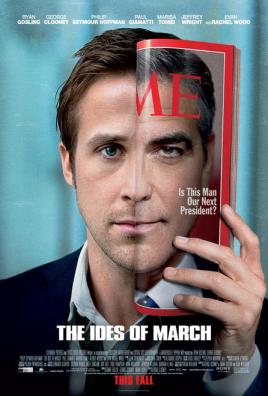
REVIEW: The Ides of March

8 10 2011

George Clooney’s “The Ides of March” makes plenty of references to the brokenness of the American political system, something you can observe by merely turning on the news nowadays.  But perhaps the most problematic indicator of the nation’s shortcomings is how easily the film can be read as a black comedy.  Clooney and co-writer Grant Heslov’s script is chock full of cruel ironies, many of which are veiled references to various political scandals.  And the very liberal Clooney is all too happy to throw Bill Clinton, and to some extent, Barack Obama, under the bus.

In an era where Congressmen send lewd pictures over Twitter, governors have foreign mistresses, and presidents act improperly with interns, is it possible that we’ve become so desensitized to scandal that we have just accepted that the system will fail us?  “The Ides of March,” with its grandiose plot of political intrigue, seems to imply yes by the lengths it has to go to shock us.  And in 2011, when public opinion seems to have turned against the establishment, this may be the movie people watch in the future to see American disillusionment and the failure of Obama’s hope and change rhetoric.

Read the rest of this entry »


F.I.L.M. of the Week (October 7, 2011)

7 10 2011

I don’t quite know what inspired me to watch “25th Hour” recently, but I’m certainly glad that I did.  Spike Lee’s 2002 film about the heavy weight of the past and the future that we carry around in the present got little attention at the time, but over time, it has gained some passionate backers, namely Roger Ebert.  That inspired me to check the movie out, and while I don’t think it’s one of my favorites of the decade, it’s good enough to qualify as a “F.I.L.M. of the Week.”

David Benioff’s script captures a day of solemn importance in the life of Montgomery “Monty” Brogan, played with typical excellence by Edward Norton.  We follow Monty in the last 24 hours before he must head up to prison to serve a 7 year sentence for dealing drugs.  He is remorseful for his past, apprehensive for his future, and filled with anger and hatred in the moment.  As he spends a day in a sort of purgatory state, we see the uneasy state of his relationships with his friends (Philip Seymour Hoffman and Barry Pepper) and girlfriend (Rosario Dawson) as they all offer a sort of false optimism.

While this story is quite limited, what makes “25th Hour” such an interesting film (and one that I suspect will be increasingly viewed as a reference for future generations) is how poetically Spike Lee juxtaposes Monty’s biography with the larger tale of society, here post-9/11 New York City.  After the film’s prologue, Lee rolls the opening credits over various takes of the two bright beams of light shining to the heavens from Ground Zero.  Much like Monty, the site is a reminder of the emptiness of that day, while the lights represent a brighter future that can still be rebuilt once the ashes are removed.

In perhaps the film’s most memorable scene, Lee employs a sort of Allen Ginsberg-meets-NWA rhythmic lyricism to express the pent-up rage that many New Yorkers felt in the wake of the tragedy.  It’s an unsettling, no-holds-barred diatribe against the city and everyone in it, and a man like Monty about to lose everything is the perfect person to deliver it.  Yet “25th Hour” is not just a movie of anger; indeed, Lee, ever the New York filmmaker, makes his movie an admiring tribute to the city’s strength and perseverance.  Even as Monty heads off to the pen, there’s a smiling child on the bus in the next lane willing to smile at him.


REVIEW: In a Better World

6 10 2011

Many times, critics try to write the film history books by declaring movies groundbreaking, innovative, daring, or bold.  We note trends, developments, and overall moods in the field of cinema at large.  We have little power to affect artistic merit, but we have a great deal of power in affecting how much cultural merit a film has.

It’s all too easy to make our ultimate standard of good filmmaking those movies that we can declare relevant.  Sometimes, though, it’s nice to get a reminder like “In a Better World” that these aren’t the only criteria for great movies.  Susanne Bier’s film is a powerful and moving testament to cinema’s ability to engage us through authentic portrayal of primal human emotions.  It’s unlikely to shake the earth with its ingenuity, but it’s almost guaranteed to make your heart shake in your seat.

While the title “In a Better World” conveys a sense of almost utopian optimism, perhaps the original Danish title, which translates to “Revenge,” better conveys the film’s exploration.  Across two continents, Bier weaves a parable about the forces that bring about one of our ugliest, deepest, yet most primordial instinct and how the strength and resilience of the human spirit can resist caving into it.  The story may have been told before, but it’s one of the greatest cinematic feats when someone like Bier can make the narrative just as captivating as if we were experiencing it for the first time.

Read the rest of this entry »


REVIEW: Of Gods and Men

5 10 2011

For the record, I don’t hate understated movies.  I love a movie that can say a lot without actually saying much at all.  I can appreciate when the mood or the atmosphere tells the story instead of a 200-page script.

But “Of Gods and Men” is that kind of understated that can really rub me the wrong way.  It’s the kind of movie I can only admire because of the overarching thematic content that deals with keeping faith in a higher power amidst the most crushing worldly forces.  It is painfully deliberative, so slow that it feels like a ten-hour mini-series with the plot arc of a short film.

It gives zero character development save for their de facto leader, the aptly named Christian, choosing to follow them as a uniform group.  Yes, monks and all believers view themselves as one in the body of Christ, I know.  But just for the sake of the narrative, couldn’t director Xavier Beauvois have done something to distinguish each of them?  It’s a crummy feeling to get to the end of a movie and only feel a connection to one person when you are supposed to feel connected to the whole group.

I do think the journey of these Algerian monks is fascinating, and their tenaciously peaceful resistance to the encroaching Muslim population is truly a divine act.  I just wish I didn’t have to see them gardening so much.  The movie may be a good watch if for nothing other than one fantastic scene where the monks silently reaffirm their commitment to the community and to each other to the tune of the “Swan Lake” theme.  It’s a well-executed and moving moment in a movie that otherwise does very little movement at all.  B- /