Random Factoid #481

21 11 2010

This is totally random, out there, and will probably be discarded as one of those “too personal” posts that probably have no use to the average reader.  But if you made it past that first long sentence, then clearly you give some sort of a care about what I’m writing, so I’ll write it anyways.

For all those in need of a productivity boost, I have a tip that has been working for me a lot recently.  Simply play the track “In Motion” from Trent Reznor and Atticus Ross’ prodigious score for “The Social Network” and feel your fingers get in rhythm with the pulsating beat.  Then curl them up into a fist one a finger at a time, beginning with the pinky, a la Jesse Eisenberg as Mark Zuckerberg hacking into the Harvard network to create Facebook.  And then attack whatever task you need to do.

You may not feel like you are sewing the seeds for a multi-billion dollar company, but it sure feels a lot better than just diving into the task with a frown.

Just my advice.


OPINION: The Versatile Movie Review

14 11 2010

NOTE: While this post is a direct response to the Central Florida Film Critic‘s post “I should have gotten the training,” I mean no ill will towards the author.  I only wish to express my own opinions on the matter and defend my own writings.

I’ve been a little busy doing clean-up work on my own site for the past week, but one thing I’ve been meaning to address is some criticism laid out against me by a fellow blogger.  In a post calling out flaws in himself and other bloggers, he specifically addressed my post on “Citizen Kane.”  For those of you who didn’t catch it, here’s the portion of the article that was written about me:

“The second thing I want to point out is Marshall of Marshall and the Movies, another fun writer. Recently he wrote a piece on CITIZEN KANE, and two things bothered me about it. Firstly, his declaration that he can count the films he has seen from before 1941 on one hand. While I can’t boast about being too much better (sixteen total, and seven came within the last few months), I do have to wonder if any of us can intellectually discuss cinematic worth with such a lack of foundation. Would you trust someone to discuss music without a foundation in understanding The Beatles or Bob Dylan? That is not to say any opinion is invalid; after all, anyone can judge art. However, a lack of classic cinema knowledge seems like it leads to false understandings of a film’s importance. Throughout his piece on Welles’ masterpiece, Marshall talks about the comparisons to THE SOCIAL NETWORK. Of course, there was a lot of talk about such comparisons, and I have referred to Fincher’s film as a modern-day CITIZEN KANE. However, I think Marshall spends so much time writing about the comparisons that it seems as if he views the classic as a building block to the Facebook movie. Welles made a masterpiece without any pretenses of Fincher, and it seems like a better way to judge it. I assume part of it is to encourage his readers to see the Welles film (like all of us, Marshall is young and his friends likely have not seen it), but I don’t think he gives CITIZEN KANE the proper critical overview, which needs more independent remarks.”

While I certainly see where James is coming from on a number of things, I think he vastly misread the intent of the post.  I don’t think I’m alone in recognizing that different movie reviews serve different purposes and audiences and should be written to reflect them.  In case you didn’t catch my October post entitled “A Great Movie Reviewer,” perhaps now is a better time than ever to check it out.  Here’s one of the five points I laid out, which I think is especially pertinent to this discussion:

Know why you write and who you are writing for. It’s important to know your purpose and your audience when you write because it will affect your tone, diction, syntax, and all those other things your English teachers loved to talk about.  If you are writing to tell people that they need to see a movie that is unknown, you need to use different rhetoric than what you would use to tell people they should see the latest James Cameron movie.  You can inform, persuade, and urge with a review, but know which you want to do when you write it.  And be sure to write in a way that can appeal to the people that will read you.  Intellectual ramblings will only get you so far if you write to an audience that just wants to know what to put on their Netflix queue.”

I write largely for an audience that could care less about classic film.  I myself don’t really care that much for it, but I know that it’s important that I see these movies to have a larger understanding of film.  The movies I choose to review don’t require an incredible amount of knowledge of classics, and referring to them in reviews or posts would be largely wasted intellectual ramble.  I choose to spend most of my time watching movies that help me make accurate comparisons to help my friends and bloggers.  It makes more sense to say that the latest indie comedy is no “Juno,” not that it’s no “Citizen Kane.”

My post on “Citizen Kane” wasn’t so much a review or an intellectual discussion so much as it was a reflection piece.  What I wanted to look at was how a movie 70 years old can be relevant to a movie about Facebook, and when I sat down to write, that’s what I was trying to convey.  I don’t have the education to talk about Orson Welles’ masterpiece in any great depth; besides, there are plenty of scholars willing to do that for me.  “Citizen Kane” means something different to an 18-year-old movie buff than it does to a film student or a filmmaker, and I found an interesting way to discuss what it meant to me through a comparison with “The Social Network.”  I’m not incredibly well-suited to write a piece on the movie many critics deem the greatest ever made, but I think my perspective mirrors most of my readers.

I’m sorry to put this bluntly, but if you plopped the average moviegoer down to watch “Citizen Kane” without them knowing what it was, I doubt they would think it was anything special.  I say this not in the sense that the movie is bad, but because it was so revolutionary, so many movies have mimicked it that what made Welles’ movie sensational in 1941 makes it average in 2010.  What better way to illuminate the exciting side of “Citizen Kane” than by placing it side-by-side with the sure-to-be generational classic “The Social Network?”  My hope was that the logic of my readers would go, “This worked in ‘The Social Network,’ so if ‘Citizen Kane’ used it, then it must be good too!”

I had no intentions to give “Citizen Kane” a full critical overview because I’m simply not qualified.  But I believe that taking into account my purpose and my audience, my post did what it was supposed to do.  I’m not asking you to trust me as a film scholar; I’m asking you to trust me as a teenager with an appreciation for film.  I’m willing to hear criticism of my work, but my overall message to James at Central Florida Film Critic is that you can’t judge all writing through one lens.  You have to take into account different perspectives, and I think your scolding of my post simply didn’t do that.  If the way I view movies doesn’t align with the way you want to view them, I can only recommend you finding another site to read.

But I certainly hope that isn’t the case.


“The Social Network” LAMBcast

6 11 2010

For those of you that missed hearing my beautiful voice since the summer, you’ll be happy to know that I recorded an episode of the LAMBcast about a month ago that is just now hitting the web.

The subject?  “The Social Network,” of course.  When I stopped to think about it, I realized that David Fincher’s film is the only movie that I felt has merited serious thematic discussion all year.  We all had our “Inception” theories, but we all legitimately care about the social message being conveyed to us here by Aaron Sorkin.

So expect me to praise it enthusiastically, expect me to uphold my assertions that it really isn’t that much like “Citizen Kane,” and expect to hear me give me full take on what I think we are meant to take from “The Social Network.”  It’s a great listen and a fascinating conversation; I highly recommend you check it out.

So CLICK ON MARK ZUCKERBERG below to be taken to the link to listen!


Oscar Moment: November Predictions!

1 11 2010

Folks, it’s time for a new set of predictions.  A lot has changed in the last two months since I issued a set of predictions.  Just a month away from the start of the horse race, I thought now would be a good time to step back and reevaluate.

(NOTE: I’m restructuring the change in position system from 2009.  The symbols stay the same, but listed in parentheses to the right is the previous position.)

Best Picture

  1. The Social Network 
  2. The King’s Speech  (NR)
  3. 127 Hours  (10)
  4. True Grit  (NR)
  5. Toy Story 3  (3)
  6. Inception 
  7. The Fighter  (2)
  8. The Kids Are All Right 
  9. Black Swan  (5)
  10. How Do You Know  (NR)

Dropping off: Another Year, Never Let Me Go, Blue Valentine

I‘m still feeling confident forecasting a win for “The Social Network.”  It has audiences and critics behind it; with enough precursor love, it could be an unstoppable force.  “True Grit” and “The Fighter” remain strong possibilities even unseen, although I’m sensing less excitement for the latter.  “Toy Story 3” hasn’t dropped; two contenders have just risen above it.  Given a push, it could still make a run for the money.  And “How Do You Know” is still unseen, but I’m getting good vibes.  Probably stupid to put it on my list instead of “Another Year,” but I’m going gutsy.

Right now, my biggest comment is that the race feels really stagnant.  It’s too early for the race to boil down to “The Social Network” vs. “The King’s Speech.”  The enthusiasm has kind of died for any movie, although that could easily change with this week’s release of “127 Hours.”  It’s just kind of been a dead zone for Best Picture buzz recently … which is a huge bummer.

Best Director

  1. David Fincher, “The Social Network” 
  2. Tom Hooper, “The King’s Speech”  (NR)
  3. Christopher Nolan, “Inception”
  4. Darren Aronofsky, “Black Swan”  (5)
  5. Danny Boyle, “127 Hours”  (NR)

Dropping off: Mike Leigh, David O. Russell

Same story between “Network” and “Speech” with the two battling out for the top spot.  I’m hesitant to say that two of the past three winners in this category could be nominated again this year, so I’ll pick Danny Boyle seeing as his movie is the safer bet at the moment.

I feel like this category will recognize visionaries this year.  This is only a hunch, of course, but I feel like directors such as Nolan are Aronofsky will get their just reward for creating pieces of art that don’t mold to any sort of convention.  Nolan has first priority of the two seeing as he was snubbed in 2008 and his movie will fare better with the Academy.  “Black Swan” is a risky movie and one that doesn’t align very well with Academy tastes.  An Aronofsky nomination means true progress.

Best Actor

  1. James Franco, “127 Hours”  (3)
  2. Colin Firth, “The King’s Speech”  (NR)
  3. Jesse Eisenberg, “The Social Network”  (2)
  4. Mark Wahlberg, “The Fighter”  (1)
  5. Ryan Gosling, “Blue Valentine” 

Dropping off: Robert Duvall

I’m sensing the “127 Hours” reward will come in Best Actor for James Franco.  At 32, he’d be among the youngest winners ever, and his status as an elite dramatic actor would be forever cemented.  I see him as being the critics’ circle darling, putting him in prime position from the beginning of the season.  However, there will be stiff competition from Colin Firth, who has the subjective “deserving” card in his hand after losing last year for his performance in “A Single Man.”

Eisenberg drops a slot because the choice youth performance is going to be from Franco, and Wahlberg plummets thanks to the buzz being squarely in the ring of Bale and Leo, his supporting cast.  Nonetheless, I think the preparation he put into this role will pay off with a nomination.  I think Ryan Gosling will be nominated for “Blue Valentine” over, say Robert Duvall for “Get Low” or Jeff Bridges for “True Grit,” because the NC-17 rated domestic drama may be too intense for Best Picture, but the actors will love it and reward it here.

Best Actress

  1. Natalie Portman, “Black Swan”  (2)
  2. Annette Bening, “The Kids Are All Right”  (1)
  3. Nicole Kidman, “Rabbit Hole”  (NR)
  4. Lesley Manville, “Another Year”  (NR)
  5. Michelle Williams, “Blue Valentine”  (4)

Dropping off: Jennifer Lawrence, Julianne Moore

Focus needs to get their act together and figure out how to campaign Bening and Moore.  Amidst the controversy, I think Portman has emerged all the stronger, and she is now my pick to win in the seemingly two-way battle for supremacy.

Nicole Kidman moves onto the list after her performance in “Rabbit Hole” garnered significant buzz, and Manville as well because I think “Another Year” has to have at least one acting nomination.  And for the exact same reason I predicted Ryan Gosling to get a Best Actor nomination, I predict Michelle Williams to get a Best Actress nomination for “Blue Valentine” to reward the movie’s true grit.  However, the tragic romance could go the way of “Revolutionary Road” and leave the leads out in the cold.

Best Supporting Actor

  1. Christian Bale, “The Fighter” 
  2. Geoffrey Rush, “The King’s Speech”  (NR)
  3. Andrew Garfield, “The Social Network” 
  4. Aaron Eckhart, “Rabbit Hole”  (NR)
  5. Sam Rockwell, “Conviction”  (2)

Dropping off: Vincent Cassel, Mark Ruffalo

Could there be anything more boring than the supporting categories this year?  Yawn.

Sight unseen, I still think Bale is the man to beat in this category.  Got any better suggestions?  Rush has won before, yet he will still prove to be a big threat given he lights the movie on fire.  Garfield is young and unknown, but he is incredible in the role.  He could move up to the top if there turns out to be a tidal wave of support for “The Social Network.”

I get a good feeling about Aaron Eckhart for “Rabbit Hole.”  He’s a great actor, and he works alongside Kidman who is a very good bet for a Best Actress nomination. There’s always that movie with a ton of acting nominations, and I get a feeling it could be “Rabbit Hole.”  As for Sam Rockwell, I still feel a nomination is a good possibility, but a win seems pretty tough with the general lack of enthusiasm for “Conviction.”

Best Supporting Actress

  1. Melissa Leo, “The Fighter”  (2)
  2. Miranda Richardson, “Made in Dagenham”  (NR)
  3. Hailee Steinfeld, “True Grit”  (4)
  4. Dianne Wiest, “Rabbit Hole”  (NR)
  5. Helena Bonham Carter, “The King’s Speech”  (NR)

Dropping off: Keira Knightley, Barbara Hershey, Marion Cotillard

Another win for “The Fighter” sight unseen, this time for 2008 Best Actress nominee Melissa Leo.  You got any better ideas?  This category is still wide open with a month left until the critics’ groups for the field for us, and that’s no fun.

Miranda Richardson’s spunky turn in “Made in Dagenham” seems to be getting a lot of buzz, thus it’s in at this point.  “True Grit” hasn’t been seen, but Hailee Steinfeld sure looks impressive from the trailer, so she’s in.  Dianne Weist got the critics talking about her work in “Rabbit Hole,” and she’s won twice before, so she’s in.  Helena Bonham Carter is in a strong Best Picture contender, so she’s in.  See how flimsy my logic is?  No one has a clue what to expect in this race.

I lied when I said there would be screenplays in this set of predictions.  For the wins, I’d say “The King’s Speech” and “The Social Network” for original and adapted, respectively.

So, how do you feel?  What Oscar nominations do YOU foresee?


Classics Corner: “Citizen Kane”

28 10 2010

Rosebud.

It’s the secret of “Citizen Kane,” the movie considered by many film scholars and critics as the greatest ever made.  So pardon me for being a little shocked when I got to the conclusion of Orson Welles’ masterpiece and realized I knew the ending thanks to watching AFI’s “100 Years, 100 Quotes” special on CBS.

The search for the meaning of “Rosebud,” however, was still quite enthralling.  Welles’ take on newspaper giant William Randolph Hearst, here under the guise of Charles Foster Kane, is a power chronicle of greed and power are still just as resonant today as they were in 1941.  So relevant, in fact, that many people pointed out the thematic similarities between it and David Fincher’s “The Social Network.”  Curious to see the connection to the chronicle of Facebook I was so highly anticipating, I watched them both on the same day to really have a comparison.

I debated it on the LAMBcast, but I don’t see all that much similar between the two other than the main characters.  Both Kane and Mark Zuckerberg start with humble origins, setting out to revolutionize the way people see the world.  There is success right from the get-go, and there is acclaim.  So both set their sights higher and see no ceiling on their ambitions.  This causes them alienation from friends and loved ones, yet for them this a small price to pay for the success they are having with their ideas.

Perhaps the biggest difference is that Orson Welles completes the story of Charles Foster Kane, a luxury that allegories can provide.  Since Aaron Sorkin made no effort to hide the fact that “The Social Network” was the story of Mark Zuckerberg, however fictionalized, he would lose credibility if he tried to extend beyond what is already known of Facebook’s short history.  He chose to document the site’s origins and the effect that meteoric success had on its founder.

The future of Facebook as is difficult to forecast as the rest of Zuckerberg’s life.  Who knows what kind of life the world’s youngest billionaire will lead?  At 26, he still has a whole life to live, one that would be tough for anyone, let alone Aaron Sorkin, to predict.  When “Citizen Kane” was released in 1941, William Randolph Hearst was 78, and his life work was nearly complete.  While he was still influential (probably more so than Zuckerberg has been in his vehement disapproval of his cinematic treatment), there was a reasonable amount of closure Welles could provide.  Aaron Sorkin left “The Social Network” fairly open-ended, and I found a certain amount of joy in being able to interpret the movie as I wanted.  How I chose to interpret it, however, was very similar to the message that “Citizen Kane” communicated.

It’s a great sign of a movie’s longevity when it can be compared to something as modern as Facebook seven decades after its release, but “Citizen Kane” did more for movies than offer up thematic depth.  The movie was a watershed event in the development of the craft of cinema for decades to come.  It’s easy to look at the movie and notice nothing, but I had heard that the movie was a true revolution, so I looked deeper.  Since I can count the number of movies I have seen from before 1941 on one hand, I went to my good friend the Internet to find out the changes.  According to Tim Dirks, we take a whole lot of Orson Welles’ techniques for granted now.  Notable first in “Citizen Kane” include:

  • Subjective camera work
  • Unconventional lighting
  • Shadows and strange camera-angles
  • Deep-focus shots
  • Few revealing facial close-ups
  • Elaborate camera movements
  • Overlapping dialogue
  • Flashbacks
  • Cast of characters who ages throughout the film
  • Long shots and sequences, lengthy takes

Can you imagine movies without any of these of these things?  What would “The Social Network” be without the overlapping dialogue?  Could Mark Zuckerberg really be like a StairMill to Erica if they paused nicely to hear each other?  Orson Welles did cinema a huge favor with this movie.  While other people have taken these techniques to towering heights, “Citizen Kane” is a necessary watch for anyone who claims to love movies because it is the origin of so much cinematic development.


Random Factoid #449

20 10 2010

Wrong, wrong, wrong.

I’m back again (along with everyone else in the world) to bash an article with incredibly poor logic and taste, this one surprisingly coming from the prestigious New York Times.  Michael Cieply published an article entitled “Longing for the Lines That Had Us at Hello,” lamenting what he called the “lost art” of the one-liner.  Such a statement is just begging to be refuted.

Clearly Cieply has been living under a rock for the past decade.  Perhaps he missed when “Juno” started a revolution in vocabulary and shook up the jargon like no movie had ever done before?  I probably quote that movie in some form or fashion EVERY DAY, be it through the use of one word or rattling off an entire line.

Comedy over the past decade has churned out many a great one-liner; two particular favorites of mine are “Role Models” and “Knocked Up,” both of which hit you with quotable line after quotable line.

But even if comedy is too “low-brow” for Mr. Cieply, plenty of dramas over the past ten years have quotable lines.  I’ll run you through one for each year among the Best Picture nominees.

  • 2000: “What we do in this life echoes in eternity!” (Gladiator)
  • 2001: “YOU SHALL NOT PASS!” (LOTR)
  • 2002: “My precious!” (LOTR)
  • 2003: “We wash our sins, we bury them clean.” (Mystic River)
  • 2004: “Anyone can lose one fight.” (Million Dollar Baby)
  • 2005: “I wish I could quit you.” (Brokeback Mountain)
  • 2006: “Maybe.  Maybe not.  Maybe go f*** yourself.” (The Departed)
  • 2007: “Call it, friendo.” (No Country for Old Men)/”I drink your milkshake!” (There Will Be Blood)
  • 2008: “Jamal! Latika!” (Slumdog Millionaire)
  • 2009: “That’s a bingo!” (Inglourious Basterds)

So needless to say, there ARE great lines in non-comedies nowadays.  And it’s not like this problem has escalated this year; as Vulture points out, we have an outstanding quotable movie in “The Social Network.”  Here are the ten lines they pull out of Aaron Sorkin’s phenomenal script that they think we will be quoting soon enough.

1. “If you guys were the inventors of Facebook, you would have invented Facebook.”
2. “I’m six-foot-five, 220 pounds, and there’s two of me.” Great for bar fights!
3. “A million dollars isn’t cool. You know what’s cool? A billion dollars.”
4. “You better lawyer up, asshole.”
5. “Like my brother and I are dressed in skeleton costumes chasing the karate kid around a high-school gym.”
6. “Because we’re gentlemen of Harvard.”
7. “I like standing next to you, [insert name]. It makes me look tough in comparison.”
8. Using “The Winklevi” in a sentence. When being dismissive, generally.
9. “If your clients want to sit on my shoulders and call themselves tall, they have the right to give it a try.”
10. “I believe I deserve some sort of recognition from this Ad Board.”

So, Mr. Cieply, here’s my proof that you are indeed very, very wrong.  I’ll keep quoting movies all day long, and you can continue living on your cloud of ignorance if you so desire.

(P.S. – Is it something in the New York water?  See Random Factoid #376 for a similarly styled refutation of a detestable article published in New York Magazine a few months ago.)


Random Factoid #442

13 10 2010

There have been many interesting debates brought up in the wake of the release of “The Social Network,” but an unexpected one that has risen to the top of the heap is the discussion of misogyny in Aaron Sorkin’s script.  Just to give you an idea of the wide range of accusations leveled against the movie, I’ll excerpt from the plethora of articles written on the topic.

Jenni Miller, Cinematical:

“Could Sorkin and Fincher have come up with a better way to portray women? Of course they could have. Is the depiction of Asian women as sexed-up, one-note, batsh*t women ridiculous and unnecessary? Of course. These are not points I’d disagree with. It is lazy to fall back on these stereotypes, and beneath Sorkin and Fincher’s talent.”

Jennifer Armstrong, Entertainment Weekly:

“But the way the women who do exist in the film are depicted is horrendous, like, ’50s-level sexist — if this were fiction, the snubs would be inexcusable … women in the movie are reduced to set pieces, gyrating, nearly naked scenery at parties, bimbo potheads, and mini-skirt-wearing interns meant to denote how far Zuckerberg has risen from his dorky beginnings. At one point, his mentor, Sean Parker (Justin Timberlake) brings a Victoria’s Secret model along as his date, and her major function is to demand shots if the boys insist on talking about icky business stuff. Perhaps the most nuanced female character in the film is the object of Sean’s one-night-stand who happens to first introduce him to Facebook. At least she seemed to give him a run for his wits as she questioned whether he remembered her name or not — even if she was ultimately blown away to find out he’d founded Napster.”

Rebecca Davis O’Brien, The Daily Beast:

“Women in the movie—apart from the lawyer and Erica, who sets the stage and disappears—are less prizes than they are props, buxom extras literally bussed in to fill the roles of doting groupies, vengeful sluts, or dumpy, feminist killjoys. They are foils for the male characters, who in turn are cruel or indifferent to them. (In a somewhat ironic turn of events, former Harvard President Larry Summers is perhaps the only man in the movie portrayed both as solicitous and respectful of a woman’s opinion.)”

Irin Carmon, Jezebel:

“He lived, and lives, in a world where, even if women were scarce in computer science classes, they were achieving as brilliantly as the men around them, in a Harvard that was driven more by extracurricular accomplishment than it was by the old-boy network, even if the old boys haven’t had their last gasp.”

Needless to say, the ladies are upset.  In a way, I understand.  The movie doesn’t exactly portray many strong women other than the two that manage to put Mark Zuckerberg in his place.  The movie argues that a woman’s rage is exactly what drove him to start Facebook, and this sets him up to have a fairly demeaning view of women from then on.

This is not real life; this Aaron Sorkin’s take on events.  In order to fully breath life into his character of Zuckerberg, I believe that he decided to make him a fairly unrepenting misogynist.  Throughout the movie, our reaction is always supposed to be, “Yes, Zuckerberg is brilliant … but look at the way he does this!  Look at the way he treats this friend!  Look at the way he treats that woman!”  How Zuckerberg acts is meant to undermine the brilliant things that Zuckerberg does.

The portrayal of women is, in my mind, not at all representative of how Sorkin wants us to view them.  Just because the main character does something does not mean that it’s what the entire work stands for.  Does anyone think that the creators of “The Office” support sexual harassment because Steve Carell’s Michael Scott does it every episode?

For all those who happened to be offended, Aaron Sorkin has apologized by commenting on a blog.  Here’s some of what he said:

“It’s not hard to understand how bright women could be appalled by what they saw in the movie but you have to understand that that was the very specific world I was writing about. Women are both prizes an equal. Mark’s blogging that we hear in voiceover as he drinks, hacks, creates Facemash and dreams of the kind of party he’s sure he’s missing, came directly from Mark’s blog. With the exception of doing some cuts and tightening (and I can promise you that nothing that I cut would have changed your perception of the people or the trajectory of the story by even an inch) I used Mark’s blog verbatim …  Facebook was born during a night of incredible misogyny. The idea of comparing women to farm animals, and then to each other, based on their looks and then publicly ranking them. It was a revenge stunt, aimed first at the woman who’d most recently broke his heart (who should get some kind of medal for not breaking his head) and then at the entire female population of Harvard.

More generally, I was writing about a very angry and deeply misogynistic group of people. These aren’t the cuddly nerds we made movies about in the 80’s. They’re very angry that the cheerleader still wants to go out with the quarterback instead of the men (boys) who are running the universe right now. The women they surround themselves with aren’t women who challenge them…”

So the misogyny is there, I’m not denying it or belittling it.  But if this is of great concern to you, Aaron Sorkin and “The Social Network” should be the last places you direct your anger.  Direct at the society that spawned the movie because there are real people out there who act like film Zuckerberg to women.  Yelling at a movie doesn’t get read of the real problem.


REVIEW: The Social Network

9 10 2010

Has Facebook made us more connected to our friends?  Or does hopelessly staring at their pictures, their moments, their lives only increase our feeling of isolation?  Such has been the question for the past five years as the Silicon Valley start-up has all but taken over the world.  We have been forced to ponder how much we want people to know about who we are, using our profile pages as a façade to cover the person hiding deep inside.  We can sculpt social perfection on the site, and perhaps that is why we pour so much time into it.

That’s the story of us in the Facebook age.  However, anyone not willing to closely scrutinize “The Social Network” might have the mistaken notion that the movie is only about the founders of the site.  While Aaron Sorkin’s script concerns itself entirely with the Facebook’s early years, the perspective is not limited merely to those intimately involved in creating the predominant social networking site of our time.

If Sorkin and director David Fincher had been interested in doing that, they would have made a documentary on the birth of Facebook.  Instead, their fictionalized account is meant to challenge our conceptions of communication and friendship in the digital era, as well as the changing nature of innovation.  As the face of human interaction becomes increasingly digital, this commentary will be an important work to consult.  “The Social Network” could very well be the movie that future generations will watch to get an idea of the millenials (or whatever history will call us).  The movie now puts the pressure on us to decide how to interpret its message: do we go polish our Facebook profiles or become disillusioned with the site?

Since creator Mark Zuckerberg refused to participate with the production, Sorkin and Fincher present him as they see him: a visionary with his fair share of vices who winds being torn asunder by two people with different ideas for the future of his creation.  Jesse Eisenberg hardly makes him sympathetic, but the ultimate interpretation of Zuckerberg is left to the viewer.  Is he a hero, a villain, or an antihero?  Whatever mold he fits, it cannot be denied that he is a figure of huge importance to the digital age.  Take his social idiosyncrasies out of the picture, and his journey is not too different than our journey with Facebook.

Read the rest of this entry »


Random Factoid #435

6 10 2010

I’m in love with Natalie Portman and I don’t care who knows it!

She’s seriously one of the most awesome people working in Hollywood.  She’s great at being funny and at being serious, she seems incredibly down-to-earth, and she has her act together.

Add consultant to that list of things she does well.  According to Aaron Sorkin, “Natalie Portman got in touch with me when she heard that I was doing this to say, ‘Listen…come over for dinner and I’ll tell you some stories,’ I would’ve come over for dinner under any circumstances. But that was really helpful.”  Since she was at Harvard when Facebook was founded, her insights were very valuable.  I’m not sure if she led Sorkin to the very dark, gloomy feeling that the school had, though.

What was her thanks?  Getting mentioned cleverly in one of the movie’s lines.  I totally caught it, no big deal.  For those of you who didn’t, here’s the quote.

“[Zuckerberg] is the biggest thing on a campus that included nineteen Nobel Laureates, fifteen Pulitzer Prize winners, two future Olympians, and a movie star.”

“Who’s the movie star?”

So thanks, Natalie.  You rock.  I rarely pick up on little easter eggs (and for another one, click here) like that, but I did thanks to you.  Anybody else catch this?  I felt pretty proud of myself since the only easter eggs I ever catch are the really obvious self-referential ones in Pixar movies.


Random Factoid #432

3 10 2010

First it was “Up in the Air;” then it was “Inception;” now it’s “The Social Network.”  Some movies are just that good that they become a regular Random Factoid topic.  So here we go…
I read a fascinating article in The New York Times on the generational divide that the movie has exposed, particularly around the figure of Mark Zuckerberg.  Here is Scott Rudin, the movie’s producer, on the differing viewpoints from generations:

“When you talk to people afterward, it was as if they were seeing two different films.  The older audiences see Zuckerberg as a tragic figure who comes out of the film with less of himself than when he went in, while young people see him as completely enhanced, a rock star, who did what he needed to do to protect the thing that he had created.”

I don’t want to ruin what’s coming my review of the movie, but I definitely leaned more towards how the older audiences felt.  Does this mean I’m an old person trapped inside a teenager’s body?  Am I somehow abnormal because my views don’t fit the rest of my generation?  Am I … more mature?  More cynical?

Interestingly enough, this isn’t the first polarizing movie on the age spectrum this year.  I’ve had a post from The Los Angeles Times bookmarked since August on the reaction from different generations.  Patrick Goldstein observed this:

“The other day I was talking to an old Hollywood hand who was astounded by the runaway success of “Inception.” It turned out that he’d seen the film on its opening weekend in a private screening room with a number of industry elder statesmen, including at least two former studio chiefs and a couple of their young offspring. After the movie was over, the industry elders were shaking their heads in disbelief, appalled by the film’s lack of clarity, having been absolutely unable to follow the film’s often convoluted story.

But before anyone could register their complaints, one of the younger people on hand, flush with excitement, praised the film to the rooftops. To him, it was such a thrill ride that if the projectionist could show the film again, he’d sit through it again right away.”

I can’t even imagine there being one day where I look at movies and wonder what the darned kids see in it.  Why do our tastes have to evolve with age?  I’m scared that if I side with the elder generation on “The Social Network,” I could become some kind of cranky geezer film snob when I get older.


Shameless Advertisement #19 – October 2010

1 10 2010

Well, this is my bad.  There was only one vote on the October poll because I put it up a little delinquently, so I really can’t complain with the results.  I don’t think it will surprise anyone that the winner is “The Social Network.”  With a 97% on Rotten Tomatoes on Metacritic, this is the real deal.  Here’s some of what I said back in my Oscar Moment in August:

The buzz started with the release of some tantalizing teaser trailers and an intriguingly mysterious poster.  When we saw the full trailer playing before “Inception,” it was a wowing experience (that would still pale in comparison to the two and a half hours afterwards).  The trailer’s opening minute is very unique as it has nothing to do with the movie at all.  Rather, we watch people interacting on Facebook, a reminder of how much it has enhanced our connections to our friends.  Then we pixelate to Mark Zuckerberg, and the history begins.

From just the trailer alone, “The Social Network” looked like a movie for our time, more clearly zeitgeist-tapping than any movie in recent memory.  It takes a dramatic look the founding of Facebook, one of the defining inventions of our time, but also seems to tackle the subject of how the social networking site has affected the way humans communicate with each other.

I won’t post the poll itself because it will take up too much room for just one vote.

As for what you can expect from “Marshall and the Movies” this month, I don’t really have any big plans.  I’m hoping to get work on the much-delayed podcast going at the end of the month, perhaps with a launch around Thanksgiving.

Oscar Moments are now bi-weekly. I usually post them on Tuesdays, but now, they will also run each Friday.  Much of the rest of 2010’s offerings will be discussed this month, including “Love and Other Drugs,” “Made in Dagenham,” and “Rabbit Hole.”  A new set of predictions should be up soon as well.

A Classics Corner post to tie into “The Social Network.” If you’ve been reading reviews, surely you know what I’m referring to.  Post should be up in the next week.

Halloween of horror! I’m not sure how I’ll bring Halloween into the blog, but expect some of it in the back half of the month, either through examining more current movies in the “F.I.L.M. of the Week” column or by seeing some classics and reporting my experience in the “Classics Corner” column.

This month is pretty loosely structured, but I think it should provide good reading and good fun nonetheless!  Enjoy your month at the movies!


Random Factoid #425

26 09 2010

Dear iTunes,

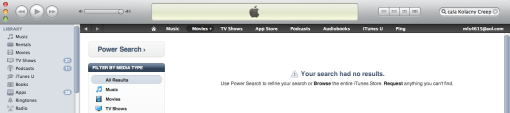
Please get the Scala and Kolacny Brothers cover of Radiohead’s “Creep” ASAP.  Listening to it on YouTube is no way to do it, especially when you are doing it on your iPhone while driving and picking up any WiFi networks stop the song.  Please put it up either on “The Social Network” soundtrack or with the album that it was originally released on.  Every day I see this, my heart breaks a little more.

Sincerely,
Marshall


P.S. – Speaking of “The Social Network,” thank you Trent Raznor for the five-track sampler.  It is truly heavenly.


What To Look Forward To in … October 2010

18 09 2010

In less than two weeks, we are headed into October.  More quality fall entertainment, more Oscar contenders.  But really, “The Social Network” leads off the month and it’s all downhill from there.  Sorry, every other movie coming out in my month of birth.  AND PLEASE TAKE THE POLL AT THE END … I blanked and left it off for a few days, but please vote!

October 1

I’ve stated twice that I’m dying to see “The Social Network,” and I’ve predicted it twice now to win Best Picture.  I’m counting on a great movie, and I’m planning on catching the first showing after school on Friday.

“Let Me In” reminds us of a time when vampires were still scary, not sexy.  Chloe Moretz (best known as Hit Girl) plays the blood-sucking child in question in this remake of the 2008 foreign horror flick “Let the Right One In.”  I think subtitles make anything creepier, but Hollywood sees English-language versions as a way to make things more accessible.

I love the book “Freakonomics,” and I think the documentary montage without any particular focus is a perfect complement to the bestseller.  If it’s anything like the book, it will be fascinating and incredibly thought-provoking.  It’s an interesting tactic to put it on iTunes before releasing it in theaters, and I’ve been asking myself whether or not I should wait for the big screen.

And on another note, poor Renee Zellweger has dropped so low as to start doing low-brow horror like “Case 39.”  To think she won an Oscar just 7 years ago…

October 8

Ugh, “Secretariat.”  Inspirational sports movies now give me an averse reaction.  And there’s also more gross horror in 3D with “My Soul to Take.”  Way to sell your soul, Wes Craven.  With the only other wide release being a corny Josh Duhamel-Katherine Heigl romantic comedy, “Life as We Know It,” it looks like I may be seeing “The Social Network” for a second time.

On the indie side of things, I’ll be happy to see some of the offerings.  For example, I’m sure “Inside Job” will be an illuminating (and probably slanted) view of what really went down with the economic meltdown in 2008.

“Stone” looks intense, much like “Brothers” appealed to me this time last year.  With an impressive cast of Robert DeNiro and Edward Norton (Milla Jovovich to a lesser degree as well), it could be a pretty good under-the-radar movie.

Tamara Drewe” has been playing at a lot of film festivals this year to mixed/positive reviews, most of the praise going not to director Stephen Frears but to leading lady Gemma Arterton.  “It’s Kind of a Funny Story” has also been playing film festivals recently albeit to much less success.  Despite the widespread acclaim the filmmakers’ past two movies, “Half Nelson” and “Sugar,” have received, this just hasn’t caught on.  “Nowhere Boy,” the story of John Lennon, premiered at Toronto this week, but I didn’t hear anything about it.  No news is NOT good news at a festival.

Read the rest of this entry »


FINCHERFEST is coming / “The Social Network” Poll Results

17 09 2010

We are TWO WEEKS away from the release of “The Social Network,” and I am about to FREAK OUT!!!  After hearing ecstatic review after ecstatic review, my anticipation just continues to build!  It’s now the background of my phone and computer.

As you may recall, I announced at the beginning of the month to spend a week dedicated to examining Fincher’s seven previous films leading up to “The Social Network.”  That will start either Thursday the 23rd or Friday the 24th, depending on how the “F.I.L.M. of the Week” column plays out.

But I want to make this more than just about me.  I alone cannot provide a full and complete survey of Fincher’s work, so I must call upon other bloggers to share their thoughts on Fincher and his movies.  If anyone has reviewed any of David Fincher’s films or written anything about him, I am inviting you to submit it to be published as a link alongside my reviews. Please send any and all submissions to mls4615@yahoo.com or leave a link in the comments here.

Just as a review, those movies are:

  • Ali3n (1992)
  • Se7en (1995)
  • The Game (1997)
  • Fight Club (1999)
  • Panic Room (2002)
  • Zodiac (2007)
  • The Curious Case of Benjamin Button (2008)

Hopefully by the time I start receiving submissions, I’ll have a banner ready to send to everyone who wants to submit so they can post it to their blog as well.  I’ll probably also submit this to be plugged on the LAMB as well.

And while we are on the topic of David Fincher, I might as well announce the results of the poll I attached to my Oscar Moment on “The Social Network.” I presumed it to be the frontrunner, which it may very well be, and asked if it will win Best Picture.

The results were interesting.  The first 5 people to vote all said “no.”  However, the last two said “yes.”  Winning is hard to call in September, but this is where I’d put my money if I were a betting man.

So submit, submit, submit!  Once the post runs, I won’t add any new links.


Oscar Moment: Pre-Festival Predictions!

1 09 2010

Well, folks, I’ve given you 14 Oscar Moments so far that have examined and analyzed the potential awards contenders of 2010.  Today begins a new chapter of the Oscar hunt with the beginning of the Venice Film Festival.  Next week, the Toronto Film Festival will kick off, and soon there will be various festivals in New York, Telluride, and London.

No more idle chatter. This is real.  It’s the time of the year when we separate the weaklings from the true players.  And so I begin before the madness with a few opinions of my own, a set of predictions that I have formed from merely the raw slate as is.  I’ll probably look back at this list and laugh; last year, I said “It’s Complicated” would be nominated.

So, on with the show!  (I’m skipping the screenplays for the next set of predictions.)

Best Supporting Actress

  1. Keira Knightley, “Never Let Me Go”
  2. Melissa Leo, “The Fighter”
  3. Barbara Hershey, “Black Swan”
  4. Hailee Steinfeld, “True Grit”
  5. Marion Cotillard, “Inception”

This is a category that likes proven young talent, so I think Knightley makes a good first pick for a winner.  Melissa Leo is clearly well-liked enough by the Academy to score a nomination for a no-name movie like “Frozen River,” so I think pretty mainstream Oscar bait like “The Fighter” bodes well for her chances.  I threw Hershey in the mix because I feel like the Academy will love “Black Swan,” and Best Supporting Actress likes veterans as well.  I’ve never even heard of Steinfeld, but she’s young, and this is the category that gave Tatum O’Neal and Anna Paquin the big prize in their teen years.  And just for fun, I threw in Cotillard as a wild-card.  She’s already won an Oscar, and I get the feeling the Oscars want to nominate her again.

Best Supporting Actor

  1. Christian Bale, “The Fighter”
  2. Sam Rockwell, “Conviction”
  3. Andrew Garfield, “The Social Network”
  4. Vincent Cassel, “Black Swan”
  5. Mark Ruffalo, “The Kids Are All Right”

An entire slate of first-time nominees?  Dang … I honestly have no idea how this category is going to play out; I just picked from some movies that I thought would be big.  Four of the five are from Best Picture nominees (riskiest bet being Cassel), and I threw in Sam Rockwell because his performance looks REALLY baity.

Best Actress

  1. Annette Bening, “The Kids Are All Right”
  2. Natalie Portman, “Black Swan”
  3. Jennifer Lawrence, “Winter’s Bone”
  4. Michelle Williams, “Blue Valentine”
  5. Julianne Moore, “The Kids Are All Right”

I’m sensing Bening vs. Portman with maybe a little bit of Jennifer Lawrence to make things interesting.  It’s time for Bening to get one, if not for “The Kids Are All Right” then at least as recognition of how amazing she was in “American Beauty.”  Then again, Natalie Portman is going way out of her good-girl comfort zone, even farther than “Closer,” for “Black Swan.”  She’s definitely a force to be reckoned with this year.  Lawrence is the up-and-comer of the season, which always adds some fun.  Williams, a previous Oscar nominee, is a good bet based on how emotionally wrenching her role is.  And Julianne Moore needs to show up somewhere this year; it appears they are campaigning her for lead where she belongs.  Honestly, they should move Annette Bening to supporting.

Best Actor

  1. Mark Wahlberg, “The Fighter”
  2. Jesse Eisenberg, “The Social Network”
  3. James Franco, “127 Hours”
  4. Robert Duvall, “Get Low”
  5. Ryan Gosling, “Blue Valentine”

It feels like a Wahlberg kind of year.  He’s been nominated before, but this is a role that is born for him to play.  More on that later in the inevitable Oscar Moment, though.  Everyone else has better days ahead, or, in the case of Robert Duvall, already has an Oscar.

Best Director

  1. David Fincher, “The Social Network”
  2. Mike Leigh, “Another Year”
  3. Christopher Nolan, “Inception”
  4. David O. Russell, “The Fighter”
  5. Darren Aronofsky, “Black Swan”

Fincher rides “The Social Network” train to victory.  Mike Leigh gives him a good run for his money because the Academy loves him way too much.  Christopher Nolan finally gets a much deserved Best Director nomination.  David O. Russell gets in because his movie is loved.  And Darren Aronofsky gets in for the same reason – except he has a rabid fan base that will try to push him to victory.

Best Picture

  1. The Social Network
  2. The Fighter
  3. Toy Story 3
  4. Another Year
  5. Black Swan
  6. Inception
  7. Never Let Me Go
  8. The Kids Are All Right
  9. Blue Valentine
  10. 127 Hours

I’ve read one review of “The Social Network,” but that alone has convinced me that the movie will win Best Picture.  If it’s as good as that review claims, it will be one of the most zeitgeist-tapping movies EVER.  After “The Hurt Locker” got in touch with the American psyche in Iraq last year and won Best Picture, the prize will move back home for “The Social Network.”

I’m just picking up really good vibes from “The Fighter,” mainly because it’s the “little movie that could” story that propelled “Slumdog Millionaire” to victory in 2008.

“Toy Story 3” could actually win.  No joke.  But enough people have to raise the question of “Who cares if it’s animated, it’s the best movie of the year?” to overcome the hurdles.

“Another Year” becomes the critical darling of 2010, likely a critics’ circle favorite, and thus impossible to ignore.

I’ll admit that I caught a peek at some early “Black Swan” reviews from Venice and this is the real deal.  It’s in.

“Inception” plays into the mix, although outside the old-fashioned five, because it’s the big summer hit and for “The Dark Knight” reparations.  Such a combination has to equal a Best Picture nomination.

“Never Let Me Go” is the obligatory literary adaptation bait.

“The Kids Are All Right” will get in because of its great critical standing.  It’s going to have a hard time making a serious run, though, because of the mediocre box office receipts.

“Blue Valentine” is going to be so hard-hitting and gruelingly real that I think the Academy can’t ignore it.

And finally, “127 Hours” gets in just because the Academy loves Danny Boyle and can’t think of anything else to put in.  Or wait, maybe that’s me who can’t think of anything else to put in!

What are your thoughts?  Who did I leave off?  Where am I dead on?