 I know that I’m a movie blogger by name, but if you’ll allow me a brief aside, I’d like to address a different field altogether. I, like many Americans this summer, have been following the developments in the trial of Casey Anthony. Today, to the shock (and disgust) of many captivated American television watchers, she was acquitted of murdering her two-year-old daughter, Caylee.
I will inevitably catch heat for this, but I do not sit in front of my computer typing this post in dismay. Just a day after 311 million Americans celebrated the preservation of the inalienable rights of life, liberty, and the pursuit of happiness that so many men have died for, the trial by jury guaranteed to all citizens in the Bill of Rights produced a verdict of not guilty. Regardless how much Nancy Grace or Bill O’Reilly told us she is guilty, or will continue to tell us she is guilty, we have to trust the American legal system here. We have to trust that these jurors listened to the evidence and made the right call.
But this post isn’t about the woman in the courtroom, it’s about the people that watched her courtesy of the courtroom cameras. I learned a lot about how Americans view concepts of justice, vengeance, and entertainment, three ingredients that can make be quite poisonous when mixed. Quite frankly, what I’ve seen over the past month should have the Founding Fathers rolling over in their graves. This cannot be the America they wanted to create.
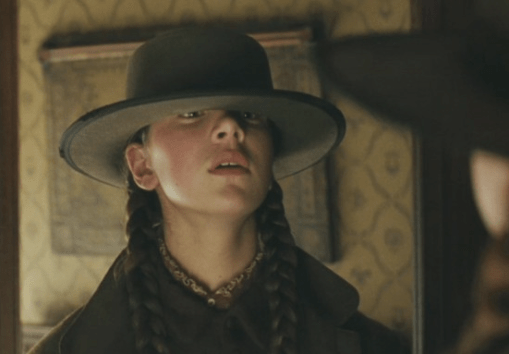
 Just last Christmas, “True Grit” was an unprecedented success, grossing $171 million, scoring nearly unanimous critical support, and raking in 10 Academy Award nominations. The Coens’ film grapples with the tricky question of revenge; in the movie, Hailee Steinfeld’s spunky 14-year-old Mattie Ross embarks on a journey to kill Tom Chaney, the man who murdered her father in cold blood. She is seen as the hero of the film, and when she ultimately succeeds, the audience cheers. The character representing justice, Matt Damon’s LeBoeuf, is a clown that is mostly mocked by the audience.
While the Coen Brothers likely expected this to play mostly for their usual niche audience, the excellent film wound up entering the mainstream and playing well into February and March in most theaters. Not to insult the average moviegoer, but I don’t think that many of them understood that “True Grit” is supposed to be a meditation on the merit of retribution, not a vindication of it. The movie is just ENTERTAINMENT, and the Coens deliver a cinematic vengeance that excites inside a theater. But outside that theater, we aren’t meant to feel inspired to deliver payback in such a dramatic fashion.
Which brings me to the matter in question here, the Casey Anthony trial. How does an ordinary 25-year-old mother from Orlando, Florida become “The Social Media Trial of the Century,” according to Time? How does she grace the cover of People alongside Brad Pitt, Angelina Jolie, and Jennifer Aniston? Simply put, people want VENGEANCE. They want to see the death of Caylee Anthony avenged, and they want blood to pay for it.
How do I feel so confident in making this statement? Because most people didn’t need a trial or the deliberations of a jury to reach their own verdict; they just went ahead and pronounced her guilty. Bill O’Reilly even said, “She is as guilty as they come.” Although it is not specifically codified in the Constitution, it is considered a part of common law and an American virtue that someone is presumed innocent until proven guilty. Everyone has the right to due process of law. Everyone has the right to a trial by jury. It is not up to people watching the trial on Fox News from their couch, nor is it up to those catching glimpse on CNN from the water-cooler.
 But how can Americans have strayed so far from the ideals of our Founding Fathers? In my opinion, it’s the means of information that induce such expectations for violent ends. It’s a tired argument, I know. Let’s blame the media and putting cameras in courtrooms for everything! But in this case, the drive for ratings and good television has muddled the distinction between justice and vengeance by adding entertainment to the mix. We have become convinced that the American legal system is only doing its job when it’s convicting people because there is too much crime in this country for punishment to be spared.
All of those title cards for coverage of the Casey Anthony trial, no matter what channel you watched, read “JUSTICE FOR CAYLEE.” But it was never about justice for them, it was about retribution for her. They found a woman who represented all sorts of bad parenting and immoral behavior, two things they could prove without a trial. They made the trial about the condemnation of a woman more for her lack of scruples and less for her action since the case was based largely on circumstantial evidence. They wasted no time calling her a representative of all evil in society.
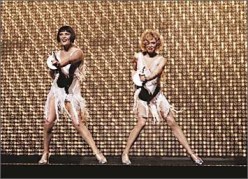
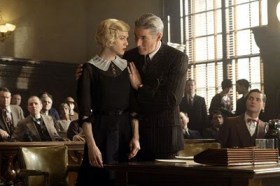
This, to any well-versed film watcher, echoes the message of “Chicago,” Rob Marshall’s 2002 Best Picture winning musical movie. Richard Gere’s Billy Flynn is a master of the media; in the number “We Both Reached for the Gun,” he is shown manipulating everyone literally as marionette puppets, holding their strings and making them dance. He is the best lawyer in Chicago because he can turn the tide of public opinion in favor of his merry murderesses, thus providing a nice complement to evidence that suggests, but doesn’t prove, their innocence. Billy has a mastery of the courtroom too and manages to get false acquittals for Roxie Hart (Renee Zellweger) and Velma Kelly (Catherine Zeta-Jones) because he knows one fact: “This trial … the whole world … it’s all … show business.”
Here is a perfect study of opposites: Roxie is a victim of culture’s evils, while Casey Anthony was made to represent them. The media tried to make her trial a proxy trial for her behavior. But it’s not; it’s about her actions, and the jury could not find in evidence that her actions included murdering her daughter. It makes for good television to focus on her unscrupulous behavior in the wake of her daughter’s disappearance, but it does not make for a trial in the American judicial system.
 While I’m indulging in pessimism at the moment, I don’t believe this condemnation is a final verdict on America’s fate. Now perhaps more than ever, I think “12 Angry Men” rings true and relevant. The movie revolves around a twelve man jury deliberating a case based on reasonable doubt, not unlike the Casey Anthony trial. When they enter the deliberation move, it seems that all will vote guilty. However, one juror known as #8, played by the noble Henry Fonda, votes in dissent. Over the course of Sidney Lumet’s movie, #8 tries to convince the other jurors that their mental picture of the defendant is not enough to justify a vote. As he so eloquently puts it, “It’s not easy to raise my hand and send a boy off to die without talking about it first …We’re talking about somebody’s life here.”
With the death penalty on the table for Casey Anthony, she found herself in a position very similar to that of the Puerto Rican man in the movie. But thanks to one noble juryman, he was saved. As #8 struggles to change the rest of the jury’s mind, they take a second look at the evidence that seems to tell one story yet find that it tells another one – a story where the defendant is innocent. When there are only three holdouts, #8 makes this speech that gets straight to the heart of the trial that has been the center of American attention for months:
“It’s very hard to keep personal prejudice out of a thing like this. And no matter where you run into it, prejudice obscures the truth. Well, I don’t think any real damage has been done here. Because I don’t really know what the truth is. No one ever will, I suppose. Nine of us now seem to feel that the defendant is innocent, but we’re just gambling on probabilities. We may be wrong. We may be trying to return a guilty man to the community. No one can really know. But we have a reasonable doubt, and this is a safeguard which has enormous value to our system. No jury can declare a man guilty unless it’s sure.”
Perhaps Casey Anthony is guilty. That’s what many Americans still think in spite of this verdict. But how many of us have come to this decision based on piecing together the evidence presented in court? I’m going to guess very few of us have. However, whatever notions I may have had about Casey Anthony thanks to Fox News or CNN have been wiped clean today with the jury’s verdict. I’m not sure if the deliberations played out like “12 Angry Men” or if they took on another shape or form entirely. Yet I am going to trust that however they came to their verdict, it is the right one. And if you believe in the justice system that our Founding Fathers envisioned is morally right, then you must scorn notions of retribution and entertainment and believe in their verdict too.
 February could be a lot worse, but I’m wondering if I’ll bother to open my wallet for a 2011 release (thanks to the godsend that is free screenings, I have yet to pay for a movie that opens this year) any time this month. Do studios really just want everyone to go see “
 Have you heard the one about Matt Damon and the abs double? It sounds like a great joke to use at a bar. Here’s the story from



 It looks like Halloween came early (or two months late).

 (9)
(9) (3)
(3) Little change in the “TSN”/”TKS” dialectic as I still believe their duel will be the story of the season and that David Fincher’s Facebook movie will win out. Other than that, the job of a prognosticator is to distinguish the dark horses from those just lucky to populate the top 10.
 Although I don’t agree with the commonly held conception that “The King’s Speech” will be the big winner of 2010’s Oscar race, I do think it will have a nice trophy haul. The voters like this movie, and they want to give it some reward other than Best Picture. Thus, Colin Firth, the very likable and talented performer, gets Best Actor as a testament to the film’s power. I can see it playing out much like 2008 when “Milk” took home Best Actor for Sean Penn and Best Original Screenplay. James Franco may just be too young to win (and he gets to host the show.)
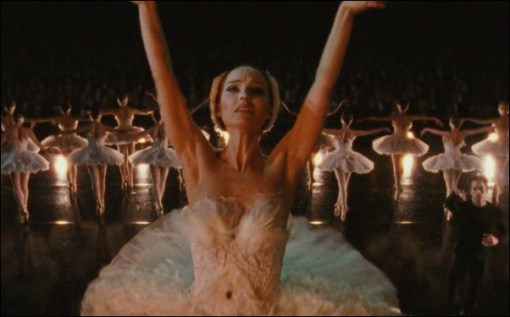
 Little change here as well. I stil think this is Portman’s year, and she will run away with it. Perhaps certain organizations where sentimental votes really count will choose Bening, but I think the Academy knows an incredible, transformative performance when they see one. To quote my own review of “Black Swan” in a shameless plug, “Portman absolutely disappears into her character. It’s a shocking and startling transformation due to Portman’s dedication to learning the craft of ballet and her impeccable acting.”
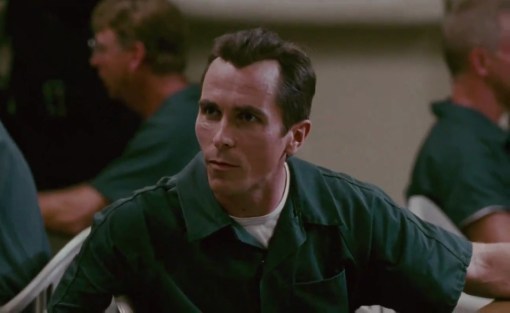
 Since I last updated these predictions, people actually saw “The Fighter” and confirmed my suspicion that Christian Bale would steamroll his way through awards season. He has the respect to get there (despite his temper), and he is deserving. Paramount will easily be able to make the case that this is “his time.” Apologies to Geoffrey Rush, but your time was in 1996 when you won Best Actor.
 Finally, some commentary on the screenplay race that you’ve been craving since September. Don’t lie, this is exciting to you.
 If “The Social Network” should be eclipsed by “The King’s Speech,” it should still take Best Adapted Screenplay without a hitch. Aaron Sorkin’s genius script will probably be the movie’s most appealing offering over the season, and this category seems to seal the deal for the Facebook flick to score at least one Oscar. Then again, we said the same thing about “Up in the Air,” and then “Precious” came out of nowhere to steal.
 Unlike “The Fighter,” which seems Academy-appealing on premise, “True Grit” is appealing on pedigree. It comes courtesy of the Coen Brothers, who each have three statues thanks to their work producing, writing, and directing “No Country for Old Men” in 2007 and another for writing “Fargo” in 1996. Including the nominations they have received for editing under the alias Roderick Jaynes, Joel and Ethan Coen have each received a whopping
  Bridges isn’t the only threat the movie has in the acting categories. Two-time nominee Matt Damon looks to make an entry into the Best Supporting Actor category, as does prior nominee Josh Brolin. The race still has no clear frontrunner (hard to believe), and either of them with enough buzz when the movie screens around Thanksgiving could lead to a major shake-up.
 Brolin, on the other hand, has only recently emerged as an actor to be reckoned with thanks to roles in “Milk,” which earned him an Oscar nomination for Best Supporting Actor, and “No Country for Old Men,” the Coen Brothers’ Best Picture winner which earned him a SAG Award for Best Ensemble. He has a more volatile personality, and this could harm him. In “True Grit,” he plays the outlaw Tom Chaney, another villainous role that he has gained so much notoriety playing. Unlike the Best Supporting Actress category where double nominees from the same film are common (see the
  But perhaps the movie’s biggest wild card is the spunky teenaged heroine Mattie Ross, played by newcome Hailee Steinfeld. She will be a more central figure in the 2010 version of “True Grit” since the novel focused more on her perspective. Still, Steinfeld will likely be campaigned for Best Supporting Actress where the field is thin and the category is more hospitable territory for young actresses. In the past decade, 13-year-old Saiorse Ronan and 10-year-old Abigail Breslin have been nominees for “Atonement” and “Little Miss Sunshine,” respectively. The category has also seen pint-sized winners like Tatum O’Neal for “Paper Moon” at the age of 10 and Anna Paquin for “The Piano” at the age of 11.

 Marshall and the Movies
Recent Comments