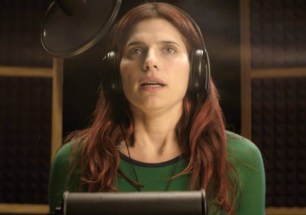
INTERVIEW: Lake Bell, producer, director, writer, and star of “In A World”

23 08 2013

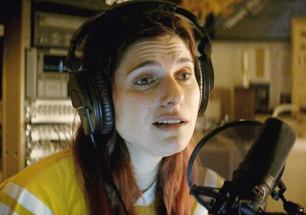
Lake Bell in IN A WORLD“I like words, I’m very fond of them,” began Lake Bell.

It was easy to tell that her opening statement was no lie because Bell had no shortage of words in the 30 minutes I got to spend in a roundtable discussion with her.  Despite having landed in Houston at 3:00 AM that morning and then getting up to do morning shows at the crack of dawn, she was as sharp and clever as her debut feature film, “In A World.”  Bell proved herself to be quite the jack of all trades on the movie, serving as its writer, director, producer, and star.  And in case you were wondering if she spread herself too thin, here’s an excerpt from my review of the film:

“As a feature debut for Bell (who I only knew from her supporting turns in ‘It’s Complicated‘ and ‘No Strings Attached‘), the film is certainly promising for many great things to come.  She makes no major missteps in her finely-tuned comedy.

And if writing and directing wasn’t enough, Bell goes full Woody Allen and stars in the film too […] ‘In A World,’ despite being just over 90 minutes, manages to squeeze in more than just Carol’s story as well.  Not unlike ‘Hannah and Her Sisters’ (though without all the philosophical and existential postulating), Bell involves us in the lives of Carol’s friends and family along the journey.”

http://www.youtube.com/watch?v=BpFNTvA93iY

In just the brief amount of time I got to spend talking with Bell, she was able to talk not only about the basics of “In A World” but also about some of the deeper thematic and feminist underpinnings of the film.  If you watch the film and wonder if it means to sound intelligent, I can tell you with confidence that it is.  Lake Bell is a very smart writer with a lot to say about women in cinema and all other professional fields.  She’s reluctant to turn herself into an activist, however, prefacing one of her most profound remarks with “not to get on my soapbox…”

In A WorldBell was willing, though, to call out girls suffering from what she calls the “sexy baby vocal virus,” a second wave of Valley Girl-itis.  The element, now sutured into the fabric of the film, did not come into the script until later drafts.  But according to Bell, “The sexy baby vocal virus was something that I personally had been preaching to my friends about, and then I had a friend that said, ‘I don’t know why you don’t have that in the script.  It should be your protagonist’s plight.’”

To Bell, it’s more than just an annoyance.  After studying voice in school, she knows it is merely an affection.  By putting on this voice, they are also stripping away a sense of feminine empowerment.  “I felt like, as a woman,” she said, “it was evoking this feeling that women are less than, that people don’t believe in themselves.”

The good news, Bell shared, is that the “sexy baby vocal virus” can be beaten.  These women can choose to sound like Lauren Bacall, Faye Dunaway, Anne Bancroft, or Charlotte Rampling, Bell’s vocal role models.  It just requires a lot of self-awareness and determination to stop, not unlike when Bell decided she did not want to say like every other word.

The feminist critique goes far beyond this memorable addition to the plot, however.  Bell’s film takes a look at competition in the voice-over industry and the difficulties women face when trying to enter it.  Granted, movie trailers were dominated by one man for so long, the golden voiced Don LaFontaine.  According to Bell, LaFontaine’s estate owns the phrase in a world, but the royalty payments aren’t the reason why it’s fallen out of use.

“It’s considered archaic now,” she reamrked, “it’s considered outdated.  Which is why in the movie, that it being resurrected, they’ve decided to make it a thing … is kind of a fantasy for me because I want them to bring it back.  But it’s not as trendy to do it now.”

http://www.youtube.com/watch?v=PjWKE-IJ4R8

(And if you’re curious, Bell pointed out that there is only one movie trailer with female voice-over: Melissa Disney narrating the “Gone in 60 Seconds” trailer.)

Though it might seem that Bell’s own experiences trying to break into the business would provide the framework for “In A World,” the foundation was laid much earlier for her when she was a young girl at her father’s racetrack.  As she put it,

“I was always around cars, he was always racing, I was always around the track since I was a little girl – another male dominated world that’s super cutthroat.  And lots of egos swinging around, lots of colorful characters, and if anything I used my father’s interactions with people on the sidelines of the racetrack for the voice-over industry when I later wrote this movie.”

Lake Bell“In A World” came about, though, much further down the road after a few hard knocks and some serious discussion:

“From my own experience, even just in organic conversations, I remember just thinking about the words ‘in a world…’ and how fun it was.  And then the conversation went to, ‘gosh, isn’t it strange that women have never done that?’

And then the conversation blossomed into that of something a little more serious, the sort of feminist issue at bay – an omniscient voice, an authoritative voice, is almost never female.  And why is that?  And perhaps it’s just ‘oh, people are just used to the male voice, that’s just how it is.’  Well, I don’t know if that’s quite good enough.

I think it’s strange when you have female-dominated content, addressed to women, and there’s still a male selling it to you.  Especially in the movie trailer.”

Bell admits that at least tampon commercials seem to get it right with a female voice selling you the product.  But she believes that the “fear-based” movie industry is too timid to shake up the system and employ women’s voices in trailers.  She makes a reasonable argument: “If it’s a chick flick, you’re already going for the female audience […] why not have a female authoritative voice to go see the movie?”

Through no fault of Bell’s, “In A World” is being released into a climate where women’s stories are still undervalued by major Hollywood studios.  This summer, two full years after “Bridesmaids” and “The Help” were box office smashes, there was just one movie with a female protagonist: “The Heat.”  Bell said that she loved the Bullock-McCarthy buddy comedy, admitting “[‘In a World’] is nice to be next to ‘The Heat’ where there is a dearth of female-driven movies.”

Asking her about “The Heat” opened up another conversation, perhaps her most profound statement of the day.  Bell pointed out that there’s a vast double standard in the way that our society looks at films based on the gender of their protagonists.  (Yes, this was the aforementioned “soapbox” moment.)

“The word rom-com has become such a negative stamp only because even though I love a great rom-com, when it’s a female-driven movie, it’s often immediately stamped as a rom-com.  While it’s not technically a love story, it’s a comedy that has family drama and family fodder.  And there’s romance and there’s all kinds of industry competitiveness and ego bashing.

Gosh, I hate to get on my soapbox – but if it’s male-dominated and has to do with marriage and relationships and love, it’s never called a romantic comedy.  Like ‘Wedding Crashers’ is LITERALLY about weddings and people getting together.  If it were a female-driven movie, it would be considered a rom-com.  Because it’s a male-dominated movie, it’s a BUDDY comedy!”

Lake Bell as Carol SolomonSo after taking a powerful stand for women on film, what’s next for Bell?

She’s currently at work on her next feature called “What’s The Point?”  When I asked her if she could share anything, she replied, “I can’t really speak to ‘What’s The Point?’ because it’s so embryonic at this point and I think it would be doing it a disservice if I speak too much about it.  But I’ve been working on it for a year intermittently and I continue to do so.”  After my time with Lake Bell, I certainly look forward to seeing her further explore and develop her voice.  She has meaningful things to say; someone needs to give her a louder microphone.


All About “Amour” on Either Side of the “Window”

20 08 2013

The following piece was written for Dr. Mary Dalton‘s Film Theory and Criticism in spring 2013.

SPOILER ALERT: The following post discusses major plot points in both Alfred Hitchcock’s “Rear Window” and Michael Haneke’s “Amour.”

What do an American film from the 1950s about a cooped up reporter and a French film from 2012 about a woman dying slowly from a debilitating stroke have in common?  While “Rear Window” and “Amour” seem to be an extremely unlikely pair, they explore common themes of love in confined spaces.  Both films take place almost entirely within a single apartment, although Alfred Hitchcock’s classic focuses mostly on the action outside the window while Michael Haneke chooses to keep his camera focused on what happens inside the window to the outside world.  Yet in spite of their different emphases, both filmmakers come the conclusion that couples must turn their sights inward in order to fully realize their love for each other.  Through forced identification, Hitchcock and Haneke’s films powerfully convey the dangers that come along with spectatorship.

Rear Window

A line delivered at the beginning of “Rear Window by Thelma Ritter’s Stella, “we’ve become a race of Peeping Toms,” has become a famous and often quoted passage from the film.  Most, however, tend to cut out the sentence that follows it: “What people ought to do is get outside their own house and look in for a change.”  Taking that sentence into account as well, Stella is not only offering merely an implicit critique of the voyeurism of humanity – a flaw largely compounded by Hitchcock’s contemporaries in the cinema – but also bringing up a seldom noticed side effect.  She is taking L.B. Jeffries, known in the film as “Jeff,” to task for being so concerned with the lives of others that he lets his relationship with his girlfriend begin to rot.

Throughout the film, Jeff’s obsession with watching the world out his rear window is seen as an impediment to the love and intimacy between he and his girlfriend, Lisa.  Every time they begin to hold each other and show tenderness, his thoughts about his neighbors’ exploits distract him, often compelling him to pick up his binoculars and look in on them. Hitchcock uses forced identification with Jeff’s outward gaze by the editing style of subjective POV, making the viewer not merely a party to this denial but entirely complicit in it.  Jeff is never seen through the window, just looking out it from the shadows, a clever replication of what the audience does in the act of watching the film in a dark theater.

RearWindow5

By his casting a gaze out the window, he neglects her needs not only intimately but also on a deeper relational level; it is clear that she is seeking marriage, yet Jeff seems clueless or at least ambivalent towards her regular hints. Their love is always broken off by one of them, normally Lisa, before it can escalate.  The film’s final shot, however, hints at some sort of reconciliation between the couple, though nothing is made explicit.  While the neighbors go about their lives, Jeff sits in his wheelchair with his back turned away from the window, soaking in the sunlight rather than lurking in the shadows.  He falls asleep with a smile on his face; meanwhile, Lisa moves from reading a serious book to please him to reading a fashion magazine for her own pleasure.  Her demeanor and posture appear markedly more relaxed and comfortable, hinting at a much-improved relationship with Jeff’s gaze turned inwards towards her.

Amour

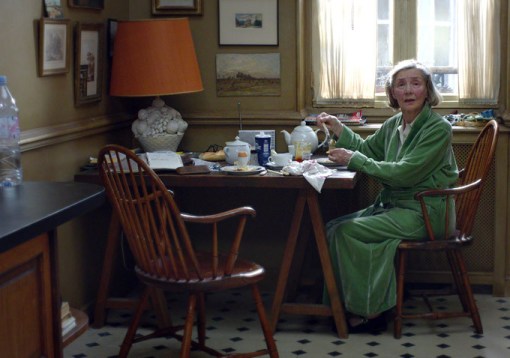
“Amour,” on the other hand, offers no such getaways for its characters or the audience watching the film.  Georges and Anne, the octogenarian couple, are trapped with each other in the apartment as she slowly succumbs to complications a series of strokes.  The two spend nearly every moment together; Georges even pays someone to go get their groceries so he can stay and monitor Anne.  Similarly, Haneke never grants the audience a single moment of escape from their lives, confining the viewer into the apartment as an objective, third unacknowledged presence in the room.  His sparse editing that chooses to leave the dull bits of life in the film as well as his predilection for long shots in deep focus provides the audience with a cold reality that they either have to accept watching or must avert their eyes from entirely.

As Anne’s condition worsens, she begins to express her great dismay with her physical state, eventually telling him, “Georges, I don’t want to carry on. You’re making such efforts to make everything easier for me. But I don’t want to go on. For my own sake. Not yours.”  Georges initially writes off her request as ridiculous because he believes she does not want to keep living to spare him pain.  Yet after she suffers a second stroke that takes away her ability to speak coherently, Georges begins to see just how miserable an existence she has come to live.  He observes as nurses give her showers, and the slightest wrong touch brings her excruciating pain.  He tries to feed her, yet she spits the water back in his face.  Her anguish leads him to slowly remove his own opinions from his view and focus all the more closely on her.

With all this attention and gaze directed solely inwards at their relationship, Georges eventually comes to do the selfless thing and put her out of her misery.  He achieves this in a respectful and loving way by putting her at ease by telling her a pleasant childhood story and then by smothering her.  Had he been aloof and turned his attention outside their apartment, he would not have noticed her lifeless life, nor would he have lovingly honored her request.  Similarly, the audience through their forced witnessing of events come to interpret his killing as an action not motivated by selfishness; rather, they see it as fulfilling the action indicated in the title: love.  It just takes the course of the movie for Georges to gain the same level of objectivity that the audience has been given since the beginning of the film.  Only when that is achieved can he realize that true love is complicated and requires tough decisions.

Amour

“Rear Window” and “Amour,” despite their different plots and tones, arrive at the same general truth within the setting of an apartment.  By casting our gaze abroad, we ignore the problems at the heart of our most treasured relationships.  Only when we look inward and give our own lives the attention they deserve can we truly find the love we need to give others.  Ironically, to liberate us from our obsession with spectatorship, Hitchcock and Haneke feel that they must first trap us in it.


LISTFUL THINKING: 10 Performers Who Will Win Oscars in the Next 10 Years

26 02 2013

Before it’s too late and no longer topical, I wanted to share a list that has been floating in my mind for a while.  On Sunday night, the Academy welcomed Jennifer Lawrence and Anne Hathaway into their club.  Now, they can join Daniel Day-Lewis and Christoph Waltz in adding the phrase “Oscar Winner” before their name is mentioned.

But within the next 10 years, who will join them in the pantheon of acting?  I have a few suggestions…

Male

Gatsby

Leonardo DiCaprio
3 Oscar nominations
9 Golden Globe nominations, 1 win
8 SAG Award nominations

COMMENTARY:  The question isn’t “if.”  It’s “when.”  And that could be as early as this year.

JGL

Joseph Gordon-Levitt
2 Golden Globe nominations
4 SAG Award nominations

COMMENTARY:  With the boy-next-door turning into a renaissance man as he heads behind the director’s chair, JGL is headed towards golden child status.  Now it’s just time for the Oscars to catch up.

Ryan Gosling in The Ides of March

Ryan Gosling
1 Oscar nomination
4 Golden Globe nominations
2 SAG Award nominations

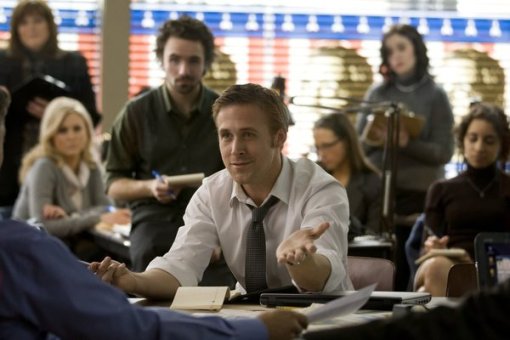
COMMENTARY:  I don’t really think I need to elaborate here as Gosling is one of the emerging Hollywood leading men.  The only thing keeping him from an Oscar, in my mind, is his eclectic role selection.

Brad Pitt in Moneyball

Brad Pitt
4 Oscar nominations (3 as actor)
5 Golden Globe nominations, 1 win
5 SAG Award nominations, 1 win

COMMENTARY:  As one of the highest-wattage stars of the past decade moves into a slower, more retrospective phase of his career, the role that will land Brad Pitt his Oscar should materialize.

George Clooney

George Clooney
8 Oscar nominations (4 for acting), 2 wins (1 for acting)
12 Golden Globe nominations (8 for acting), 3 wins
13 SAG Award nominations, 4 wins

COMMENTARY:  Yes, Clooney has already won his Oscar(s).  But I am convinced he will win his trophy for a leading role as he is such a prominent leading man in Hollywood.

Female

Amy Adams

Amy Adams
4 Oscar nominations
4 Golden Globe nominations
5 SAG Award nominations

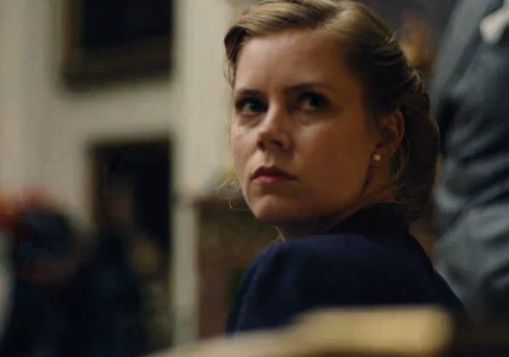
COMMENTARY: 4 nominations in 7 years.  That’s impressive.  It’s going to happen, soon.  Perhaps the first time she gets a big leading role?

Linney

Laura Linney
3 Oscar nominations
6 Golden Globe nominations, 2 wins
4 SAG Award nominations, 1 win
4 Primetime Emmy nominations, 3 wins

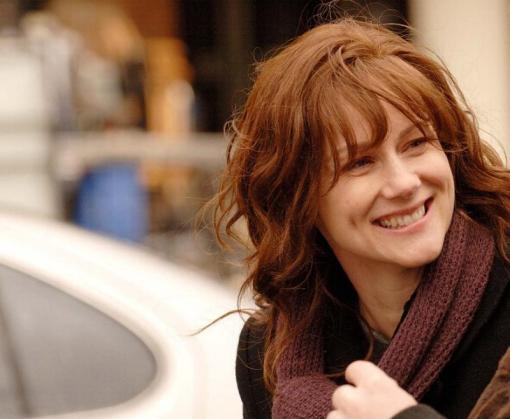
COMMENTARY:  Though as of late Linney has been more television oriented, I still don’t think the cinematic community is done paying its dues to this talented actress.

Julianne Moore in The Kids Are All Right

Julianne Moore
4 Oscar nominations
7 Golden Globe nominations, 1 win
10 SAG Award nominations, 1 win
1 Primetime Emmy win

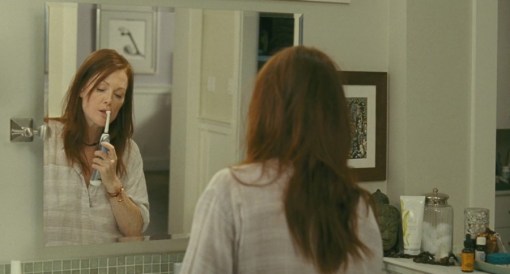
COMMENTARY: If “Game Change” had been released in theaters and not on HBO, Moore would have her Oscar.  It’s been over a decade now since her last nomination, but I don’t think that means the impetus to give her award has disappeared.

10 for '10: Best Movies (The Challenge)

Emma Stone
1 Golden Globe nomination
1 SAG Award win

COMMENTARY: She’s a new Hollywood “It” girl.  Once she lands the big and flashy role, she will get an Oscar.  (Heck, they had her announce the nominations this year, something usually reserved for prior winners/nominees.)  She’s a beloved figure with all the charm and accessibility of Jennifer Lawrence with a little more polish and refinement.

Michelle Williams

Michelle Williams
3 Oscar nominations
3 Golden Globe nominations, 1 win
4 SAG Award nominations

COMMENTARY: Williams showed she had some serious range in “My Week with Marilyn.”  Not that her mopey characters weren’t good, but now we know she’s the real deal.

What do YOU think?  Who else is destined for Oscar glory in the next decade?


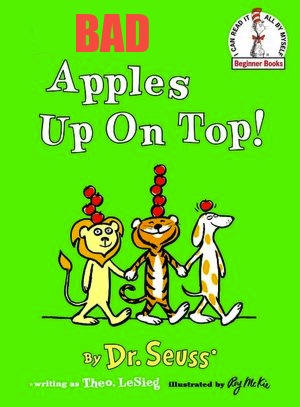
FEATURE: Bad Apples Up On Top

20 01 2013

NOTE: This post was originally published on Dead Politics Society, a blog for my Political Sociology class in the spring of 2012, as my final paper.

“Let me tell you about the very rich,” wrote F. Scott Fitzgerald, “they are different from you and me.” If you look at eight movies that specifically tackle economic malaise following the 2008 recession, you would find that Fitzgerald rings true still today. They have Degas paintings in their office (The Company Men), expensive sports cars in their garage (Margin Call), and pools with a $100 bill painted on the bottom above their penthouse (Tower Heist).

Never mind that hundreds of feet below their offices and miles from their mansions, the unemployment rate swelled to 10% and 2.3 million Americans had their homes foreclosed. These films depict the fat cats of corporate America thriving off the misery of the middle-class, setting up two powerful frames for moviegoers to view the tough times. To borrow terms from Diana Kendall (2011), the upper crust is repeatedly portrayed through “bad apples framing” while the middle-class is seen through “victimization framing,” a clash which sets up audiences to view the post-recessional landscape as a class conflict.

Each of these films represents a frame that is episodic in nature since they are limited, unrelated narratives dealing with the financial crisis in some way; these reports attribute individual responsibility to large societal problems (Iyengar 1996). So rather than closely scrutinizing how capitalism itself might be responsible for middle-class woes, post-recessional cinema endorsed a theory of “bad apples capitalism.” This belief, rooted in the idea that a few people who refuse to play by the rules can ruin an entire system (Baum 2011), allows viewers to direct their anger at a person rather than an abstract concept (Kendall 2011).

http://www.youtube.com/watch?v=UKCGydtInzA

Indeed, it is much easier to blame Gordon Gekko, the banker who refers to money as a “b*tch who never sleeps” (Wall Street: Money Never Sleeps), and John Tuld, the CEO who calls money “made up” (Margin Call) than to find the entire capitalistic system guilty for the current American misery. The “bad apples” emphasis allows the movies to rile cages and stir anger without inciting revolutionary sentiment. They villainize the products of corporate America without actually attacking corporate America. (Corporate profits make these movies happen, so “bad apples” is about as close as they can get to critiquing the system.)

http://www.youtube.com/watch?v=G97sNcbAX-M

To emphasize the corruption of the rich corporate moguls, the movies shower us with lavish descriptions of their lifestyles. They chat about their million-dollar paychecks while the financial system teeters on the verge of collapse (Margin Call), and we hear about their private islands in Belize (Tower Heist) as well as how they make 700 times the salary of the average worker in their company (The Company Men). And all of this has blinded them to the plight of their workers – they claim to work for their shareholders instead of their employees (The Company Men), rob hardworking staff of their pensions (Tower Heist), and claim that massive layoffs present an “opportunity” for those left at the company (Margin Call).

Meanwhile, the middle class, out of their sight and most definitely out of their minds, is shown as trying to preserve their virtues and lifestyles amidst the turmoil. They have to sell their car to get by (Larry Crowne), take on a bartending job at night to put food on the table (Win Win), and move back in with their parents out of necessity (The Company Men). Jason Reitman’s Up in the Air takes the most wrenching look at their economic woes, putting real downsized workers in front of the camera to reenact their firings and rehash their financial fears. Current cinema has, in other words, provided a fresh set of faces to fit the bill for the “new poor” archetype that first came to prominence during recessions in the 1980s (Gilens 1999).

(NOTE: Both of these clips show firing scenes with staged actors, but they echo the general sentiment of the truly unemployed.)

However, the middle class is normally defined by their values rather than income (Kendall 2011), and post-recessional cinema makes its depiction go further than just merely downward mobility: the crisis threatens to break the country’s moral backbone. The economy forces them to contemplate taking money unethically from the elderly (Win Win), relapse into alcoholism (Everything Must Go), and launches them into depression that ultimately proves suicidal for some (Up in the Air and The Company Men). In the extreme case of Tower Heist, a comedy that borders on farce, fired workers even hire a convicted felon to help them steal $20 million from a rich man who conned them. Sadly, Hollywood showed through this recession that the squeeze forced them to budge on their values.

Ultimately, a hopeful Hollywood ending comes for the middle-class that allows them to reconnect with their values and inherent goodness (Kinkle and Toscano 2011). Yet most films provide a pass to the people who caused the suffering as well. They make over a billion dollars off the crisis (Wall Street: Money Never Sleeps), walk out the door with a $90 million severance check (The Company Men), and giddily look forward to profiting from the meltdown (Margin Call). So why do they get off easy? Honesty.

http://www.youtube.com/watch?v=EVe2_jzT2B4

In real life, these executives not only escaped punishment but also saw their fortunes grow. The filmmakers want us to be angry when the movie ends. So far, it has worked. Polls show that 60% of Americans supported cutting payroll taxes, and over half support raising taxes only on people who make more than $250,000 a year. If Obama ever gets the Buffet rule passed, he owes Hollywood a debt of gratitude.

http://www.youtube.com/watch?v=JvaTjJpoQlg

For full bibliography, see the original post on Dead Politics Society.


LISTFUL THINKING: Most Anticipated Movies of 2013

2 01 2013

I’ll still be stuck in 2012 at least until the Oscars are handed out and until then will be filling in with reviews of some of the movies I missed from the year.  But it’s time to move forward and look ahead to 2013, which could be a great year for cinema.  Several of my favorite filmmakers have projects due this year, which is what I will have to remind myself as I have to slog through a year that reportedly will give us 31 sequels and 17 reboots!

I had originally prepared a top 10 list for my most anticipated of 2013, but then I realized that since so many were TBD, there’s a chance we won’t see some of these movies until 2014.  So I added three movies at the beginning of the list that premiered on the 2012 fall festival circuit but will hit theaters for paying audiences in 2013.

Without further ado…

To The Wonder

#13
“To The Wonder” (April)
Written and directed by Terrence Malick
Starring Ben Affleck, Rachel McAdams, and Olga Kurylenko

A year ago, Terrence Malick was critical darling with his “The Tree of Life.”  Yet when “To the Wonder” arrived at Toronto and Venice, you’d have thought they were reviewing a Michael Bay movie.  How someone goes from hero to zero that meteorically is curious.  If nothing else, “To the Wonder” could be the most anticipated disaster of the year.

Frances Ha

#12
“Frances Ha” (May 17)
Directed by Noah Baumbach
Written by Noah Baumbach and Greta Gerwig
Starring Greta Gerwig, Mickey Sumner, and Adam Driver

Upon its many festival stops in 2012, it was called a mixture of French New Wave with early Woody Allen.  Combine that with the fact that it’s written and directed by Noah Baumbach, whose “The Squid and the Whale” knocked me off my feet, “Frances Ha” sounds like a movie custom-made for me.

The Place Beyond the Pines

#11
“The Place Beyond the Pines” (March 29)
Directed by Derek Cianfrance
Written by Derek Cianfrance, Ben Coccio, and Darius Marder
Starring Ryan Gosling, Bradley Cooper, and Eva Mendes

They called it a sprawling, multigenerational epic when it played Toronto.  And from the trailer for Derek Cianfrance’s follow-up to the harrowing “Blue Valentine,” it looks ambitious.  And honestly, I may be looking forward to this far more than several of the movies that made the ten.

Nebraska

#10
“Nebraska” (TBD)
Directed by Alexander Payne
Written by Bob Nelson
Starring Devin Ratray, Bruce Dern, and Bob Odenkirk

Alexander Payne’s “Election” alone makes anything from the director worth anticipating.  After a second writing Oscar back from a seven-year hiatus for “The Descendants,” he shortens his gap with a new movie within two years.  I’m a little skeptical, though, since the cast lacks some of the pop of Payne’s previous films, and he also didn’t write this one.

Inside Llewyn Davis

#9
“Inside Llewyn Davis” (TBD)
Written and directed by Joel and Ethan Coen
Starring Oscar Isaac, Carey Mulligan, and Justin Timberlake

The Coens have gone from 1960s Jewish suburbia in “A Serious Man” to the 1880s Wild West in “True Grit.”  And now … back to the 1960s for the folk music scene of Greenwich Village?  They sure like to keep us on our feet.

The Wolf of Wall Street

#8
“The Wolf of Wall Street” (TBD)
Directed by Martin Scorsese
Written by Terence Winter
Starring Leonardo DiCaprio, Jonah Hill, and Matthew McConaughey

Scorsese.  Enough said.  I suspect this will be the role that wins DiCaprio his Oscar, provided he doesn’t take Best Supporting Actor for “Django Unchained” this year.  With “The Great Gatsby” (see below) moving back to 2013, it assures us yet another fantastic one-two punch within the same year from DiCaprio.  “Gangs of New York” and “Catch Me If You Can.”  “The Departed” and “Blood Diamond.”  “Shutter Island” and “Inception.”  Boom, Leo comin’ at ya!

Catching Fire

#7
“The Hunger Games: Catching Fire” (November 22)
Directed by Francis Lawrence
Written by Simon Beaufoy and Michael Arndt
Starring Jennifer Lawrence, Josh Hutcherson, and Liam Hemsworth

I enjoyed “The Hunger Games” this year, though I do see room for improvement in sequels.  Hopefully the writer of “Slumdog Millionaire” and “127 Hours” as well as the writer of “Toy Story 3” can elevate it because I’m certainly not expecting much from the director of the middling “Water for Elephants.”  And I just kind of need something to fill the void left from “Harry Potter.”

Elysium

#6
“Elysium” (August 9)
Written and directed by Neill Blomkamp
Starring Matt Damon, Jodie Foster, and Sharlto Copley

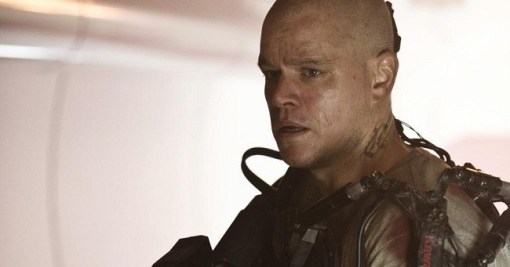
Anything shrouded in secrecy is enough to get me interested; that’s why “Prometheus” was at the top of this list for me in 2012 (that list was just mental).  And I think “District 9” could be merely scratching the surface of what Neill Blomkamp is capable of.  With Matt Damon and Jodie Foster headlining a sci-fi class warfare pic, this could be other-worldly levels of awesome.

Gravity

#5
“Gravity” (TBD)
Directed by Alfonso Cuaron
Written by Alfonso Cuaron, Jonas Cuaron, and Rodrigo Garcia
Starring George Clooney and Sandra Bullock

Speaking of other-worldly levels of awesome, let’s talk Alfonso Cuaron’s “Gravity.”  He hasn’t released a film for 7 years, but his last three films were the incredible stretch of “Y Tu Mama Tambien,” “Harry Potter and the Prisoner of Azkaban,” and “Children of Men.”  His “Gravity” has been described as “if ‘Avatar’ had been released in 1927 a week after ‘The Jazz Singer.'”  What.  Warner Bros. pushed it back from 2012 for what I imagine was fine-tuning, which just has me all the more on pins and needles.

Labor Day

#4
“Labor Day” (TBD)
Written and directed by Jason Reitman
Starring Kate Winslet, Josh Brolin, and Tobey Maguire

Jason Reitman, on a subjective and personal level, is probably my favorite director.  He’s had a flawless 4-for-4 stretch of films in his career, and though “Young Adult” might have been a step down from “Up in the Air,” that’s because the latter was basically perfect.  I’m fascinated to see what he can do with Kate Winslet and Josh Brolin.

Twelve Years a Slave

#3
“Twelve Years a Slave” (TBD)
Directed by Steve McQueen
Written by Steve McQueen and John Ridley
Starring Benedict Cumberbatch, Brad Pitt, and Michael Fassbender

Steve McQueen’s “Hunger” was pretty good, but his “Shame” was an absolutely ingenious triumph.  I can only imagine how he plans to top it in “Twelve Years a Slave,” the story of a New York man kidnapped and sold into slavery.  It’s got one heck of a cast, from Michael Fassbender to Brad Pitt to Quvenzhané Wallis and Dwight Henry’s first roles post-“Beasts of the Southern Wild.”  Is it too soon to cry Oscar?

Star Trek

#2
“Star Trek Into Darkness” (May 17)
Directed by J.J. Abrams
Written by Robert Orci, Alex Kurtzman, and Damon Lindelof
Starring Chris Pine, Zachary Quinto, and Benedict Cumberbatch

Abrams did one heck of a job turning around the “Star Trek” franchise in 2009.  And from the superb trailer, it looks like he plans to boldly go into Christopher Nolan territory with a beautifully lensed and incredibly emotional follow-up.  I can’t wait.

Gatsby

#1
“The Great Gatsby” (May 10)
Directed by Baz Luhrmann
Starring Leonardo DiCaprio, Carey Mulligan, and Tobey Maguire

I heard today that Jay-Z is going to be scoring Baz Luhrmann’s adaptation of “The Great Gatsby.”  My first reaction was to rethink my placement of the movie as my most anticipated of 2013.  Then, I thought about it and realized that it might be a stroke of inspired brilliance that makes the movie even better.  Luhrmann is unparalleled in his ability to take old texts and make them feel alive, modern, and relevant.  Just look at how he took Shakespeare’s “Romeo & Juliet” and made it relevant for a post-MTV audience.  And think about how he seamlessly integrated pop songs into “Moulin Rouge,” set in 1900!  Luhrmann’s flair for the theatrical and opulent borders on gaudy on several occasions  but I think he’s the perfect match for F. Scott Fitzgerald’s tale of the rich and the glamorous.  I have no doubt his use of 3D will serve the movie well too.  All in all, his “The Great Gatsby” will most definitely be for and by our times … and could wind up being the movie that defines 2013.


LISTFUL THINKING: 2012 Superlatives

1 01 2013

New Year’s Day always marks a very interesting balancing act, reflecting on the old while also ringing in the new.  So while people are still thinking about 2012, let me offer up the first annual Superlatives post for the films of 2012.  I’ve already weighed in with the best and worst 10 of 2012, but what about the other 80 movies of the year?  What about the performances?  What about all sorts of other things?  This is the post where I get all sorts of stuff floating in my mind out there.

For the sake of review, I’ll go ahead and re-list my 10 best and worst of 2012.

Top 10 of 2012

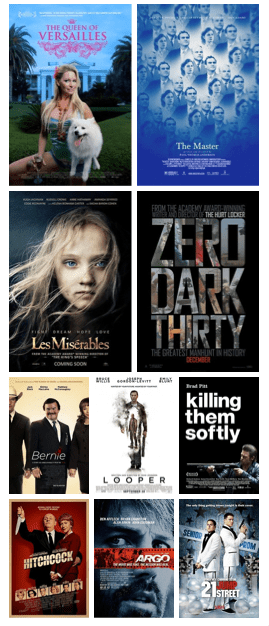
10 Best of 2012: “21 Jump Street,” “Argo,” “Hitchcock,” “Killing Them Softly,” “Looper,” “Bernie,” “Zero Dark Thirty,” “Les Misérables,” “The Master,” “The Queen of Versailles

Prometheus

Honorable Mentions: “Rust and Bone,” “Prometheus,” “Beasts of the Southern Wild,” “Wreck-It Ralph,” “End of Watch,” “Holy Motors

Worst 10 of 2012

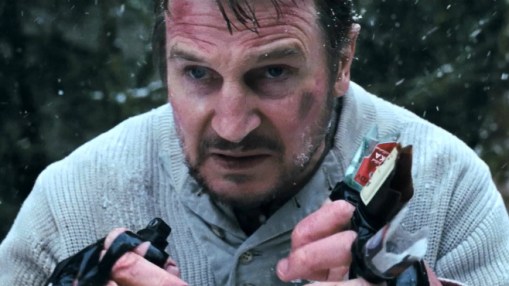
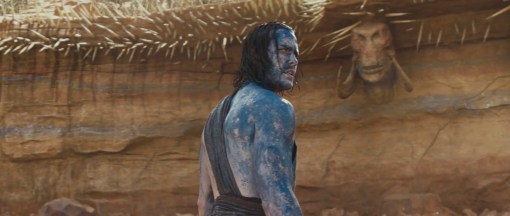
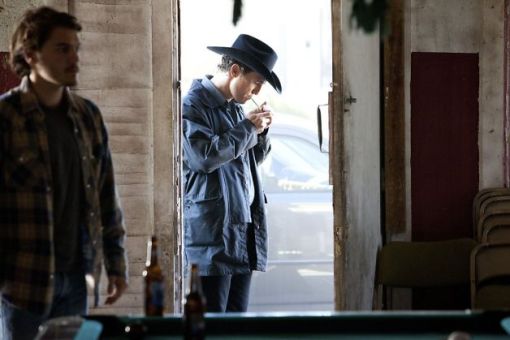
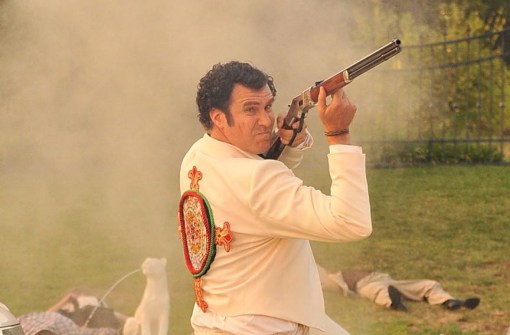
10 Worst of 2012: “The Grey,” “The Bourne Legacy,” “John Carter,” “Gone,” “The Vow,” “Killer Joe,” “The Paperboy,” “The Deep Blue Sea,” “The Watch,” “Casa De Mi Padre

pitchperfect2

Honorable Mentions: “Pitch Perfect,” “Something From Nothing: The Art of Rap,” “Abraham Lincoln: Vampire Hunter,” “First Position,” “Keep the Lights On,” “Being Flynn

10 More 2012 Releases I Still Need to See: “The Hobbit: An Unexpected Journey,” “The Impossible,” “Promised Land,” “The Intouchables,” “Seven Psychopaths,” “Hyde Park on Hudson,” “Not Fade Away,” “Smashed,” “The House I Live In,” “Searching for Sugar Man”

Vanellope

5 Most Surprising Movies of 2012: “Wreck-It Ralph,” “Bernie,” “End of Watch,” “Hitchcock,” “21 Jump Street

Denzel Washington in Flight

5 Most Disappointing Movies of 2012: “The Dark Knight Rises,” “Django Unchained,” “Lincoln,” “Flight,” “The Bourne Legacy

Bachelorette

10 Most Forgettable Movies of 2012 (in alphabetical order): “Bachelorette,” “Hysteria,” “Jeff, Who Lives at Home,” “Lola Versus,” “Man on a Ledge,” “Men in Black III,” “Salmon Fishing in the Yemen,” “Seeking a Friend for the End of the World,” “Take This Waltz,” “Trouble with the Curve

Silver Linings Playbook

5 Most Rewatchable Movies of 2012: “21 Jump Street,” “Silver Linings Playbook,” “Wreck-It Ralph,” “Argo,” “Ted

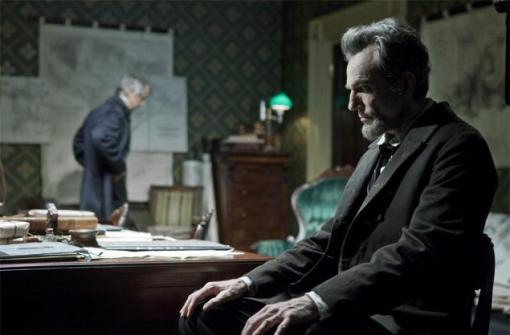
Lincoln

5 Movies of 2012 I’m Glad I Saw But Will Never Watch Again: “Lincoln,” “Amour,” “The Invisible War,” “Compliance,” “ReGeneration

Killing Them Softly

5 Most Underrated Movies of 2012: “Killing Them Softly,” “Les Misérables,” “Prometheus,” “Safety Not Guaranteed,” “End of Watch

The Avengers

5 Most Overrated Movies of 2012: “The Sessions,” “Lincoln,” “Django Unchained,” “Life of Pi,” “The Avengers

PSH

5 Movies That Got Better with Distance and Time: “Killing Them Softly,” “Zero Dark Thirty,” “The Master,” “Silver Linings Playbook,” “Prometheus

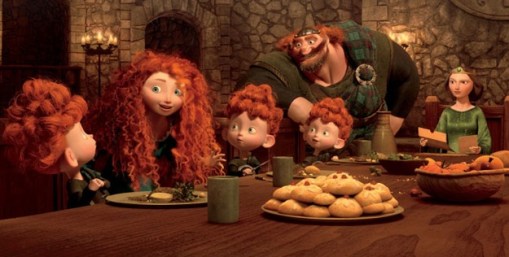
Brave

5 Movies That Got Worse with Distance and Time: “Brave,” “Lincoln,” “Flight,” “The Sessions,” “The Dark Knight Rises

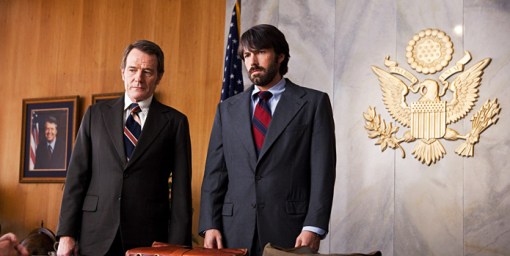
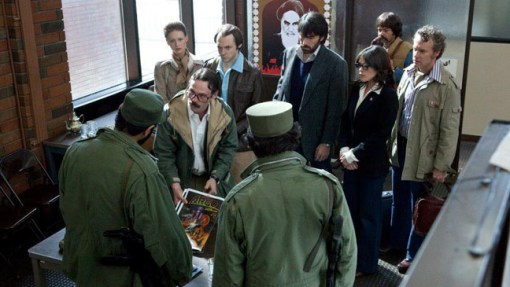
Argo

5 Movies That Felt Shorter Than Their Runtime: “Zero Dark Thirty,” “Les Misérables,” “The Dark Knight Rises,” “Argo,” “Django Unchained

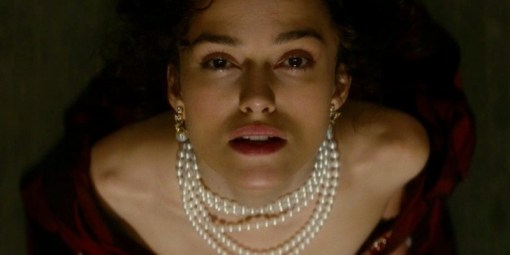
Keira Knightley in "Anna Karenina"

5 Movies That Felt Longer Than Their Runtime: “Lincoln,” “Anna Karenina,” “This Is 40,” “Damsels in Distress,” The Five-Year Engagement

BOTSW

Breakout Performances: Quvenzhané Wallis in “Beasts of the Southern Wild,”  Eddie Redmayne in “Les Misérables,” Ezra Miller in “The Perks of Being a Wallflower,” Garrett Hedlund in “On the Road,” Scoot McNairy in “Argo

Silver Linings Playbook

Breakthrough Performances: Bradley Cooper in “Silver Linings Playbook,” Michael Pena in “End of Watch,” Jack Black in “Bernie,” Channing Tatum in “21 Jump Street,” Elizabeth Banks in “People Like Us

Best Exotic

Breakdown Performances: Anna Kendrick in “Pitch Perfect,” Salma Hayek in “Savages,” Tom Cruise in “Rock of Ages,” Emile Hirsch in “Killer Joe,” Dev Patel in “The Best Exotic Marigold Hotel

frame 01021605R

Best Body of Work in 2012: (tie) Anne Hathaway in “The Dark Knight Rises” and “Les Misérables,” Jennifer Lawrence in “The Hunger Games” and “Silver Linings Playbook

The Deep Blue Sea

Worst Body of Work in 2012: (tie) Rachel Weisz in “The Bourne Legacy” and “The Deep Blue Sea,” Taylor Kitsch in “John Carter” and “Savages

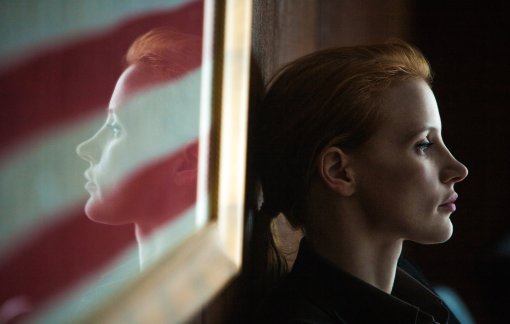
Jessica Chastain in Zero Dark Thirty

Best Heroes: Jessica Chastain as Maya in “Zero Dark Thirty,” Mark Ruffalo as The Hulk in “The Avengers,” Hugh Jackman as Jean Valjean in “Les Misérables

John Carter

Worst Heroes: Andrew Garfield as Spider-Man in “The Amazing Spider-Man,” Taylor Kitsch as John Carter in “John Carter,” Jeremy Renner as Aaron Cross in “The Bourne Legacy

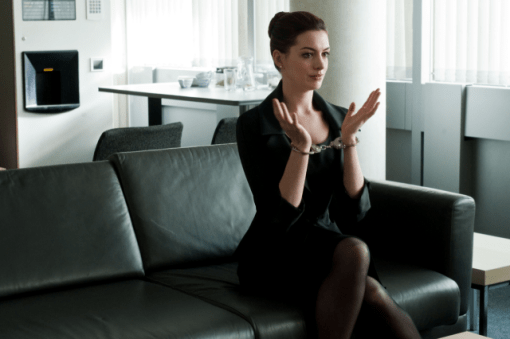
Catwoman

Best Villains: Anne Hathaway as Selina Kyle/Catwoman in “The Dark Knight Rises,” Russell Crowe as Javert in “Les Misérables,” Leonardo DiCaprio as Calvin Candie in “Django Unchained

Skyfall

Worst Villains: Tom Hardy as Bane in “The Dark Knight Rises,” Javier Bardem as Silva in “Skyfall,” Rhys Ifans as Lizard in “The Amazing Spider-Man

Joaquin

Best Possessed Performance: Joaquin Phoenix in “The Master

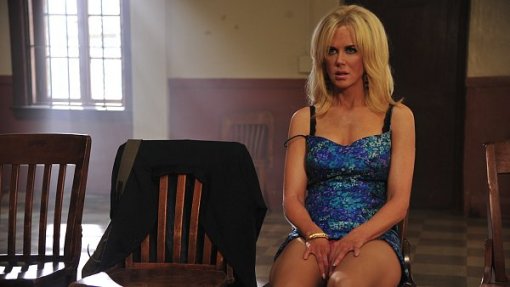
The Paperboy

Worst Possessed Performance: Nicole Kidman in “The Paperboy

Bernie

Best Comedic Performance: (tie) Jack Black in “Bernie,” Channing Tatum in “21 Jump Street

The Watch

Worst Comedic Performance: The cast of “The Watch

Uggie

Best Cameo: Uggie in “The Campaign

Ryan Reynolds

Worst Cameo: Ryan Reynolds in “Ted

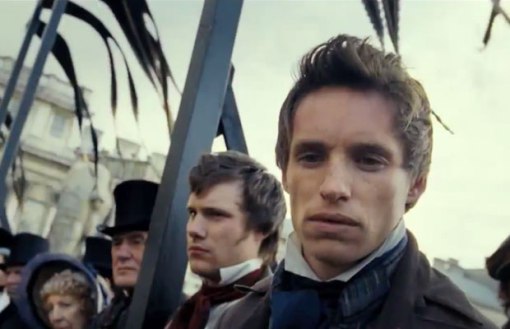
Eddie Redmayne

Best Singing: Eddie Redmayne in “Les Misérables

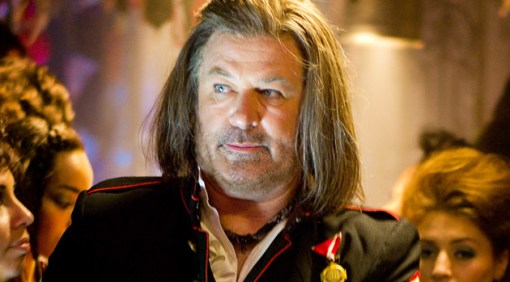
Alec

Worst Singing: Alec Baldwin in “Rock of Ages

That’s about all I can come up with for now … may add to this later!  Happy 2013, everyone!


Not Your Average Top 10: The Best of 2012

30 12 2012

It gets harder to believe every year when this point of the year rolls around, but it never ceases to amaze me when it comes time to make end-of-year lists.  Although if I’m being honest with you all, I’m making the list all year long in my head.  But to know there’s a point of finality is always a little scary.

This is always the most opportune time to muse on trends in the year of film and perhaps even unify the most exemplary movies under a common theme.  To be honest, I thought 2012 was a bad year for the movies.  As of the publication of this post, I saw one hundred movies released in the calendar year – the majority of which could be described as cliched, stale, average, mediocre, unspectacular, color-by-numbers, tired, banal, so-so, or middling.  Or to put all that into one word: unambitious.

2012 was a year where filmmakers and financiers played it safe, resorting to the comfort and ease of the stock and formula.  That can be okay at times, but the upper limit on those types of films is being good – not great.  And when we expect greatness, what we are left with when the credits roll is a lingering sense of disappointment.

So when I sat down and decided to officially declare what I thought the ten crowning achievements of cinema in 2012 were, it was not particularly hard.  But I think that was facilitated not by how good my top ten films were, but rather by how bad the majority of my bottom 90 were.  Save my top two films of the year, I don’t think 2012 gave us any masterpieces (and even those are a stretch).

Yet these ten movies did give me a flickering feeling of hope that there are people in the industry who still have a little bit of that iconoclastic spirit left in them.  These filmmakers made bold works, ones that stood markedly above the otherwise average year … and were not your average version of whatever framework they were working inside.

21 Jump Street

#10
21 Jump Street
Directed by Phil Lord and Chris Miller
Written by Michael Bacall and Jonah Hill
Starring Channing Tatum, Jonah Hill, and Ice Cube

Not Your Average High School Movie

I normally reserve a slot for a comedy in my top 10 – just because I think there are plenty of great contributions to cinema that don’t come in the form of serious, brooding drama.  This slot, however, produced a top 10 berth for “Get Him to the Greek” in 2010, a pick I now regret.  But something tells me I won’t regret including “21 Jump Street.”  It’s a movie that sets out to be an entirely different kind of high school movie, one not perched in the cliches of old.  By redefining who the popular kids can be, it provides fantastic humor and imagination to a subgenre dwelling in obsolescence.  Maybe subsequent films inspired by its greatness will do it best, but “21 Jump Street” most definitely did it first.  And darned well by 2012 standards.

Argo

#9
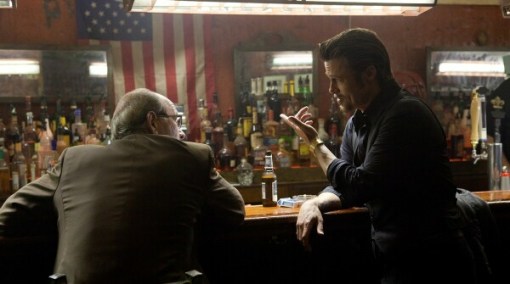
Argo
Directed by Ben Affleck
Written by Chris Terrio
Starring Ben Affleck, Alan Arkin, and John Goodman

Not Your Average Escape Film

If “Toy Story 3” was any indication, no one wants to watch a serious escape movie anymore; they just want to see a tongue-in-cheek parody.  But Ben Affleck’s “Argo,” set against the background Middle East chaos in the 1970s, recalls the brilliant and classic filmmaking of that same era.  It’s a thrilling ride that takes us through three different worlds: the hilariously superficial Hollywood, the dimly-lit and smoky corridors of Washington bureaucracy, and ultimately the precarious and hostile Iran with anti-Western sentiment always palpable in the air.  With every scene, Affleck finds the perfect tone and straps us in for a thrilling ride.

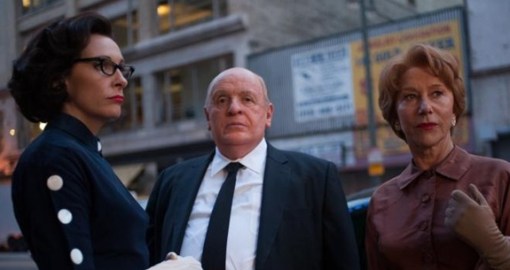
Hitchcock

#8
Hitchcock
Directed by Sacha Gervasi
Written by John McLaughlin
Starring Anthony Hopkins, Helen Mirren, and Scarlett Johansson

Not Your Average Biopic

I’m getting really tired of hagiographic biopics that act as if all people worthy of having their lives documented on film follow the same clean narrative pattern.  Sacha Gervasi’s slice-of-biography “Hitchcock,” focusing on the struggle to get the now-classic “Psycho” made, resists falling into the typical trappings.  It’s got a killer sense of humor and an even better sense of history and the shortcomings of the past.  Gervasi’s biopic is both entertaining and informative, but more importantly, it’s fair because it discards the usual illusions.

Killing Them Softly

#7
Killing Them Softly
Written for the screen and directed by Andrew Dominik
Starring Brad Pitt, Richard Jenkins, and James Gandolfini

Not Your Average Gangster Film

Though I had my reservations upon seeing the premiere in Cannes, “Killing Them Softly” has grown on me in a way that no other film has in 2012.  The daring style Andrew Dominik injects into his film provides such a kick that I’ve been feeling its reverberations all year long.  It’s a movie that uses the framework of a gangster film to make a statement on violence and criminality, but Dominik doesn’t blare out what that statement is.  How he figures out a way to be restrained while kicking out our teeth with his killer finale.

Looper

#6
Looper
Written and directed by Rian Johnson
Starring Joseph Gordon-Levitt, Bruce Willis, and Emily Blunt

Not Your Average Sci-Fi Flick

There’s nothing strong characterization can’t fix, and Rian Johnson employs it to superb effect in “Looper.”  He finds that by taking the time to develop and invest in his characters, particularly Joseph Gordon-Levitt and Bruce Willis’ Joe (at different ages), every aspect of science-fiction gets better.  It results in more investment and far greater payoff.  If this is the new direction of the genre, I am totally on board.

Bernie

#5
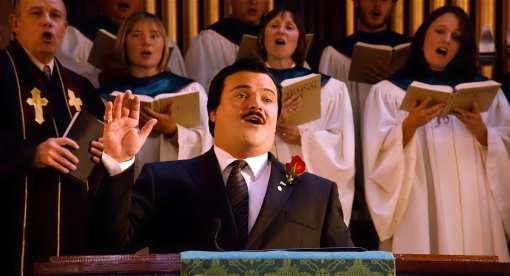
Bernie
Directed by Richard Linklater
Written by Richard Linklater and Skip Hollingsworth
Starring Jack Black, Shirley MacLaine, and Matthew McConaughey

Not Your Average True Story

My love of “Bernie” may be partially inflated due to the story’s setting of Carthage, Texas being close to home in Houston.  But after several viewings to let the novelty wear off, and I’m still a huge fan.  Linklater’s film is a finely tuned tale of a man, Jack Black’s brilliantly played Bernie Tiede, and the spell he cast on a community.  Yet Linklater cleverly recognizes the limits of fiction and captures Carthage with a semi-documentarian angle.  As a result, the magnetism of Black’s character feels all the more authentic when placed in a real-life context.

Zero Dark Thirty

#4
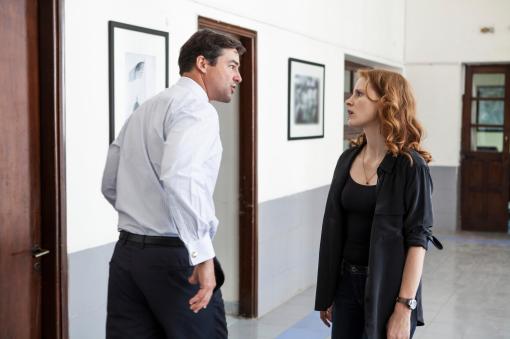
Zero Dark Thirty
Directed by Kathryn Bigelow
Written by Mark Boal
Starring Jessica Chastain, Kyle Chandler, and Jason Clarke

Not Your Average Procedural

Not unlike “Looper,” Kathryn Bigelow and Mark Boal’s “Zero Dark Thirty” finds transcendence in a strong character.  Jessica Chastain’s Maya, the hero of the year on screen, is so fiercely committed to finding Osama Bin Laden that we can’t help but get all worked up alongside her.  We normally watch events unfold from a cool distance in procedurals, but that’s not the case here thanks to Bigelow’s unbelievable ability to create tension and Chastain’s tour de force.

Les Miserables

#3
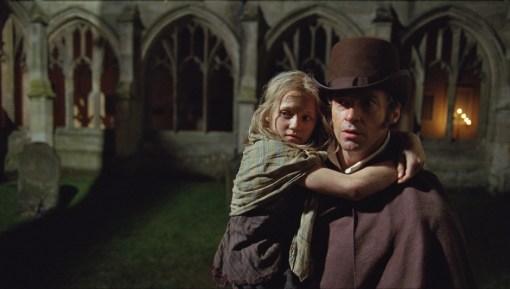
Les Misérables
Directed by Tom Hooper
Written by William Nicholson
Starring Hugh Jackman, Russell Crowe, and Anne Hathaway

Not Your Average Musical

I feel like my 1400 word review said just about all I could say about the brilliance and boldness of “Les Misérables.”  Tom Hooper has literally redefined what the movie musical can be with his movie.  By trying out an entirely different visual feel, he has now opened the floodgate for less literal and more cinematic adaptations of musical theatre.  It’s made even more impressive by the fact that this technical marvel also provides the most emotionally powerful movie experience of the year.

The Master (6)

#2
The Master
Written and directed by Paul Thomas Anderson
Starring Joaquin Phoenix, Philip Seymour Hoffman, and Amy Adams

Not Your Average Paul Thomas Anderson Film

In 2012, I feel like I paid a lot of attention to auteurs, directors with their own personal stamp on their movies.  And this year, so many of them flopped, failing to show signs of growth or simply stalling in familiar grounds to disappointing effect.  Not Paul Thomas Anderson.  With “The Master,” he has truly come into his own as a filmmaker.  Gone are the vestiges of Scorsese and Altman, two directors he imitated successfully for a decade.  He’s now in the realm of Kubrick, not necessarily in terms of feel or style but definitely in terms of impact and originality.  Anderson dared to push the boundaries of cinema in ways we will not likely realize fully for years.  And I just can’t wait to see what revelations his meticulously crafted “The Master” holds in store in the future.

Queen of Versailles

#1
The Queen of Versailles
Directed by Lauren Greenfield
Featuring Jackie and David Siegel

Not Your Average Documentary

The dichotomy between my top two movies of the year is quite interesting.  “The Master” is a marvel of planning and method.  “The Queen of Versailles,” on the other hand, is a happy accident.  When Lauren Greenfield first fixed her lens on the Siegel family, they were on top of the world, building the biggest house in America and throwing caution to the wind.  Then the recession happened, and things got really interesting.  By having her camera in the right place at the right time, Greenfield epitomizes the ability of cinema to capture, reveal, and discover.  With fine tuning and a sharp sociological imagination, her final film is the most inquisitive and incisive work to date about what it means to be an American in the Great Recession.  It entertains us not unlike a Bravo special, yet it also asks us tough questions about the American Dream as well as our notions of success and happiness.  Greenfield captures reality like a documentary but suggests layers of depth normally only found in fiction.  It’s an important work that will undoubtedly serve as a cultural signpost while also continuing to probe our collective psyche.


LISTFUL THINKING: 10 Movies That Are More Pro-Torture Than “Zero Dark Thirty”

29 12 2012

You probably came to this post expecting some sort of meaningful meditation on the use of torture in “Zero Dark Thirty,” when in reality this is anything but that.  It’s a silly mockery of the ten most torturous moviegoing experiences I had in 2012.  These ten films believe in moviegoing as a potent form of torture.  They wielded it well.  (And by well, I mean to terrible effect.)

So without further ado, the ten films of 2012 that are more pro-torture than “Zero Dark Thirty.”  AKA the worst 10 movies of the year.

The Grey

#10
The Grey

The Bourne Legacy

#9
The Bourne Legacy

John Carter

#8
John Carter

Gone

#7
Gone

The Vow

#6
The Vow

Killer Joe

#5
Killer Joe

The Paperboy

#4
The Paperboy

The Deep Blue Sea

#3
The Deep Blue Sea

The Watch

#2
The Watch

Casa De Mi Padre

#1
Casa De Mi Padre


Weekend Update – Golden Globes 2011 Live Blog!

15 01 2012

4:00 P.M.  E! has already started their Golden Globe coverage, so I guess it’s time for me to begin as well!  Time for the best of Hollywood (and television) to come out and get rewarded (or robbed).  Predictions will slowly trickle in as the stars grace the red carpet, but I’ll be writing from the arrivals to the awards to Ricky Gervais’ harsh quips.  With recaps, opinions, and insights, make “Marshall and the Movies” your companion for the Golden Globes!

Read the rest of this entry »


Weekend Update, Oscar Edition – January 8, 2012

8 01 2012

“The funny thing about winning an Academy Award is that this will always be synonymous with my name from here on in.  It will be Oscar-winner George Clooney, Sexiest Man Alive 1997, Batman died in a freak accident…”

– George Clooney accepting the Academy Award for “Syriana,” 2006

“I grew up in a place called Alcobendas where this was not a very realistic dream.  And always on the night of the Academy Awards, I stayed up to watch the show.  And I always felt that this ceremony was a moment of unity for the world because art – in any form – is, has been, and will always be our universal language.”

– Penélope Cruz accepting the Academy Award for “Vicky Cristina Barcelona,” 2009

“Did I really earn this, or did I just wear y’all down?”

– Sandra Bullock accepting the Academy Award for “The Blind Side,” 2010

Why the Oscars?  Why the attention?

I had planned a whole, in-depth analysis here … but then I got sick today.  I want to get something up, so let me lead off with this: the Oscars are about setting the tone for an industry.  It’s about making and rewarding careers.  It’s about celebrating the best of an industry.  It’s about capturing a moment in time, reminding future generations of what the year meant to those who lived through it.

Revised Predictions

Best Picture

  1. The Artist
  2. The Descendants
  3. The Help
  4. War Horse
  5. Midnight in Paris
  6. Hugo
  7. Moneyball
  8. The Tree of Life
  9. The Girl with the Dragon Tattoo
  10. Bridesmaids

As far as I’m concerned, the top six aren’t going to change.  “Moneyball” may or may not make it in, given the passion for the movie that may or may not exist.  And “The Tree of Life” could sneak in as the top choice of many voters, but I don’t feel comfortable predicting that, nor do I think the late surge of “Dragon Tattoo” love will translate into a Best Picture nomination.

Now, onto the state of the race. It looks like 2008 all over again in the Oscar race.  The little movie that could then was “Slumdog Millionaire.”  It was a consensus critical favorite and won the BFCA (Critic’s Choice), then trumped the more conventional Globes play “The Curious Case of Benjamin Button” in the drama category, and capped off its all-around sweep by taking the SAG ensemble prize without having any big stars to boast … and then pretty much every guild too just for fun.  You could say “Button” or “Milk” posed a serious threat – and “The Dark Knight” might have been a formidable foe had it not been snubbed – but everyone knew it was “Slumdog” all the way.

Similarly, in 2011, the oh-so-typical Oscar movie yet anything BUT typical “The Artist” looks about ready to lap the competition.  It’s been the critical darling of the year but doen’t have the unanimity that “The Social Network” had last year.  Thus, it has become their gentle suggestion of the best movie of the year, not like the mandate that backfired last year.  It has been scoring everywhere it needs to score – a field-leading 11 nominations at the Critics Choice Awards including Best Picture (which it will most likely win), a field-leading 6 nominations at the Golden Globes including Best Picture, and 3 nominations at the SAG Awards including Best Ensemble.  Now all it needs to do is start winning things to make it undeniable.

Running closely behind is Alexander Payne’s “The Descendants,” which looks to be the “Milk” of 2011 as it seems to be the favorite for both the Best Actor and Best Adapted Screenplay trophies.  It could win Best Picture; indeed, it seems likely to win Best Picture in the drama category at the Golden Globes.  But in a year where nostalgia and an old-fashioned yearning for movies to take us out of our misery – not face it – could hurt this movie which is already burdened by comparisons to Payne’s last film, “Sideways.”

Then again, having a virtual monopoly on the brain vote may help “The Descendants” because the heart vote is being tugged in a number of directions.  “The Help” makes a big case as it’s a period piece (Oscars love the past), it’s a feel-good movie (“The King’s Speech” won last year), it has real audience support ($169 million), and it has the actors behind it.  Davis and Spencer are both serious threats to win their categories, and I would definitely consider “The Help” to be the favorite for the coveted SAG ensemble prize.  Given how well-acted the movie is down to its core, this may be the movie that rallies the biggest branch of the Academy.  But if “The Artist” wins that award, I would consider the race to be pretty much over.

There’s also the case to be made for “Hugo,” which harkens back to the pioneering days of moviemaking, and “War Horse,” which reminds all who see it of the weepy sentimentality and soaring scopes of a John Ford picture.  But with neither making blockbuster cash and neither getting a single nomination from the SAG, it’s really hard to see either mounting a serious threat.  It’s particularly problematic for “War Horse” as it missed a Best Director nomination for Spielberg at the Globes and a Best Adapted Screenplay nomination with the WGA.  Spielberg’s legendary status will likely get him into the Best Director field at the Oscars, but not having a screenplay nomination will be problematic.  Not since “Titanic” in 1997 has a movie won Best Picture without having a nominated screenplay, and only once in the last 10 years did the Best Picture winner not also win a Best Screenplay Oscar.

The acting thing is also an issue as it’s pretty rare for a movie to win Best Picture without an acting nomination.  The last time two times it happened was with “Slumdog Millionaire” and “The Lord of the Rings: The Return of the King” – both of which had the actors’ support as shown by their wins in the SAG ensemble category yet were consensus favorites anyways.  The nomination may be the prize for these movies.

As a final word on the category, don’t count out “Midnight in Paris.”  It’s been flying under the radar, but it could win Best Picture in the comedy category at the Golden Globes.  Woody Allen has won the category twice before, and this is his tenth film nominated for Best Picture overall.  It’s also his fifth Best Director nomination and sixth Best Screenplay nomination.  All this talk about career rewards for Spielberg and Scorsese need to be equally focused on Woody Allen.  The movie has scored with the SAG, PGA, and WGA – so there’s no reason to take this movie lightly.

Best Director

  1. Michel Hazanavicius, “The Artist”
  2. Alexander Payne, “The Descendants”
  3. Martin Scorsese, “Hugo”
  4. Steven Spielberg, “War Horse”
  5. Woody Allen, “Midnight in Paris”

It’s never wise to predict a split Picture-Director ticket … even when the director is as widely regarded as David Fincher, who may come into play as a dark horse for “The Girl with the Dragon Tattoo.”  But in my mind, the top four is set with Hazanavicius, Payne, Scorsese, and Spielberg, who were all BFCA nominees (and all but Spielberg were HFPA nominees).  Woody Allen, to me, seems like the logical fifth nominee.  The director’s branch has nominated him six times, four of which were not a complement to a Best Picture nomination.  They like him, even when they don’t like his movie.  While Terrence Malick may have crafted a more ambitious, director-driven movie, I still don’t see them opting for him over Allen.

Best Actor

  1. George Clooney, “The Descendants”
  2. Brad Pitt, “Moneyball”
  3. Jean Dujardin, “The Artist”
  4. Michael Fassbender, “Shame”
  5. Leonardo DiCaprio, “J. Edgar”

The top three are locked in after getting nominations from the BFCA, SAG, and HFPA.  Fassbender can’t be put in the same category since he missed with the SAG, the group with the most overlap with Academy voters, but he seems pretty safe given that the nomination would be a reward for his ubiquity just as much as his performance.  In addition, physical commitment to a role always plays well with the actors branch; see nominations for James Franco in “127 Hours” and Mickey Rourke in “The Wrestler” as proof.  “Last Tango in Paris,” another controversial NC-17 film, received a nomination for its leading actor back in 1973.   However, his name was Marlon Brando.

Leonardo DiCaprio, after garnering notices from all three of the major groups, would normally be considered a lock.  But here’s my hangup on predicting him: this is a category that almost always requires a quality movie behind a quality performance.  You have to look back to ten years ago when you saw a movie with a Rotten Tomatoes score below 70% – “Ali” at 67% and “I Am Sam” at a staggeringly (and unfairly) low 34%.  “J. Edgar” currently stands at 42% on the review aggregator. Not since 2005 has anyone with nominations for BFCA, SAG, and HFPA missed an Oscar nomination in this category, and that was previous winner Russell Crowe who was up this time for “Cinderella Man.”  It also happened to Paul Giamatti for “Sideways” in 2004, the victim of Clint Eastwood coming out of nowhere and scoring a nomination thanks to the rising tide of “Million Dollar Baby.”

But if DiCaprio misses, who gets in?  Ryan Gosling is having a great year but his two performances could cancel each other out, and neither “Drive” nor “The Ides of March” seem to have much momentum.  There isn’t consensus either on which is the more deserving performance; BFCA nominated him for “Drive” while HFPA nominated him for “The Ides of March.” I feel like this is prime territory for a dark horse candidate to rise … but who will it be?  Michael Shannon for “Take Shelter?”  Joseph Gordon-Levitt for “50/50?”  Woody Harrelson for “Rampart?”  Or will SAG nominee, but still underdog, Demian Bichir capitalize on the actor’s love for his work in “A Better Life?”  Unfortunately, there’s not much opportunity for any of these candidates to gain traction in the race, so you either go smart and pick Leo here or go with a hunch.

Best Actress

  1. Viola Davis, “The Help”
  2. Meryl Streep, “The Iron Lady”
  3. Michelle Williams, “My Week with Marilyn”
  4. Tilda Swinton, “We Need to Talk About Kevin”
  5. Rooney Mara, “The Girl with the Dragon Tattoo”

For the past 15 years, the SAG field has provided a clue to at least 4 of the 5 eventual nominees for Best Actress at the Oscars.  The top four in the field – Davis, Streep, Williams, and Swinton – have all scored nominations from the BFCA, SAG, and HFPA.  Then, the plot thickens. The way I see it, there are three actresses competing for that final slot.  History says go with the SAG nominee, which is Glenn Close in “Albert Nobbs.”  But Charlize Theron is also a threat for “Young Adult” after cracking the field for both the BFCA and HFPA.

And I definitely don’t think anyone can count out Golden Globe nominee Rooney Mara for “The Girl with the Dragon Tattoo.”  People sensed the passion wasn’t there for this film, but it’s been stealthily building a healthy résumé throughout the season.  It was one of the top ten movies for the National Board of Review and the American Film Institute; this week, it was nominated by both the Producers Guild and the Writers Guild.

The movie has supporters where “Albert Nobbs,” which currently sits at 50% on Rotten Tomatoes, has few. But love from producers, directors, and critics doesn’t provide any direct aid to Mara, who must be nominated by her peers in the acting branch of the Academy.  They may be more inclined to vote for Glenn Close because she’s a five-time nominee who worked tirelessly for three decades to get this story on screen, whereas Mara is making her first big splash (and will likely have two other chances to be nominated for this role) and Theron seems to have had her moment in the sun.

Here’s an interesting mini-trend I’ve picked up on: since 2003, only once has the Academy not included an actress under the age of 30 in the field.  Michelle Williams is now 31, so only Mara (or dark horses Felicity Jones and Elizabeth Olsen) fills this new quotient.

Best Supporting Actor

  1. Christopher Plummer, “Beginners”
  2. Kenneth Branagh, “My Week with Marilyn”
  3. Albert Brooks, “Drive”
  4. Jonah Hill, “Moneyball”
  5. Brad Pitt, “The Tree of Life”

At once, this is the most solid and the most fluctuating race this year.  The frontrunner still is – and has been since June – Christopher Plummer for his incredible turn in “Beginners.”  I don’t really think anyone else has a prayer because this is both a sentimental, Lifetime Achievement Oscar (think Morgan Freeman and Alan Arkin) and a consensus pick (think Tim Robbins and Javier Bardem).  Of course, this assumes that he will steamroll to wins from the BFCA, SAG, and HFPA, a scenario which I think is incredibly likely.

Branagh is the only other sure-fire nominee after scoring nominations from all three of the big organizations thus far.  Brooks also seems pretty secure, although the SAG omission raises some eyebrows since the Oscars have matched the SAG five in this category for the past two years.  I would also say that given the support for “Moneyball,” Jonah Hill seems like a decent bet after SAG and HFPA nominations.  It’s that very support and presence that I think is the X-factor for him and perhaps the nail in the coffin for Nick Nolte, whose movie “Warrior” is totally absent on the precursor scene.

As for that final slot, I’m going gusty and saying it will be Brad Pitt in “The Tree of Life.”  I don’t see why this performance can’t ride in on the coattails of his sure-fire nominated one in “Moneyball.”  And it would make Pitt both a competitor and a co-star of Jonah Hill; how awesome would that be?  Dark horse nominees, unnoticed by the big three organizations, happen in this category – look to Michael Shannon in “Revolutionary Road,” William Hurt in “A History of Violence,” Alan Alda in “The Aviator,” Djimon Hounsou in “In America.”  But this is a gusty pick; smart money always goes the SAG five.

Best Supporting Actress

  1. Berenice Bejo, “The Artist”
  2. Octavia Spencer, “The Help”
  3. Jessica Chastain, “The Help”
  4. Janet McTeer, “Albert Nobbs”
  5. Shailene Woodley, “The Descendants”

BFCA/HFPA/SAG only agreed on Bejo, Spencer, and Chastain.  This is the only category where, to my knowledge, getting all three of these nominations does not ensure a nomination.  Last year, Mila Kunis missed for “Black Swan,” and Cameron Diaz missed in 2001 for “Vanilla Sky.”  It happens, although I’d say that that was more of a character judgement disapproving of some of their other, non-Academy friendly projects.  None of these actresses seem to be at risk for a similar fate.

I’d call Bejo the frontrunner because there might be some vote-splitting for the scene-stealing Spencer and the year-stealing ubiquitous Chastain.  If Viola Davis emerges as the one to beat for Best Actress, I would guess that the urgency to reward one of the ladies of “The Help” here will go down.

The race gets murkier beyond that, though, as the three organizations differed on how to fill those final two slots.  BFCA went Melissa McCarthy in “Bridesmaids” and Shailene Woodley in “The Descendants” (they nominate six, so Carey Mulligan was also in there for “Shame”).  SAG went McCarthy and Janet McTeer in “Albert Nobbs.”  HFPA went Woodley and McTeer.  Again, the rule is usually to follow SAG … but I just don’t think Melissa McCarthy can manage a nomination because comedic actresses just aren’t usually the Academy’s cup of tea.  I think the only precedent is Robert Downey Jr. being nominated for “Tropic Thunder,” but that was a lot more daring and probing of a performance.  McCarthy just – drains her plumbing in a sink.

McTeer disappears in her role (so I’ve heard) and Woodley is in the #2 movie of the year.  I think those are my other two.

Best Original Screenplay

  1. Midnight in Paris
  2. The Artist
  3. Bridesmaids
  4. Win Win
  5. 50/50

Here is where I think the surprising “Bridesmaids” love – among the top movies feted by the AFI, SAG, HPFA, PGA, and WGA – will register.  It’s a well-written movie where the comedy is so heavily in the dialogue and the plot; while Apatow movies have yet to show up here, there has to be a first time for everything.

“Midnight in Paris” and “The Artist” are slam-dunk nominees destined to duke it out until the end, unless “The Artist” just pulls away and can’t be stopped.  I hope the WGA nominees “Win Win” and “50/50” translate their success there into Oscar nominations, but this category could go a number of directions.  It’s hard to imagine that they would spring for a slate of five comedic nominees, but it could very well happen.

There’s a chance that “The Tree of Life,” thinly plotted as it is, will show up here.  “Beginners” is also an option; “Margin Call” could surprise.  It was a very good year for original screenplays, so many things are fair game.

Best Adapted Screenplay

  1. The Descendants
  2. Moneyball
  3. The Help
  4. Hugo
  5. The Girl with the Dragon Tattoo

“The Descendants” is about to lap the field here; barring a huge surge for “Moneyball” (which would make Aaron Sorkin a back-to-back winner), I don’t see anything standing between Alexander Payne and a second Academy Award win in this category.

As for the rest of the field, it’s kind of a mess.  I went with the WGA five here, which subbed the surging “The Girl with the Dragon Tattoo” for the sagging “War Horse.”  (Funny enough, that would make Steven Zaillian nominee again in the category – the Oscars are seeing double this year!)

I think Tate Taylor, who will most likely miss for Best Director, can earn a nomination here for his work adapting “The Help.”

And while “Hugo” is a director’s movie, I don’t see why hot scribe John Logan (who also penned “Rango” and “Coriolanus” this year) can’t score a nomination.

“Tinker Tailor Soldier Spy,” ineligible at the WGA, could also sneak in for a nomination given its labyrinthine plot.  But given its total radio silence during the season, I’m seeing that as a long shot at best.

Tune in this time next week for my LIVE BLOGGING of the Golden Globes!


It was the best of times … 2011

31 12 2011

As the few minutes left in 2011 quickly wane, I wanted to reflect on all the good that has come from this trying year of 2011.  As Lester Burnham said in “American Beauty” – and I quoted on my senior page in the yearbook – it’s hard to stay mad when there’s so much beauty in the world.

No matter the general consensus of film in a year (and I don’t think it takes an expert to tell you this wasn’t a stellar one), the top 10 list is a reminder to all critics and readers that there will always be something to celebrate.  Even amidst all the chaos of the year, we found reasons to be happy … and thus a way to be happy.

Much was said about high profile divorces – Demi and Ashton, Sinead O’Connor, Kim Kardashian – but the whole world tuned in for the Royal Wedding.  Even with the American divorce rate soaring and half of all marriages are unable to last, it was love that brought us together.

Much was said about our military’s inefficacy in Iraq as we pulled out the last troops in December, but Seal Team Six gave Americans something to be proud of as they flawlessly took down the elusive Osama bin Laden.  Failure and cynicism may make for an interesting editorial page, but it was success that captured the attention and the heart of America.

Much was said about the dumbing down of youth with mindless blockbusters like “Transformers” grossing a billion dollars worldwide and mindless literature like “Twilight” flying off the shelves.  Yet the young generation – my generation – proved it was hardly an empty one by turning out in record numbers on the opening day of the final “Harry Potter” movie.  If you couldn’t feel a real magic from the movie, you had to take comfort in seeing that the experiences of reading a book and going to a movie theater, thought be many to be endangered, were alive and well.

So while our president may have abandoned hope and change for 2012, I, for one, am full of it.  I am confident that all will pan out for the future, especially given how willing filmmakers were in 2011 to tackle some of the toughest issues facing our society.  In my top 10, you will see movies committed to showing us how to live, how to love, and – most importantly – how to change.  Like Owen Wilson’s Gil Pender from “Midnight in Paris,” living in the past only works as a fantasy.  We have to live in the now; we have to face its challenges; we have to accept pain as a natural part of progress.

So, without further ado, here were the 10 best movies I saw in 2011:

Read the rest of this entry »


2011 … It was the worst of times.

31 12 2011

On New Year’s Eve, this year as always, we stand teetering unevenly between the past and the future – one eye looking forward, the other looking back.  However, this particular day more than any in recent history, people seem to be casting all sight and all hope towards the future because 2011 brought them more pain than pleasure.  Indeed, while there was plenty to celebrate, this year seemed to highlight the worst in all of us, emphasizing our shortcomings rather than our strengths, reminding us that we could be better … but for some reason we weren’t.

Politically, the year started with such promise as we looked to put an end to inflammatory and hateful dialogue in the wake of the horrific shooting in Tuscon that nearly took the life of Arizona congresswoman Gabrielle Giffords.  In a horrifyingly ironic twist, Sarah Palin had put her district on a map with a shotgun sight on it a few months earlier, drawing attention to the overuse of words like murder and kill in the vernacular.  The tragedy shamed us all, although apparently not nearly enough.

In this age of uncertainty, Washington moved towards its idealogical poles, only drawing attention to their vast differences instead of our many similarities.  We are all committed to having a government that functions (and functions with less debt), yet the parts nearly came to a screeching halt as politicians disagreed as to the machine’s output.  We all want to get out of this economic slump, but the inability to find common ground may have only added to the problem.  And amidst it all, you heard the same kind of hateful speech that we wanted to eradicate back in January.  Much of it was directed at the Tea Party: Rep. Maxine Waters said they “can go straight to hell,” Vice-President Joe Biden called them “terrorists,” and perhaps worst of all, Teamsters President Jimmy Hoffa issued a rallying cry to “take the sons of b*tches out.”  We could be better … but for some reason we weren’t.

It was also a year of scandals that highlighted the inability of men to handle the power granted them by society.  Rep. Anthony Weiner was forced to resign after moronically tweeting nude pictures of himself to young women (the icing on the cake was his wife’s pregnancy coming shortly thereafter).  It likely went unnoticed amidst the debt ceiling drama, but Rep. David Wu also vacated his position after an alleged sexual assault.

The most sickening, though, was the Penn State child sex abuse drama that resulted in the termination of much of the football staff including the legendary coach Joe Paterno.  As if 2011 needed any other humiliating debacle, Jerry Sandusky’s use of his charity for at-risk children to fulfill his perverse sexual desires (read the grand jury report if you want to gag) makes everything else look tame.  Yes, even you, lovechild bearing governor Arnold Schwarzenegger, accused rapist and IMF head Dominique Strauss-Kahn, or philandering former Republican presidential hopeful Herman Cain.  It makes Charlie Sheen look like he actually could be #winning.  We could be better … but for some reason we weren’t.

Look at TIME’s Person of the Year and you can deduce the prevailing emotion of the year: anger.  Protesters throughout the world channeled their distrust and disapproval of government, of institutions, even of people into the streets.  Some were organized, like the Arab Spring through social media and around a particular message, such as Egypt’s demands that Mubarak needed to resign for the sake of freedom and posterity.  Others, like Occupy Wall Street and its various offshoots, just inspired people to bring whatever grievance they had in a display of civil disobedience.  While the topics of income inequality, corporate greed, and the government influence of the financial sector floated into mainstream conversation, the lack of a unified goal has led to frustration, confusion, and inefficacy.  In America, anger has just bred more anger.

And in the tradition of societal tumult, we look for a scapegoat.  For some it was John Boehner’s Congress.  Others blamed President Obama.  But during the summer of our discontent, Americans found an unlikely figure to project their uncertainty and insecurity onto: Casey Anthony, the Florida mother accused of murdering her young daughter.  Here was someone that represented everything wrong with the country – neglecting her duties, failing her children, squelching the possibility of a bright future – yet ironically, she was deemed innocent.

Cue everyone on Facebook and Twitter screaming in all caps “CASEY ANTHONY IS SO GUILTY!”  No one wanted justice, they wanted blood.  An eye for an eye, the perpetrator for the victim.  That misplaced anger showed up once again at Penn State, where students rioted in support of their beloved Coach Paterno, whom they believed to be collateral damage in the fallout of the scandal.  Yet if they had really listened, they would have known that Paterno had not called the police when directly given the information of Sandusky’s sexual misconduct in his facilities.  We could be better … but for some reason we weren’t.

So why are you reading this on Marshall and the Movies?  You probably could have read all the above on CNN.  For one, I have firm belief in the ability of the history (the societal narrative) to affect the biography (the personal narrative), so everything from the shameful scandals to the angry Americans to the partial politics played a role in how we watched (or didn’t watch) movies and how they reflected us.

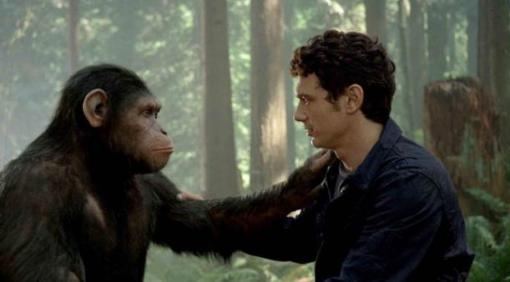
It was a year of intelligent apocalyptic movies, on a global scale by way of storms (“Take Shelter”), viruses (“Contagion”), planetary collisions (“Melancholia”), technological manipulation (“Rise of the Planet of the Apes”), and financial meltdown (“Margin Call”), all of which tied into the anxieties of living in the now.

There was also an abundance of movies tying into non-apocalyptic but hardly apocryphal personal crises.  Much of it centered around loss  – the loss of a family member (“The Descendants,” “Super 8”), the loss of health (“50/50”), the loss of a job (“Everything Must Go,” “Conan O’Brien Can’t Stop”), or the loss of perspective (“Martha Marcy May Marlene,” “The Beaver”).

However, plenty of these catalysts for change are the result of society, be they from industrial shifts (“The Artist,” “Hugo”), the impact of digital culture (“Shame,” “Page One”), the fallout of economic downturn (“Win Win”), an unfair playing field (“Moneyball”), hatred (“The Girl with the Dragon Tattoo,” “In a Better World”), injustice (“The Help,” “Weekend”), or a general loss of faith in an institution (“Higher Ground, “The Ides of March”).

Just as the movies had a tumultuous relationship with society in 2011, society had a tumultuous relationship with the movies.  Revenues fell again as ticket sales were the lowest in 15 years; you know, when Tom Cruise suited up as Ethan Hunt for the first “Mission: Impossible” movie, “Independence Day” ruled the box office, and “Super 8” star Elle Fanning had yet to be born.  Why so low?  Look to the same distrust of corporations that moved the Occupiers to New York’s Zuccotti Park.

Just like “Inside Job” showed us that the banks scammed America, the preponderance of 3D revealed to most moviegoers that the technology was being used less for art (like in “Hugo”) and more for increasing profit margins (like for “Captain America”).  As Grady Smith of Entertainment Weekly put it, “Consumers balk at the idea of having to pay a regular ticket price PLUS an additional $3.50 for an experience that doesn’t often provide much more than a headache.”  With the growing precariousness of the country’s economic situation, the consciousness of high ticket prices might have kept the public at large from seeing non-essential movies in the theater.
There also seemed to be a paradoxical audience reaction to sequels in 2011 (as if there already wasn’t enough confusion this year).  The top seven movies of the year were all sequels, and the rest of the top ten belonged to some larger franchise.  Only at #12 (“Bridesmaids”) do you get anything original.  However, this sequel success is double-edged as only the last “Harry Potter” film, “Fast Five,” and “Mission: Impossible – Ghost Protocol” were able to outdo their predecessors.  Some fell just short, while others, particularly animated sequels like “Alvin and the Chipmunks” and “Happy Feet” severely underwhelmed.  The success of original films like “Inception” seems to have done little to phase the studio executives, one of which said that spectacle over story is what they count on for success.  Unfortunately, audiences have wised up thanks to filmmakers like Nolan, and traditional strategies now seem more and more out of touch.

Finally, before I reach my 10 worst movies of the year, which are awful for lack of creativity, purpose, ambition, and cohesion, I wanted to end this post on the worst of 2011 on a personal note.  After nearly 18 months of posting every day, I largely fell off the map this year.  I returned to blog all of summer, but in the spring I let festivities of high school graduation overpower my will to blog; similarly in the fall, I let the transition to college life get the best of my writing capabilities.  I never stopped watching movies (I saw a whopping 114 released this year). Hopwever, I did stop sharing my thoughts about them and interacting with the community at large, making all that time spent in front of the screen self-serving.  I could have been better, but I wasn’t.

But just because I wasn’t better doesn’t mean I can’t be better.  Mark my words, I will be better in 2012.  Hopefully, we all will be.

Read the rest of this entry »


(Kinda Belated) Weekend Update – August 21, 2011

21 08 2011

“How much does your life weigh? Imagine for a second that you’re carrying a backpack. I want you to pack it with all the stuff that you have in your life… you start with the little things. The shelves, the drawers, the knickknacks, then you start adding larger stuff. Clothes, tabletop appliances, lamps, your TV… the backpack should be getting pretty heavy now.

You go bigger. Your couch, your car, your home… I want you to stuff it all into that backpack. Now I want you to fill it with people. Start with casual acquaintances, friends of friends, folks around the office… and then you move into the people you trust with your most intimate secrets.

Your brothers, your sisters, your children, your parents and finally your husband, your wife, your boyfriend, your girlfriend. You get them into that backpack, feel the weight of that bag. Make no mistake your relationships are the heaviest components in your life.”

– George Clooney as Ryan Bingham in 2009’s “Up in the Air

“For what it’s worth: it’s never too late or, in my case, too early to be whoever you want to be. There’s no time limit, stop whenever you want. You can change or stay the same, there are no rules to this thing. We can make the best or the worst of it. I hope you make the best of it. And I hope you see things that startle you. I hope you feel things you never felt before. I hope you meet people with a different point of view. I hope you live a life you’re proud of. If you find that you’re not, I hope you have the strength to start all over again.”

– Brad Pitt as Benjamin Button in 2008’s “The Curious Case of Benjamin Button

In case you missed it…

It was a pretty slow week as I was incredibly preoccupied running last second errands before leaving for college on Wednesday.  Hopefully I won’t fall off the map too precipitously, but things might be running slow for a while – especially in terms of reviewing new releases.

I took this as an opportunity to run reviews for some older movies that tied into other releases this week.  With Jessica Alba headlining the new “Spy Kids” movie, I reviewed her “Machete” and “Little Fockers” from 2010.  James McAvoy’s “The Conspirator” hit video this week, so I took the opportunity to review “Gnomeo & Juliet,” the animated Shakespearean tale to which he lent his voice.

I also took a look at the September crop of releases, which has a few gems shining amidst the trash heap.  Kris Tapley of “In Contention” just updated his Oscar predictions to include “Moneyball” as a probable nominee for Best Picture, Actor, and Supporting Actor.  More reason to get excited.  Click on the picture below to see the September preview post.

And the end of the week saw a lot of emphasis on Anne Hathaway as “One Day” opened in theaters.  On Friday, the “F.I.L.M. of the Week” was “Rachel Getting Married,” Oscar-nominated because of her performance.  On Saturday, I reviewed “One Day” and for the most part liked what I saw.  Click the picture below to read the review.

Recommended Reading

Save a tree, read a blog. Unless you want to print out a review … in which case, you aren’t saving trees.

And Vulture asks the question we are all pondering: Why Do Studios Think There’s So Much Value in Old Titles?  After the flop of “Conan the Barbarian” and “Fright Night,” here was their best conclusion.

“‘Studios remake these movies because they often already own the title,’ says Ammer. But it’s more than that. After all, it wouldn’t cost a studio any more money to hire a writer to write an original screenplay than it would to have him or her write one based on an older film. The real appeal of an old title is more superstitious: The studios use them, says Ammer, because ‘they know it’s worked in the past.’ Even though it’s an entirely different movie made by different people for a different generation, the idea is, hey, the title worked before, why not give it another shot? For all of Hollywood’s supposed liberalism, studios, like their audiences, are quite conservative. Genre is the most predictive aspect of a film’s future results, and then title, so why not double down? A remake of a successful genre film allows a studio the greatest possible risk reduction.”

The Tree of Death

/Film said it best when they broke the story: Even Sean Penn did not care for Sean Penn in “The Tree of Life.”  However, I’ll give credit to where I saw this first, Guy Lodge of “In Contention.”

Sean Penn moping about in my hometown.

In an interview with the French magazine Le Figaro, Sean Penn had this to say about Terrence Malick’s enigmatic film:

“I didn’t at all find on the screen the emotion of the script, which is the most magnificent one that I’ve ever read. A clearer and more conventional narrative would have helped the film without, in my opinion, lessening its beauty and its impact. Frankly, I’m still trying to figure out what I’m doing there and what I was supposed to add in that context! What’s more, Terry himself never managed to explain it to me clearly.”

I’ll go ahead and add this disclaimer to those that love the movie or the fact-checking Gestapo that yes, I realize that’s not the full quote.  But for the sake of this post, it’s easier to just analyze this part.

Where to begin?  The fact that a two-time Academy Award winner would bash his own movie would be shocking even if it was a total sellout, but even I as a non-impressed watcher see “The Tree of Life” as anything but a sellout.  It’s high art, just not the kind of art that was to my taste.  He doesn’t exactly mince his words there, pretty openly stating his distaste for how his role in the movie turned out.

This is nothing new, of course.  Adrien Brody complained when he was largely cut out of Malick’s “The Thin Red Line” – while I don’t like when whiners get their way, he certainly got it with Roman Polanski’s “The Pianist” in 2002.  But Penn’s statement goes far beyond just a diva fit, although I do think it dabbles in a sort of self-centered sensibility.  He questions the very way that the movie was made!  Keep in mind that Sean Penn has stepped behind the camera before, even turning out an all-time favorite of mine with “Into the Wild.”

Penn gets to the core of my issues with the movie.  I’m even a little bit more flexible – I’d be fine without a conventional narrative.  But Penn points out that the movie was incredibly disjointed.  I’m sure that the movie was beautiful in Terence Malick’s head, just as Penn says it was beautiful on the page.  Interestingly enough, I’ve heard from industry insiders that Malick shot the script with the dialogue, even allowing Jessica Chastain to speak.  Then he would cut, walk over, and tell her to emote all of the dialogue just with her eyes.  An interesting philosophy that produced an interesting end product.

Still moping...

Yet when everyone on set is not working in sync with the same vision towards a final product, the movie inevitably suffers.  If an actor doesn’t understand his purpose on screen, how can he do a decent job?  Moreover, how can he contribute anything to the movie?  If a director can’t even articulate his vision to the people he entrusts to help him create art, how can he articulate it to an audience?  I’ll inevitably be hit with the “it’s subjective” argument, but give it up here.  You can’t honestly argue that Malick is such a visionary that he can’t even be on the same page with his fellow artists.

Even those that I’ve talked to who LOVE the film can at least admit that the Sean Penn segments were the weakest parts of the film, and the actor’s statements shed some light on why that is.  An actor just existing on screen because a character exists on the page doesn’t make for compelling cinema if he doesn’t understand the basic objectives and motivations.  It’s just … boring.

I guess my biggest question here is why didn’t Penn make a bigger fuss on the set?  It seems kind of cowardly to whip out these harsh words now, potentially even in “too little, too late” territory for those who feel they’ve wasted their life watching the movie.  I get the whole mindset that Malick is a genius and you don’t question him, but for such primal acting concerns as these, why wouldn’t you demand more from the master during production?  If he was really that dissatisfied, why not walk off the movie?  These problems Penn has should have been settled a long time ago, and by just bringing them up now, he’s either searching for attention or absolution for being the worst part of the movie.

Penn did close with this statement about the movie, something that I’d say I basically espouse:

“But it’s a film I recommend, as long as you go in without any preconceived ideas. It’s up to each person to find their own personal, emotional or spiritual connection to it. Those that do generally emerge very moved.”


(Once Again Belated) Weekend Update – August 17, 2011

17 08 2011

“What is comedy? Comedy is the art of making people laugh without making them puke.”

– Steve Martin

“I am thankful for laughter, except when milk comes out of my nose.”

– Woody Allen

There’s a MASSIVE analysis of comedy down at the bottom.  Please read and comment or I’ll feel like all my hard work was for nothing.

In case you missed it…

I gave two stellar reviews this week for summer closers “Rise of the Planet of the Apes” and “The Help” as well as major kudos to Dominic Cooper’s performance in “The Devil’s Double.”  Things were not so rosy for “Final Destination 5,” “Another Earth,” or “30 Minutes or Less.”  Speaking of the latter, this week’s “F.I.L.M.” was “Roger Dodger,” the film debut of Jesse Eisenberg.

Recommended Reading

Here’s some of the good stuff I was reading.  If you don’t like to read, then why are you on my site?

Sunday Funnies

The New York Latino Film Festival’s ad campaign revolved around movie clichés and implausibilities, and they nail some of the stuff we just accept spot on.  (via /Film)

The Inadvertent Activist

On Monday, I noticed a humongous uptick in traffic.  Naturally, I got a little skeptical, especially when a lot of the hits were coming from Facebook.  Then I started getting a lot of redirects from a site called R-Word.org.  I had heard of this site before, but in case you haven’t, here’s a video that succinctly states their mission:

They saw that I had called out the filmmakers of “The Change-Up” in my review for senselessly using these people as the butt of a joke.  Some people are calling for radical action, and they have done a good job of making their voices heard.  But as offensive as it is, the writers have the right to free speech and can say it if they want.  The joke falls flat in the movie, and if you do for some reason decide to see it after my D+ review, use it as a reminder to eradicate the word from your casual vernacular. If you want more information on this campaign, click the picture below.

An R-Rated Renaissance?

In The Los Angeles Times back in July, Steven Zeitchik asked this question, “How deep will the R-rated renaissance run?”  He cites the statistic that 2011 is “the first year ever that at least four R-rated comedies have topped [$75 million].

I’d like to respond back with this question: is this what a Renaissance supposed to look like?  Because all I see is one comedic gem shining amidst a surplus of lackluster and forgettable others.  Just because there has been a great quantity hardly means there has been great quality.  Before I jump into my own analysis, I’d like to review my reviews of the seven R-rated comedies of summer 2011.

Read the rest of this entry »


Weekend Update – August 7, 2011

7 08 2011

“I felt kind of trapped in that material. I felt, This is not my boat. I’m just a passenger, but I’m going down and there’s no way out.”

– James Franco on hosting the 2011 Oscars

“Here’s my guess: Critics will be out to kill [‘Rise of the Planet of the Apes’] and blame me for it just because they are out to kill me. Last year people were pretty nice. This is the year when people are going to have fun going after me. I don’t feel the same way about ‘Rise of the Planet of the Apes’ as I do about ‘127 Hours’ or ‘Milk.’ It was a ­different kind of acting.”

– James Franco on the media in Playboy, July 2011

Credentials

This week, I went to a promotional screening for “Rise of the Planet of the Apes.”  I decided to show up an hour and a half early because I knew the line would be ridiculously long.  However, I didn’t anticipate that the theater would already be full by the time I got there!

Reeling, desperate, dying to see the movie, I resorted to a card I had yet to play.  I went up to the rep and said, “You may not believe me but I’m a member of the press.”  I wasn’t lying.  And no, I’m not a member of the press just because I write a blog.

I guess it’s time for me to make a big announcement, one that I should have made several months ago.  My work now appears on The Christian Science Monitor‘s webpage.  That’s right, selected posts from “Marshall and the Movies” now appear on a section of the Monitor‘s site called the “Culture Café,” which pools a handful of bloggers for their opinions on the culture at large.  Since May, 8 posts from my blog have appeared on their webpage, ranging from reviews of new releases to Classics Corner posts and even, most recently, a “F.I.L.M.”

Don’t believe me?  Check it out for yourself by clicking on the link below!  I’ll do a better job from now on including links to the posts they syndicate on “Weekend Update,” but know that you can always read it here first!

In case you missed it…

Not much went on at “Marshall and the Movies” this week.  Running frantically behind, I resorted to publishing a lot of reviews I’d been holding back for a long time, “The Girl Who Kicked The Hornet’s Nest” and “Burlesque.”  I did, however, strategically publish my review of “Howl” as James Franco had a big movie opening this week.

Yesterday, I reviewed “The Change-Up.”  What a disaster that was.  In case you don’t want to read the whole review, let me sum it up for you in one fragment: AVOID AT ALL COSTS.

The F.I.L.M. of the Week was Charles Ferguson’s “No End in Sight,” a documentary about the American occupation of Iraq.  It’s still a fascinating watch even though the end is in sight … hindsight, as a matter of fact.

And because I didn’t get a chance to point it out in last week’s post, the July edition of “Classics Corner” took a look at Mel Brooks’ timeless comedy “Blazing Saddles.”  Thank goodness people like it enough to put clips on YouTube so I can embed them here.

Recommended Reading

And here’s what I read this week.  You should read it too, unless you are illiterate.  Then find someone to read it for you.

Other cool things I read this week from non-blogger types:

James Franco and the Rise of the New Celebrity

You’re always hearing something about James Franco.  Whether it’s him pursuing yet another degree, opening yet another movie, publishing a book, announcing a directorial venture, or appearing on a soap opera, the man seems to keep reinventing his own celebrity as he goes.  But at the same time, we can’t help but ask, “Who is James Franco?”  A Renaissance Man or a jack-of-all-trades spreading himself too thin?  An entertainer or an artist?  And I think that’s the question he wants us to be mulling over constantly.

The one thing that is certain about James Franco, however, is that he is brutally and blatantly honest.  The man will say what’s on his mind and act his feelings; he won’t take pull any punches or hide behind any veneers.  Case in point: the Oscars this year.  You may or may not have read the quote at the top of the post, but he hated the material and was very vocal about it.  In that same interview with Playboy, he said that he told the producer of the telecast that “I just don’t think this stuff’s going to be good.”

So how did he react?  With boredom and a complete lack of enthusiasm while Anne Hathaway tried to exude enough enthusiasm for both hosts.  But for those of us who know James Franco beyond the obvious filmography, this isn’t really a surprise or something we haven’t seen before.  Have you seen 2008’s “Camille,” a little indie he starred in alongside Sienna Miller?  If you haven’t, don’t because it’s awful.

Here’s the thing about “Camille” – Franco knows it’s terrible and acts accordingly: bored and brutalized, much like how those of us stupid enough to watch the movie feel.  Or if you saw “Eat Pray Love,” you’ll see a similar display.  The guy caught in the thankless A-hole ex-boyfriend role isn’t an exciting place to be, and Franco doesn’t act thrilled at all.  But honestly, should he be?  If you see “Rise of the Planet of the Apes,” you’ll see a similar side of Franco: bored and acting like he’s above the material the whole time.

My question to you, the reader, is this: is James Franco justified in showing his feelings toward the movie on screen?  Is he allowed to say “Yes, this is a paycheck movie, but that still doesn’t mean I have to like it” through an inferred glance?  Or does he need to swallow his pride and just act?  Because in the end, do we pay to see James Franco or the person that James Franco is acting as?  Do we need to be able to separate the actor from the character?  Or can we accept a post-modern blurring of the two?

Now allow me to shift gears while you mull over the tremendous amount of questions posed in the last paragraph.  Back in March, when the Charlie Sheen phenomenon was raging out of control, the brilliant author Bret Easton Ellis (“American Psycho”) wrote a fascinating editorial for Newsweek cleverly titled “Charlie Sheen IS Winning.”  In it, he broke down how Sheen epitomizes the modern (or post-Empire, as he calls it) celebrity.  While acknowledging that there may be some mental or substance issues present with Sheen, he lays out a convincing case for Sheen as the smartest celebrity in Hollywood because he understands what the public wants.  Try arguing with this:

“To Empire gatekeepers, Sheen seems dangerous and in need of help because he’s destroying (and confirming) illusions about the nature of celebrity … What Sheen has exemplified and has clarified is the moment in the culture when not caring what the public thinks about you or your personal life is what matters most—and what makes the public love you even more (if not exactly CBS or the creator of the show that has made you so wealthy)…

… Do we really want manners? Civility? Empire courtesy? Hell, no. We want reality, no matter how crazy. And this is what drives the Empire to distraction: Sheen doesn’t care what you think of him anymore, and he scoffs at the idea of PR.”

So, is James Franco the bellwether of a new kind of celebrity entering the mainstream consciousness without having a drug-fueled implosion?  Or is he something else entirely?  Weigh in!