I have talked plenty about moviegoing pet peeves – so much, in fact, that it’s no longer worth it for me to link to the manifold other posts where I have ranted. To assure myself that I’m not alone in being bothered by various things, I did a quickie Google search on “moviegoing pet peeves.” Here’s someone from the California Literary Review (why on earth this post is there I have no idea) on a pet peeve of theirs that I hadn’t even thought about:
“THE ONE WITH THAT GUY WHO DID THAT THING. This one isn’t regarding a theater experience, per se, but a type of moviegoer who can never seem to remember the name of a film or anyone who acted in it. “It’s that one where that guy did that thing with that other guy!” she says, staring at you like you know, that one! My generic response has become, “Oh yeah, where they did that one thing and that other guy came in and saved the day!” Perhaps this is a bit snarky, but usually the offender then provides the details needed.”
As someone who spends way too much time reading up about the movies and absorbing random facts that are virtually useless other than building up a repertoire of film knowledge, sometimes it gets tough taking my jargon down a few notches. Not everyone is going to know who Andrew Garfield is; I’m going to have to say “Mark Zuckerberg’s friend that he double-crossed” for quite some time – or at least until Spider-Man comes out.
With the Oscars expansion to ten Best Picture nominees, it’s truly unfortunate that within the first year, the term “The Blind Side slot” became a legitimate phrase. We now know that certain movies of less Academy-caliber filmmaking have a shot at Best Picture. “The Blind Side” brought a mixture of inspiration and sports to the table and wound up on the Academy shortlist.
However, those two elements seem to go hand-in-hand nowadays. Could this same slot be for a movie that is just inspirational? What I am suggesting is that perhaps “The Blind Side slot” in 2010 is destined to go to “Conviction,” not the presumed heir apparent “Secretariat.”
It’s a legal drama, a genre that has been more traditionally up the Academy’s alley that sports. Betty Anne Waters, played by two-time Oscar winner Hilary Swank, spends a decade earning a law degree to prove the innocence of her brother Kenneth (Sam Rockwell), who is jailed on a murder conviction. The struggles are many, but the underdog story prevails as always.
On paper, the plot seems to good to be true – and it may turn out to be exactly that way. “Conviction” may be hitting theaters a few years too late as many will feel like they have seen this exact same story several times before. We’ve seen audience backlash on banality before, and the Academy have echoed their sentiments. Just look at how they scoffed at “Invictus” last year, a movie everyone thought was safe on the virtue of being about sports and Nelson Mandela.
The movie premiered at the Toronto Film Festival a few weeks ago to fair reviews. Here’s what Brad Brevet of Rope of Silicon had to say:
“‘Conviction’ is a rather simple film, but the emotional impact of the story comes through in the end after what is a rather mundane and cliched story of the innocent man in jail and the person working hard on the outside to get them out. At no point does this seem like new territory, but outside of being about ten minutes too long it’s a decent film despite its rather traditional dramatic nature.”
This might be an alarming review or an almost immediate disqualifying flaw if the same words could not be used by most critics to describe “The Blind Side.” Nowadays, if the audience is moved and critics aren’t, the former can win out. I think a Best Picture nomination is a possibility if the reviews can get into the 70% range on Rotten Tomatoes and the box office take exceeds $25 million. But sorry, Tony Goldwyn, the Best Director field is too talented to make room for you. (I haven’t seen “A Walk on the Moon,” but “The Last Kiss” was kind of lame, so he can start proving himself here.)
“Conviction” also stands a chance in the acting categories as well. While I have nothing against Hilary Swank, there are plenty of people up in arms that she has the same amount of Oscars as Meryl Streep. I think backlash and a strong field of Best Actress candidates will keep her out of the race.
Sam Rockwell, as the convict of “Conviction” (punny, I know), seems to be the movie’s best shot at Oscar glory. He has been coming into his own as a star as of recent, and movies like “Moon” have made him a cult favorite. This could be his chance to show the mainstream how talented he truly is, and I think an aggressive campaign could easily get him into the relatively unformed Best Supporting Actor race.
Rockwell seems to be the one part of “Conviction” that everyone can rally around. According to Katey Rich at Cinemablend, “every scene in the prison interview room and especially flashbacks gives the film a jolt of electricity.” I think we can expect some sort of representation from the movie, be it just Rockwell or the movie as a whole.
BEST BETS AT NOMINATIONS: Best Supporting Actor (Rockwell)
OTHER POSSIBLE NOMINATIONS: Best Picture, Best Actress, Best Original Screenplay
Well, this is my bad. There was only one vote on the October poll because I put it up a little delinquently, so I really can’t complain with the results. I don’t think it will surprise anyone that the winner is “The Social Network.” With a 97% on Rotten Tomatoes on Metacritic, this is the real deal. Here’s some of what I said back in my Oscar Moment in August:
The buzz started with the release of some tantalizing teaser trailers and an intriguingly mysterious poster. When we saw the full trailer playing before “Inception,” it was a wowing experience (that would still pale in comparison to the two and a half hours afterwards). The trailer’s opening minute is very unique as it has nothing to do with the movie at all. Rather, we watch people interacting on Facebook, a reminder of how much it has enhanced our connections to our friends. Then we pixelate to Mark Zuckerberg, and the history begins.
From just the trailer alone, “The Social Network” looked like a movie for our time, more clearly zeitgeist-tapping than any movie in recent memory. It takes a dramatic look the founding of Facebook, one of the defining inventions of our time, but also seems to tackle the subject of how the social networking site has affected the way humans communicate with each other.
I won’t post the poll itself because it will take up too much room for just one vote.
As for what you can expect from “Marshall and the Movies” this month, I don’t really have any big plans. I’m hoping to get work on the much-delayed podcast going at the end of the month, perhaps with a launch around Thanksgiving.
Oscar Moments are now bi-weekly. I usually post them on Tuesdays, but now, they will also run each Friday. Much of the rest of 2010’s offerings will be discussed this month, including “Love and Other Drugs,” “Made in Dagenham,” and “Rabbit Hole.” A new set of predictions should be up soon as well.
A Classics Corner post to tie into “The Social Network.” If you’ve been reading reviews, surely you know what I’m referring to. Post should be up in the next week.
Halloween of horror! I’m not sure how I’ll bring Halloween into the blog, but expect some of it in the back half of the month, either through examining more current movies in the “F.I.L.M. of the Week” column or by seeing some classics and reporting my experience in the “Classics Corner” column.
This month is pretty loosely structured, but I think it should provide good reading and good fun nonetheless! Enjoy your month at the movies!
Long before there were your creepy Facebook “friends” who could stalk your photos, there were people like Sy Parrish, the creepy photo developer in Mark Romanek’s “One Hour Photo,” the “F.I.L.M. of the Week.”
Robin Williams plays the SavMart employee whose fixations drive him to violate all notions of privacy. With no family or friends to speak of, he lives vicariously through the Yorkin family, whose pictures he has developed since the birth of their son. Sy compulsively saves their pictures, compiling them on a giant wall in his home.
One day, obsession turns to possession, and he manages to convince himself that he is a member of their family. We never figure out what leads him to these delusions, be it greed, envy, loneliness, depression, or some other compulsion. And it is precisely because of his undefined motive that “One Hour Photo” is so scary; we could know someone like Sy. Or he could know us.
Williams is absolutely frightening in the lead, and his performance is only aided by the shock value when we realize this is the man who gave us “Mrs. Doubtfire” and “Flubber.” It’s not just his movie though. Mark Romanek’s direction is sharp, and his script is full of many keen observations on the meaning of a photo. In the era where we tag ourselves in picture after picture on Facebook, “One Hour Photo” is one of the rare movies that becomes more relevant as the technology in it becomes irrelevant.
Has Michael Caine spilled all of the secrets to the summer’s most buzzed movie’s ending? Or is he merely chiming in with the latest “Inception” theory? Since he was in the movie and could actually talk to Christopher Nolan – where all bloggers like me can only dream of it – should his statements be taken more seriously than those of any fanboy?
Since this does concern the ending, I won’t spoil the fun for the two Americans who happened not to see “Inception” this summer. The discussion continues after the cut.
As part of a deal with Paramount and Warner Bros. to make “Zodiac,” David Fincher took on the $150 million production of “The Curious Case of Benjamin Button.” The result was his first nomination for Best Director and the most Oscar-nominated movie of the decade.
“The Curious Case of Benjamin Button” is a masterpiece.
YES, I used the dreaded m-word. Do I regret it?
Absolutely not. I stand by assertion 100%, and I will argue my side until you see it. Fincher’s adaptation of F. Scott Fitzgerald’s short story is the closet thing I think we will ever get to a 20th century epic. It’s a sweeping story of love, time, and life, not to mention the single most beautiful movie I have ever seen. Aside from the typical splendor of a period piece, Fincher’s film has the greatest visual effects I have ever seen.
When I first saw “Benjamin Button,” I was under the impression that the younger (as in newly-born) Benjamins would only be voiced by Brad Pitt, not acted by him. Yet after doing some research, I found out that aside from the last five minutes of the movie, Benjamin Button’s face was always animated by Pitt. It’s completely possible to not notice that it actually is him because the effects are so subtly incorporated, and doing such is such an incredible achievement in film history.
I’ll address two common criticisms of the movie, the first being its similarities to “Forrest Gump.” These concerns might be valid had the two not shared the same writer, Eric Roth. I see no problem with an author exploring similar issues, especially when he delves deeper into more profound revelations. “Benjamin Button” gets to the heart of what it means to be alive in the grandest of fashions.
And then there are those who claim that the movie’s 166 minute runtime is absolutely unbearable. To those poor, impatient souls, I say that our journey is Benjamin’s journey. We don’t just watch time go by; we feel it with him. Glancing through an inverted lens gives us a fascinating look at the passage of time and its effect on one man fated – or perhaps doomed – to live it that way. Just because I say this is a masterpiece doesn’t mean that I think it is perfect. I don’t think any film can be entirely perfect, but when a movie is truly great, it has many beautiful, fleeting moments of perfection. Some claim that the movie drags, and I’ll agree that certain scenes could have used a little more time in the editing room. However, the pacing is not slow. It is deliberate, and only at this wistful speed can we truly appreciate Benjamin’s world.
Everything about this movie got so much attention, but I’d like to draw attention to one element that got completely and unjustly overlooked: Cate Blanchett’s performance. She received absolutely no awards or nominations for her performance as Daisy Fuller, Benjamin’s love interest, which is a shame because this is by far her most emotionally compelling and sensitive performance ever. What I found particularly remarkable about her in “Benjamin Button” was her ability to turn small moments into things that can stick with us. When I think of her in this movie, I keep coming back to a small scene where Daisy looks plaintively at a young girl with all of her physicality intact and suddenly just finds herself overcome with despair. It’s as much her story as it is Benjamin’s, and Blanchett wins our hearts just as quickly as Pitt does.
It’s a marvel that Fincher can transition so seamlessly from his violent thrillers and dramas to this romantic vision of the 1900s. In my mind, it’s his best and most thoughtful work, displaying more of his top-notch precision than ever (albeit in a totally different form). There are very few movies that have the power to stun us into silence, and “The Curious Case of Benjamin Button” is one of them. It has the power to make us feel light as a feather and make us fly in a gentle wind, full of emotion and with a new appreciation for life.
As if the movies couldn’t get pathetic enough, now we get insulted by the Kennedy/Marshall Company turning the story of “Sulley,” the pilot who landed a plane in the Hudson River, into a movie. His heroic actions took place in all of three minutes, and even if you put that in the hands of an artsy European director, you can’t make much of a movie out of it. And in case you didn’t pick up on it, these are the people that gave you Best Picture nominee “The Curious Case of Benjamin Button.”
I’ve got two ideas for Kennedy/Marshall. First, they could turn the story into a comedy and cast John Ratzenberger as Sulley, the option I much prefer. Or, secondly, they could abandon this adaptation (they optioned his memoir) and choose to bring some other book to the big screen. It’s taken “The Hobbit” long enough to get to the screen, and a personal favorite of mine, “Ender’s Game,” has been shopping for a home for quite some time now. I haven’t read “Life of Pi,” but a lot of people have and love it; that movie can’t seem to get off the ground. So why can quality literature get shelved and Sulley’s memoir get the rush order for the silver screen treatment?
After “Panic Room,” Fincher took a five year break from directing. He returned to the big screen in 2007 with “Zodiac,” a narrative of the events surrounding the Zodiac Killer who haunted San Francisco in the 1960s and 1970s.
There’s no such thing as a simple movie with David Fincher. On the surface, “Zodiac” looks like a movie about the hunt for a serial killer. But much like “Seven” is not a movie about a serial killer, neither is “Zodiac.” It’s a multitude of things, and while it’s not left open for you to interpret like “Fight Club,” you can still make of it what you want.
The movie can really be thought of as two mini-movies (which may brutalize less patient moviegoers since the running time is 157 minutes). The first half follows the police investigation of the murders of the Zodiac Killer and the games the murderer plays with his victims and the authorities chasing him down. There’s plenty of cop drama for all of those who faun over movies like “The Town” and “The Departed,” but once the official police inquiry into the events stops, all those drooling will face the harsh reality that “Zodiac” is no longer a police movie.
The second half concerns itself with the peculiar obsession of Robert Graysmith (Jake Gyllenhaal) with tracking down the Zodiac Killer through his own means. Acting compulsively to catch him, Graysmith consults the two men most knowledgable on the subject, reporter Paul Avery (Robert Downey, Jr.) and police investigator Dave Toschi (Mark Ruffalo). Armed with their insights, he gets to the bottom of the case – even if we don’t have the satisfaction of certainty, as the case is still unsolved as of today.
But the overarching storyline that ties both of these aspects together is a journalistic view of the events. Here’s how Fincher saw “Zodiac” as he made it:
“I looked at this as a newspaper movie. My model was ‘All the President’s Men.’ You piece the thing together with a bit of info here, a hunch there, and you make mistakes long the way, and maybe you end up with an supportable conclusion as to the when and where and how. … And maybe, with someone like Zodiac, even he couldn’t provide an answer, I don’t know.”
But it’s also not just about the people intimately involved with the investigation; it’s about how the fear of being killed gripped the San Francisco area. Fincher himself was among those as a seven-year-old boy scared to go outside. There are no strange storylines that show directly how the events impact the average San Franciscan, but it’s a very subtle undertone that could fly totally under the radar for those not paying attention. It took me some reading to discover this angle, and the more I think about it, the more I see it.
As a movie that’s psychologically affecting, I don’t think “Zodiac” is entirely effective. It’s not like I haven’t been scared by the prospect of a serial murderer in real life; the D.C. sniper took his toll when I was about 10 years old, and that frightened me. However, Fincher crafts a movie quite different from his others here: a fact-based narrative that relies on true events to provide the terror. The fact that it manages to sustain interest for two and a half hours is another testament to the director’s incredible versatility.
There must be something in the water in Hollywood with everyone dropping dead this week … first Gloria Stuart, then Sally Menke (Quentin Tarantino’s editor), then Arthur Penn, and finally Tony Curtis. Oh, and for Comedy Central fans, Greg Giraldo. In alll seriousness, why do deaths in show business always come in a value pack? Buy one, get four free … what a morbid deal.
Back in Random Factoid #279, I talked a little bit about celebrity mortality, particularly how I was somewhat affected by Natasha Richardson’s passing. So in the same vein, I got to thinking about what celebrity I might actually cry for when they die. It has to be someone whose movies are tightly linked to my own life, most likely somehow to my childhood.
Right now, I’d have to say I think I could cry when Julie Andrews dies. She feels like a sort of cinematic grandmother to me. But I don’t want to think that it could happen anytime soon …
Fincher moved onto a more Hollywood-friendly thriller in 2002 after “Fight Club” was a pretty risky studio gamble that didn’t fully pay off in the short run. “Panic Room” was a financial success and was fairly well-received by critics.
I think that “Panic Room” is fantastic and totally unfairly derided.
Most people tend to think of it as Fincher’s ugly stepchild (when you don’t count “Alien 3,” of course) and write it off because it lacks the style of a “Seven” or a “Fight Club.” But for what it’s worth, “Panic Room” could have been a terrible movie in the hands of a lesser director. With the help of a good editor, such direction could make the movie an hour and twenty minutes.
But the movie succeeds because Fincher resists the temptation to give into horror filmmaking clichés. Sure, this isn’t a highly original concept, yet it works because he treats it with reverence and respect like he would for any other movie. While the atmosphere of terror isn’t exactly profound, it is genuinely terrifying because the idea governing it is scary. We all consider our home a haven, a place where no one can get at us. Thinking that someone could violate that sense of tranquility is unsettling indeed.
Fincher takes his time sweet time with the movie, and the slow, deliberate pacing just makes the tension all the more taut. His utilization of subtle scoring and lavish cinematography sets a really eerie aura in the New York City townhouse of Meg Altman (Jodie Foster) and her diabetic daughter (a classic 12-year-old Kristen Stewart caught in an awkward phase). The plot doesn’t get much more complicated than a mother and daughter trapped inside their panic room when three robbers invade their home.
There’s a little bit of typical shenanigans with everything that can go wrong going south, but “Panic Room” still holds us in its grip because of the very real and palpable terror. The closed-in claustrophobic sense is exactly what drew Fincher to the movie; according to him, “[he] wanted to make what Coppola called ‘a composed movie’.” For those not willing to look deeper into the artistic darkness of “Seven,” this is Fincher’s pitch-perfect filmmaking at its most accessible.
And if nothing, the movie did manage to add a new phrase to the English jargon. Because let’s be honest, who actually knew what a “panic room” was before 2002 and could pepper it into conversation?
WARNING: Today’s factoid is pretty much a rant in the style of “Really?” from SNL’s Weekend Update.
My opening statement comes from some wonderfully sardonic writer at Cinematical:
You may recall that many ‘Star Wars’ fans were unhappy with the prequels, and that as a consequence of the fans’ anger, Episodes I, II, and III are only the 7th, 30th, and 12th highest-grossing films of all time, with a combined worldwide gross of just $2.4 billion. Duly chastened by this catastrophic failure, George Lucas announced Tuesday that those prequels, along with the three original films, will be re-released in 3D. This will fix everything, since the main thing people didn’t like about the prequels was that watching them didn’t require special glasses.
Really, George Lucas? You are rereleasing the “Star Wars” movies in 3D? Your estimated worth is over $3 billion; isn’t it time to stop trying to make money off the “Star Wars” trilogies and just move on? You haven’t directed anything other than that series since 1973, so maybe a new project could do you good! When you are that rich, you aren’t allowed to shamelessly money grub like this!
And really, 3D conversions? We still have to put up with you? I thought you were going to DIE with M. Night Shamalamadingdong’s reputation. I’m sorry, but I’m not so desperate to see a movie in 3D to see a movie that gets a cheap-o conversion, nor am I so desperate to see the original “Star Wars” movies like my parents saw them in a theater.
I don’t have the incredible wit and biting humor of Seth Meyers, but that’s my best stab at the ridiculous news emerging today.
Fincher followed up disappointment with “The Game” by directing “Fight Club” in 1999, which would prove to be an iconic movie and cultural phenomenon. While it didn’t do much business in theaters, it became a cult hit on video. In today’s installment of Fincherfest, I’ll attempt to peg what has made it such a smashing success with fans for over a decade.
There are a multitude of ways to interpret “Fight Club,” and for precisely that reason, it is a great movie. It can mean so many things to so many people; everyone gets something different out of it. Heck, you can even see it through a Fascist light! I’ve only seen it once, so there is a certain level of depth of the movie that I haven’t reached.
However, I don’t intend to bore anyone by reciting the plot or saying that the acting, directing, and writing is great. That’s been common knowledge for over a decade now, and me saying that doesn’t really add anything to the movie. The proof is in the celluloid (and now DVD and whatever other formats are out there).
I watched the movie a year ago after some residual curiosity from “Benjamin Button” compelled me to check out David Fincher’s violent side. But before that, I had heard nothing but amazing things from the legions of male fans my age. Sure enough, I wasn’t disappointed. Although it still ranks behind “Button” for me, this is my favorite of Fincher’s early explorations to the darker side of human nature.
Here’s what I think has made it such an endearing classic for the younger generation: we have been so diligently trained to suppress all our impulsive emotions that eventually we want to explode. Sometimes, our lives are so sheltered and so desensitized that sometimes we have the deep desire to feel some kind of emotion, even if it must be pain. To quote Lady Antebellum, “I’d rather hurt than feel nothing at all.”
“Fight Club” indulges that side of all teenage boys and budding men by going back to our primordial cavemen instincts. We have to fight for what we want. Kill or be killed. The movie finds a sort of catharsis in violence, using it to express all the frustration men feel at the oppression of their natural tendencies. So in a messed-up kind of way, the movie has served as a wake-up call to boys and men everywhere to reclaim their masculinity and reassert themselves.
There’s a perfect quote from Fincher himself that sums up the movie from my interpretation:
“We’re designed to be hunters and we’re in a society of shopping. There’s nothing to kill anymore, there’s nothing to fight, nothing to overcome, nothing to explore. In that societal emasculation this everyman [the narrator] is created.”
I just had a random thought hit me, and thus, it proved to be nice fodder for random factoid discussion.
Remember back when movies used to have “premiere previews” on the day before they opened between 7:00 and 10:00 P.M.? Because midnight apparently wasn’t good enough for them. The first movie I remember definitively doing this was “Pirates of the Caribbean: Dead Man’s Chest,” although there might have been some for “Poseidon” early that summer. The trend ran mainly from 2006 to 2009, and some of the movie that previewed early were “Transformers,” “Iron Man,” and “Star Trek.”
(There were some earlier movies that used the model too, such as “The Matrix Reloaded” and “Austin Powers in Goldmember.”)
So why did they die out? I honestly have no idea why. Anybody have any ideas why we have to wait until 12:01 A.M. now?
Fincher followed up the resounding success of “Se7en” with 1997’s “The Game,” a cerebral thriller that was received notably less well both financially and critically.
I made the slight complaint with “Se7en” that I had seen a similar premise done a little bit better. With “The Game,” I have a similar grievance. The movie was, in essence, the same as the 2008 paranoid thriller “Eagle Eye” with much lower stakes and much less intrigue. Both involve people getting played by some system bigger than they can comprehend, and both follow the struggles of the people trying to escape the oppression of this omniscient system.
Michael Douglas headlines as banking mogul Nicholas Van Orton, a man who has chosen money over relationships. He is estranged from his younger brother Conrad (Sean Penn) and let his relationship with his most recent wife fall by the wayside. The problems can all be traced back to his father’s suicide while he was a young boy, and the effects of the life-shattering decision continue to affect him decades later.
But things all change after a mysterious birthday gift turns into an all-encompassing game designed to challenge his priorities. Reality begins to blur in this game, although not as intensely as it does in a movie like “Inception.” Van Orton feels mildly disoriented and wonders whether every suspect thing in his life is happening because of the game. Eventually, his anxieties lead him to demand answers from the organization that set up this game.
By no means am I saying that “The Game” isn’t good. The premise keeps us interested the whole time, although the ending is wholly unsatisfying because it wraps up way too neatly. Fincher’s attempt to recreate a very tense atmosphere of terror just isn’t quite as effective as it is in “Se7en,” and the paranoia is totally missing. This thriller lacks any sort of thrill, making it little more than just a series of events with the hope of a bigger twist waiting at the end.
Please get the Scala and Kolacny Brothers cover of Radiohead’s “Creep” ASAP. Listening to it on YouTube is no way to do it, especially when you are doing it on your iPhone while driving and picking up any WiFi networks stop the song. Please put it up either on “The Social Network” soundtrack or with the album that it was originally released on. Every day I see this, my heart breaks a little more.
Sincerely,
Marshall
P.S. – Speaking of “The Social Network,” thank you Trent Raznor for the five-track sampler. It is truly heavenly.
 I have talked plenty about moviegoing pet peeves – so much, in fact, that it’s no longer worth it for me to link to the manifold other posts where I have ranted. To assure myself that I’m not alone in being bothered by various things, I did a quickie Google search on “moviegoing pet peeves.” Here’s someone from the California Literary Review (why on earth this post is there I have no idea) on a pet peeve of theirs that I hadn’t even thought about:
 With the Oscars expansion to ten Best Picture nominees, it’s truly unfortunate that within the first year, the term “The Blind Side slot” became a legitimate phrase. We now know that certain movies of less Academy-caliber filmmaking have a shot at Best Picture. “The Blind Side” brought a mixture of inspiration and sports to the table and wound up on the Academy shortlist.
 Sam Rockwell, as the convict of “Conviction” (punny, I know), seems to be the movie’s best shot at Oscar glory. He has been coming into his own as a star as of recent, and movies like “Moon” have made him a cult favorite. This could be his chance to show the mainstream how talented he truly is, and I think an aggressive campaign could easily get him into the relatively unformed Best Supporting Actor race.
 No. I don’t believe it.
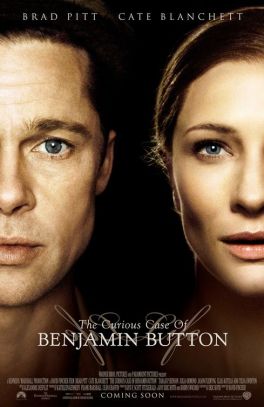 As part of a deal with Paramount and Warner Bros. to make “Zodiac,” David Fincher took on the $150 million production of “The Curious Case of Benjamin Button.” The result was his first nomination for Best Director and the most Oscar-nominated movie of the decade.
 Hollywood really is running low on ideas.
 There must be something in the water in Hollywood with everyone dropping dead this week … first
  WARNING: Today’s factoid is pretty much a rant in the style of “Really?” from SNL’s Weekend Update.
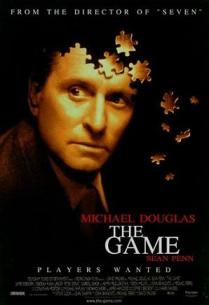 Fincher followed up the resounding success of “Se7en” with 1997’s “The Game,” a cerebral thriller that was received notably less well both financially and critically.


 Marshall and the Movies
Recent Comments