Random Factoid #558

6 02 2011

For about 7 years, I have been using a little book called “The Yogi Book” as a coaster on the dresser that sits directly next to my bed. (If you were wondering, the book features great sayings from America’s foremost philosopher, New York Yankees player Yogi Berra.)  I’ve always had it out, and it’s always been fun to pick it up and read a quote for a laugh.

But as of this week, “The Yogi Book” ended its run on my dresser.  It has now been replaced by a mousepad promoting “The Social Network.”  So now at night, when I reach for my glass of water, I see the upper right quadrant of Jesse Eisenberg/Mark Zuckerberg with the superimposed words “PUNK TRAITOR BILLIONAIRE.”

Just another way movies pop up all through my life.


Random Factoid #557

5 02 2011

Grr.  The open door policy at AMC Theaters that has bothered me for so long has once again struck with a vengeance.

I first wrote about this problem back in 2009 after seeing “Bright Star” (that long ago), and I directed my anger at hearing Taylor Swift songs from the lobby while trying to watch the British costume drama into the blogosphere.  The problem has persisted, but perhaps never with such disastrous effects as it did yesterday.

I was “127 Hours” for the second time (because I love it), and the road to amputation was growing inevitable.  It was the last 15 minutes or so of the movie, and the tension was getting to the point that it could be cut with a knife.  All of a sudden, I start hearing noise that I know is not a part of Danny Boyle’s movie.  I perked up my ears and began to distinguish words coming from the lobby.  People were broadcasting their conversations into my theater!

I wasn’t going to go get up and close the door – heck, I don’t even know that it was open – because the movie was too good.  But I had to sit there and bear it for the rest of the movie.  Only until the music flared up to 11 was I able to drown out their disembodied voices.  So, once again, the whole sanctity of the moviegoing escapism experience was violated by the policy.  This has to stop.


Know Your Nominees: “Inception”

4 02 2011

The Oscars are a great cultural conversation for all to participate in, but it’s all too easy to only have surface knowledge of the nominees.  It’s all too easy to know “Black Swan” as the ballet movie, “The Fighter” as the boxing movie, and “The Social Network” as the Facebook movie.  But don’t you want to know more and stun your friends with your knowledge of the movies in the weeks leading up to the awards and ultimately during the broadcast itself?

That’s what my KNOW YOUR NOMINEES series hopes to do.  Every three days, I’ll feature ten interesting facts about the ten Best Picture nominees of 2010 that would be fascinating to pepper into any conversation.  My hope is that you will come away with an enhanced appreciation of the movies but also enjoy learning strange and interesting things about them.

So, as we proceed in alphabetical order, our next stop on the tour is “Inception.”

So what was the inception of “Inception?”  According to director/screenwriter Christopher Nolan, the movie began as a heist film mainly as a way to provide entertainment and exposition for the complicated dream structure.  But concerned with the cold emotional detachment to the characters in a heist film, he began to add the hero’s story to get the audience to connect with the movie.

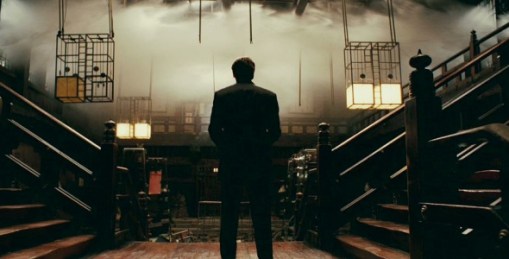
What’s real and what isn’t was a big talking point about “Inception,” but it may interest you to know what was shot on location (real) and what was shot on a soundstage or studio lot (not real).  The snow fortress was a built set, as was Saito’s castle. With a few other exceptions, most scenes were shot on location in Tokyo, Paris, Mombasa, Los Angeles, and a small town in Nolan’s home country, England.

How about that spectacular anti-gravity fight scene in the hotel hallway.  According to Christopher Nolan, Joseph Gordon-Levitt did all his own stunts for the scene, only using a double out of necessity for one scene.  The scene was done by creating a spinning set, not through CG.

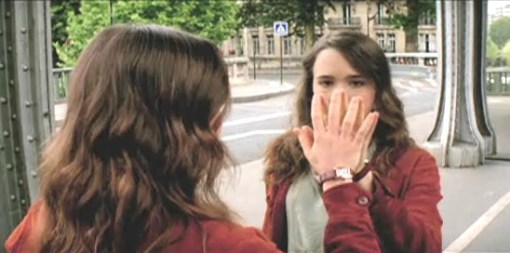
Another fantastically well-executed scene of mind-blowing visual proportions was the scene at the Parisian café where the city implodes.  How did they shoot that?  According to cinematographer Wally Pfister, they used a camera that captures 1,500 frames per second (in contrast to the average camera which captures 24) to create the slow-motion effect.  In post-production, the visuals team added effects to make the objects look like they were floating.  (Everything was shot out of air cannons for the explosion effect.)

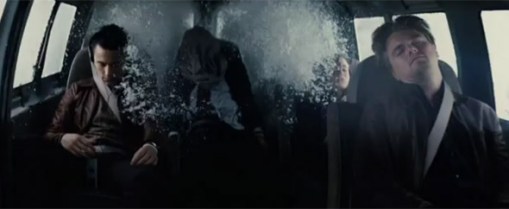
Throughout the second half of the movie, we saw plenty of the van falling off the bridge.  But what you might not know about this scene is that it took months to film and entire days were dedicated to the shot.  But it gets better: the van was shot out of an air cannon and when the van hit the water, the actors actually had to stay underwater for four to five minutes holding their breath and taking air from a tank.  How’s that for dedication?

The ensemble cast turned out perfectly, but it wasn’t always what it was.  Before shooting, Evan Rachel Wood was slated to play Ariadne but dropped out and the role went to Ellen Page.  Another big casting shift was the exit of James Franco, who was originally cast to play Arthur, due to scheduling issues; the role ultimately went to Joseph Gordon-Levitt.

Fans of Marion Cotillard got a chuckle when they heard “Non, je ne regrette rien,” the closing song of the film “La Vie En Rose” which won her an Oscar for Best Actress.  The title means “No, I regret nothing” when translated literally into English.  Was it a clever nod to her previous role?  Actually, no.  Nolan and composer Hans Zimmer chose the song before Cotillard became attached to the project because of its booming rhythmic qualities, not because of its association with the actress.

Many people have seen “Inception” as a metaphor for filmmaking, and Nolan has said that these musings aren’t entirely off-base.  But the craft he was most interested in exploring was architecture.  In an interview with WiReD, he stated, “I’m very interested in the similarities or analogies between the way in which we experience a three–dimensional space that an architect has created and the way in which an audience experiences a cinematic narrative that constructs a three–dimensional -reality from a two-dimensional medium—assembled shot by shot. I think there’s a narrative component to architecture that’s kind of fascinating.”

NEWS FLASH: The kids at the end of the movie are not the same as the ones before! Adjust your explanations of “Inception” as necessary.

Don’t worry, no top theories here.  Only some insight on where the idea came from – not exactly inception.  Nolan gave a top as a gift to his wife and then rediscovered it, incorporating it into “Inception.”  The one used in the movie was symbolically designed by the prop department to represent Cobb’s universe.

Check back on February 7 as the KNOW YOUR NOMINEES series continues with “The Kids Are All Right.”


Random Factoid #556

4 02 2011

How did Mark Zuckerberg turn what looked like a PR nightmare 5 months ago into what’s now a PR bonanza?  “The Social Network” was supposed to make him look like an anti-social a-hole to the moviegoing public has made him a celebrity and household name, something surprising given the site’s country-sized population.  There’s no way that he would have been named TIME Magazine’s Person of the Year had it not been for the movie.

Danielle Berin offers up this theory:

“Oh what a difference an awards season makes. In the five months since opening, the film has lapped up box office success and critical acclaim, and, along the way, Zuckerberg’s image has undergone elaborate transformation. The once Machiavellian Harvard student has become the philanthropic humanitarian…. What began as a negative spin on Zuckerberg and his haughty conquer-the-world attitude had transformed into the most celebratory and useful publicity both Zuckerberg and his company have seen since Facebook’s founding. And to think, all it took was a little Oscar buzz. OK, a lot of Oscar buzz. The past few months of award-winning and Oscar campaigning have done more than cement the genius of the film’s cast and creators. Because of the spotlight cast on Zuckerberg, the young entrepreneur has had a chance to prove he isn’t the socially inept anti-hero portrayed by Eisenberg, but, rather, a benevolent titan of the digital age.”

Patrick Goldstein of The Big Picture wrote this:

“My theory is that all this kumbaya tub-thumping wasn’t just a spontaneous outpouring of awards-season good cheer. It was more likely the product of shrewd Oscar-season strategizing. Sorkin and ‘Social Network’ producer Scott Rudin were forging this rapprochement for one reason and one reason only–they believe that having an appearance of harmony between the film and its subject will help ‘Social Network”s Oscar chances. If Zuckerberg was still running around, bitching and moaning about his portrayal, as he was doing around the time of the film’s release last fall, it would inspire a new round of inflammatory media hit pieces about the film’s veracity, stories that could only do damage to the film’s Oscar chances.”

Either way, this whole ride for Zuckerberg has been fascinating to watch unfold.  I will say that five months ago, I never would have seen this coming.  Heck, the real Mark Zuckerberg could be the true underdog story of the Oscar race.

It’s always nice when we get a surprise.  I get so sick of hackneyed Hollywood plotlines being lived out by celebrities.


F.I.L.M. of the Week (February 4, 2011)

4 02 2011

Surely I can’t be the only one who’s a little shocked that Christian Bale is just receiving his first Oscar nomination, and if there’s any justice in the world, his incredible performance in “The Fighter” will earn him a statue on his first time to the big dance.  Bale is one heck of an actor who really can do it all: headline blockbusters like “The Dark Knight” and “Terminator: Salvation” but also step into unconventional leading man roles in independent movies such as “Rescue Dawn,” my pick for the “F.I.L.M. of the Week.”

Bale plays real-life Dieter Dengler, a U.S. military pilot shot down over Laos in the early years of the nation’s involvement with Vietnam.  He survives the crash and attempts to run to safety, but he gets caught by hostile militant forces who take him to a P.O.W. camp.  There, Dieter meets other prisoners, including Duane (Steve Zahn) and Gene (Jeremy Davies), all gaunt from their extended stays.

Dieter won’t be held back or held in and almost instantaneously begins plans for escape.  After getting the lay of the land, it takes him a while to find the perfect way and the perfect time.  He and Duane manage to get away unscathed, but that leaves the two of them with very little food in the middle of the jungles of Laos.  Lost and desperate, the two embark on a journey for survival that is both harrowing and inspiring.

Sure, Bale makes another one of his trademark physical transformations to make the role believable; however, this is not what makes “Rescue Dawn” such a fantastic watch.  It’s his emotional transformation that’s so gripping. Bale’s stripping away of all acting instincts to portray the most primal instincts with such raw power is nothing short of astonishing.  (And on a lesser note, will someone give Steve Zahn his own movie?  The guy kills every supporting role has gets – it’s time for him to move up to the big leagues.)


Random Factoid #555

3 02 2011

5-5-5.  Super cool.

Anyways, to actual factoid business now, can you spot a bad movie from the advertising? /Film linked to an Internet user who thinks he can: it’s the bold, red, uppercase fonts.

The response to this graphic came quickly and swiftly though, showing that it’s dangerous to overgeneralize:

I don’t really judge by the poster, as often times they aren’t exactly indicative of the quality of a movie.  Case in point: “The King’s Speech.”  The first poster is a hideous composition of three heads that doesn’t tell you anything about the movie, yet it does scream “THIS IS A BRITISH COSTUME DRAMA.  YOU SAW THIS MOVIE FOUR YEARS AGO WHEN IT WAS CALLED ‘THE QUEEN.'”  But the second poster, with its off-centered shot of Bertie, captures the movie’s slightly tweaked take on the historical biopic.

If anything, I have learned to avoid movies based on their trailers.  Nowadays, studios tend to throw their best jokes and one-liners in the trailer.  So if those falter, then the movie is usually a total dud.  I also tend to get pretty skeptical when I get a huge laugh out of the trailer because if that’s the best, then whats left?

But, all in all, it just goes to show you that you can’t judge a movie by its poster – but maybe you can by its trailer…


Random Factoid #554

2 02 2011

February could be a lot worse, but I’m wondering if I’ll bother to open my wallet for a 2011 release (thanks to the godsend that is free screenings, I have yet to pay for a movie that opens this year) any time this month.  Do studios really just want everyone to go see “The King’s Speech” and “True Grit” again, enough so that they’ll dump “The Roommate” and “Sanctum” on us?  There are few rays of mainstream hope, mainly emanating from “I Am Number Four.”

Elisabeth Rappe of Film.com shares in my lamenting:

“February is the dumping ground for bad films. If a film is originally set for a particular date — say, October 5, 2011 — and is suddenly yanked and shoved into February, it is the death knell. You know it’s not going to be worth your time or money to see, and the reason we know this is because we’ve been lured to many a lousy winter film in the past. Go back just 10 years, and you’ll see that February has boasted such great films as ‘Reindeer Games,’ ‘Snow Day,’ ‘Down to Earth,’ ‘Valentine,’ ‘Hannibal,’ ‘Rollerball,’ ‘Daredevil,’ ‘How to Lose a Guy in 10 Days,’ ‘Against the Ropes’ … the list just goes on and on into sheer dollar bin misery. The box-office returns tell a sad state of desperation. ‘Snow Day’ opened at No. 3 on February 11, 2000, and it wasn’t because it was a good film, it’s because there was nothing else to see.

The entire month is a pretty bleak slate, but the real DOA date has been distilled to the fine point of the first weekend of February. These aren’t just bad films, they’re the worst of any given year. Search them at random. February 2, 2005: ‘Unleashed.’ February 3, 2006: ‘When a Stranger Calls.’ February 1, 2008: ‘Over Her Dead Body,’ ‘Strange Wilderness,’ and ‘The Eye’. Wretched. Just wretched.

Why is poor February, who never did anything to anyone, the land of the lousy film? Why is its first weekend a cinematic graveyard? Hollywood might tell me that it’s traditionally a time of poor returns, that polling shows audiences like to see ‘Captain America’ in summertime, and that it’s too far out to risk releasing an award contender. (Not always so. ‘The Silence of the Lambs’ was released on February 14, 1991, and went on to win Best Picture. ‘Shakespeare in Love’ was a January 1999 release. It can happen.)

Considering that studios are becoming more and more desperate to milk the box-office dollar, and there are only so many weeks to the summer season, why not start using February to unload a few of your flashiest popcorn flicks? Instead of jockeying for a good July date, why not release a Harry Potter or a Transformers in February? Would audiences truly shy away from seeing a Transformers movie simply because it was released in winter? A good and bankable film doesn’t need a historic summer weekend. It just needs a screen. Considering more and more films are being made simply on name recognition — hence the lust for remakes or big comic book properties — it stands to reason that audiences would flock to Superman in February.”

I think it’s about time that studios ditched the whole “open everything big in summer” mentality.  Sleeper hits like “Taken” and “Paul Blart: Mall Cop” have shown that audiences are willing to flock to movies with good buzz in the winter, and prestige pics like “Shutter Island” can open well and have staying power with very few quality alternatives.

Quite frankly, I’m ready for 2011 to start making a name for itself.  I’m running out of 2010 movies to see again while I wait.


Know Your Nominees: “The Fighter”

1 02 2011

The Oscars are a great cultural conversation for all to participate in, but it’s all too easy to only have surface knowledge of the nominees.  It’s all too easy to know “Black Swan” as the ballet movie, “The Fighter” as the boxing movie, and “The Social Network” as the Facebook movie.  But don’t you want to know more and stun your friends with your knowledge of the movies in the weeks leading up to the awards and ultimately during the broadcast itself?

That’s what my KNOW YOUR NOMINEES series hopes to do.  Every three days, I’ll feature ten interesting facts about the ten Best Picture nominees of 2010 that would be fascinating to pepper into any conversation.  My hope is that you will come away with an enhanced appreciation of the movies but also enjoy learning strange and interesting things about them.

So, as we proceed in alphabetical order, the second movie on our countdown of the Academy’s best of 2010 is “The Fighter.”

You’ve probably heard “The Fighter” described as Mark Wahlberg’s passion project, and his fight for four years to get the movie made has finally hit the silver screen thanks to the personal identification the star has with the story.  Both Wahlberg and his character Ward grew up in large Massachusetts families with nine siblings.  Both had tenacious mothers who favored their older brothers – which, in Wahlberg’s case, happens to be the New Kid on the Block Donnie Wahlberg.  As Micky became the “Pride of Lowell,” Mark Wahlberg idolized the prize fighter and is now starring and producing the ultimate tribute to him.  In an interview, Wahlberg said that the only difference between the two of them is that “Micky’s a fighter and I’m an entertainer.”

A nice little under-the-radar Oscar story of 2010 has been David O. Russell’s comeback directing “The Fighter,” which is in itself a comeback story.  But it wasn’t always going to be that way.  Remember seeing in the opening credits that Darren Aronofsky was an executive producer of the movie?  Originally, he was going to direct the movie but eventually abandoned the movie to make “Black Swan.”  That makes him connected to two Best Picture nominees this year.  Also worth noting about the director’s chair – Martin Scorsese turned the project down, claiming that “Raging Bull” was enough boxing for him.

Aronofsky’s exit wasn’t the only major change that “The Fighter” underwent before production began.  Matt Damon and Brad Pitt were both attached to play Dickie Eklund, the former fighter and older brother to Mark Wahlberg’s Micky Ward that is played in the movie by Christian Bale.

And what of the documentary HBO made about Eklund?  Called “High on Crack Street: Lost Lives in Lowell,” the movie is real, not just a plot device in “The Fighter.”  Thanks to the beauty of the Internet, you don’t have to wait for it to hit the circuit on cable – you can watch it FOR FREE on SnagFilms.  (In case you didn’t catch it, I embedded the link in that bolded statement.)

Mark Wahlberg did plenty of physical preparation for “The Fighter.”  He claims that his last few movies have been carefully selected as training and preparing to play Micky Ward.  He built a boxing ring in his own home and spent four years training with boxing coaches, even bringing them with him to his other movie sets.  Wahlberg did all the fighting himself, refusing to use a fighting double.  By the time all was said and done for Wahlberg’s training, he spent more preparing than he made.

Wahlberg wasn’t the only cast member altering their body for “The Fighter.”  Christian Bale noticeably dropped 30 pounds to play Dickie, giving him the look of both an ex-fighter and a crack addict.  But more under the radar, Amy Adams also did her part to inhabit the character of Charlene.  To make her character look like she’d been in one too many bars, Adams gained about 10 pounds to get a bit of a beer gut.

How about that wild family in “The Fighter?”  Director David O. Russell said these wildly over-the-top characters were actually toned down from their real-life counterparts.  I find this hard to believe in the case of the seven sisters, which are played by a particularly interesting group of actresses.  One sister is played by Conan O’Brien’s sister, Kate.  Another actress, Jill Quigg, was recently arrested in Boston for robbery and is now in jail.  (How’s that for some authenticity?)

Did the cinematography of the fights look a little bit different than the rest of the movie?  That’s because David O. Russell brought in camera crews from HBO to shoot them in the same style they were televised in for the sake of authenticity.  I found it to be an interesting touch that definitely set the fights apart from the rest of the movie.  They also feel real because the real Micky Ward was heavily involved in their production.

Just how real is “The Fighter,” though?  According to the real life Micky Ward in an interview with Sports Illustrated, he said, “It was pretty much right on. Christian Bale did an excellent job.”  The movie’s historical accuracy was greatly aided by Wahlberg’s close relationship with the real Ward and Ecklund, who often stayed in his guest house for weeks at a time.  The veracity was also undoubtedly aided by Mickey O’Keefe, Ward’s real-life trainer who played himself in the movie.
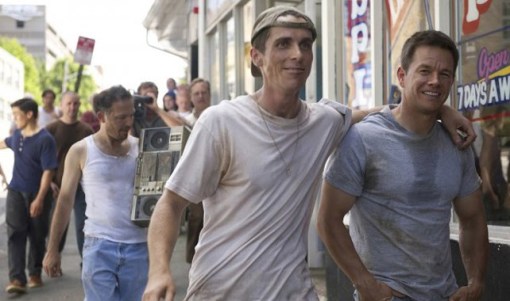
And the big question: since Dickie Ecklund is still alive, how did he react to the movie?  Apparently he saw it for the first time without an audience and was not a fan.  Understandable for anyone to react unfavorably to a shrinking down of their life’s struggles and mistakes into two hours.  But then Wahlberg and Bale convinced him to see it a few more times with a crowd, and once he saw their reaction, Ecklund was proud of how his overcoming of crack addiction moved the audience.  How’s that for a feel-good story?

Check back on February 4 as the KNOW YOUR NOMINEES series continues with “Inception.”


Random Factoid #553

1 02 2011

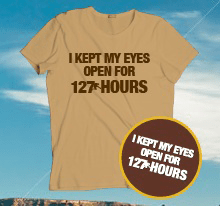
I doubt many people other than the dedicated fans or the obsessive free promotion-seekers heard about the “I Kept My Eyes Open for 127 Hours” campaign.  Fox Searchlight turned the film’s marketing weak point – people passing out during the graphic amputation scene – into a gimmick to reward the tough moviegoers out there and essentially dare those who hadn’t scene it.

Although I have only limited experience in marketing and advertising, this at first seemed like a strange campaign.  When they initiated it, “127 Hours” had largely run its course in movie theaters, and the awards buzz was beginning to die down.  It felt like just too little, too late.

I got my T-shirt this week after going up some rather strange alleys to get in contact with a Fox Searchlight representative to get a larger size (because I just can’t squeeze into a medium).  I wore it proudly to school and to rehearsal, although under a sweatshirt most of the day as the Houston weather was unseasonably cold, and everyone that saw it had to comment on it.  One friend is even heading to see it over the weekend.

So, Fox Searchlight, consider this a success in goading curiosity.  You’re welcome for sending $20 your way – plus another $10 for me to see it again this weekend.


Shameless Advertisement #23 – February 2011

1 02 2011

It’s February – which means that it’s the last month where we have to live in 2010!  With the Oscars getting underway in 26 short days (eek), the theater near you is beginning to chunk the films for “Black Swan” in favor of “The Roommate.”  Nothing quite like the quality cycle of moviewatching, is there?

But what February release earns the shameless plug as voted on by my readers?  There was a horse race between “Sanctum” and “Cedar Rapids” with one vote each, and I’ll break the tie by ruling in favor of the Ed Helms comedy (which doesn’t open until MARCH where I live – grrrrr Fox Searchlight).  Here’s what I wrote about the movie in my February preview post:

“On the indie side of things, ‘Cedar Rapids’ sure looks promising.  A fish-out-of-water comedy involving Ed Helms’ small-town boy getting into trouble in the booming metropolis of Cedar Rapids, Iowa, the movie seems like a perfect foil for Sandler’s comedy.  With John C. Reilly, Sigourney Weaver, and Rob Corddry on board, I’m really looking forward to this.”

So that’s that.  Enjoy “Cedar Rapids” when it comes to a theater near you!

As for other things you can expect on “Marshall and the Movies” in this incredibly abbreviated month, here’s a quick rundown.

The Oscars. Well, duh.  Live blog?  For sure!  More “Know Your Nominees?!”  You bet – every three days!  Editorial pieces about the race itself?  If all goes well, then yes!  I hope to provide fun and enlightenment on this exciting season for all my readers!

F.I.L.M. features Oscar nominees. The Friday column “F.I.L.M. (First-Class, Independent Little-Known Movie) of the Week” will continue through February with past underrated or under-seen gems from the Oscar class of 2010.  See these stars before they could affix “Oscar nominee” before their names (or maybe after for certain overachievers).

Rom-Com to Oscar Gold, Part 2! It’s actually coming … nearly three months later.  I promise.

Reviews, reviews, reviews. Nothing changes.

I’m looking forward to a great February with you all!


HITCHCOCKED: “The 39 Steps” (1935)

31 01 2011

NOTE: The name of this 12-part series reviewing some of Alfred Hitchcock’s finest features has been changed from “Hallowed Hitchcock” to “Hitchcocked” for the sake of compactness.

Can you believe I’ve gone 18 years of living and 18 months of blogging without seeing a single movie directed by Alfred Hitchcock?  Of course I’ve heard of his mastery and know of his influence over the craft of filmmaking as we know it, but as a New Year’s resolution, I decided to stop knowing about him and finally experience him.

So here we are, at the first of a monthly series running through 2011 hitting 12 high points in the filmmaking career of Alfred Hitchcock.  Where to start?  Before he came to America and made the films that made him an icon, I decided to start with one of his smaller British movies, “The 39 Steps,” to see if I noticed him returning to his roots.

While I didn’t watch this movie and instantly proclaim Hitchcock a men among boys and a god among men, what I did see was good, precise filmmaking that sure did entertain and engage.  It’s less of a thriller, the genre most fans associate Hitchcock with, and more of a captivating mystery with none of the ridiculous bells and whistles Hollywood movies add on nowadays.

Over the course of four days, Richard Hannay (Robert Donat) runs all over England and Scotland trying to escape the police after being wrongfully accused of murder and a league of spies who believe he holds dangerous knowledge about them.  The innocent Richard winds up assuming multiple identities to keep himself safe from his pursuers.  It’s an well-plotted adventure that keeps the audience on its toes for the duration of the movie.

I don’t really have any context to put “The 39 Steps” into, but it sure does make me look forward to exploring some of Hitchcock’s more famous filmography.  If something this good isn’t one of his most popular directorial ventures, then I’m expecting some real winners coming up.


Random Factoid #552

31 01 2011

Today in my English class, we talked about how the system of moviegoing we have in place skewers our opinions of what we watch (as a branch of another conversation).  The perfect example given by one of my classmates was Oscar season: now, you don’t go see “The King’s Speech,” you go see the critically-acclaimed Oscar nominated “The King’s Speech.”  These are two entirely different beasts, and the expectations are skewered entirely.  The experiences completely changes as you watch a movie to check off boxes of approval, not just watching to watch.

That got me thinking: is it possible to see a movie without expectations?  To have the pure experience of moviegoing in our hands?

The closest thing I could think of was film festivals.  Even if we haven’t heard a review of a movie, we make assumptions based on the genre, the stars, the director, the trailer, and even other advertisements.  But at a film festival like Sundance, people just walk into movies with little to no idea what they will see.  And what we get are the best indicators of a movie’s actual worth.  (Judging by reactions, “Like Crazy” is great.  No one had ever heard of Felicity Jones before the movie, and based on the performance alone, she has been lauded … well, like crazy.)

I’d love to attend a film festival like Sundance or South by Southwest (Cannes and Venice are way out of my price range) simply to have this experience of unadulterated moviewatching.  I want to watch a movie to watch a movie, not fill out an approval ballot in my head.  I don’t think we were destined to watch movies like this – thanks a lot, mass media.


Classics Corner: “Rosemary’s Baby”

30 01 2011

I find that when it comes to watching horror classics, I’m generally not as scared as I’m told I should be.  Perhaps it’s just expectations being set sky-high, or maybe I’m just really not freaked out by horror movies at all.  Roman Polanski’s most famous entry into the genre, 1968’s “Rosemary’s Baby” is no exception.  Thanks to some eerie Satanic twists and some very well-directed realism, it did manage to creep me out on levels I didn’t think it would.

I think the hardest thing about looking retrospectively at horror movies is changing the mindset of what to expect.  Several decades ago, filmmakers styled horror in a much more ambient and cerebral manner.  These made for some very traumatizing experiences for moviegoers in those times because that was all they could expect.  Thanks to advances in technology, horror has now been taken to different levels, usually preying more on suspense and cheap thrills to get an audience reaction.

I’m not quite sure when the turning point came (“Final Destination,” perhaps?), but sometime between 1968 and 2011, genre movies like “Rosemary’s Baby” became considered more artistic films than horror flicks.  That’s why “Black Swan,” a movie with a few similarities, is such a hard sell as a horror movie to many people nowadays.   Horror has been redefined, and anything that doesn’t fit into the narrow box of predictability and jump-out surprises is dismissed.

But this sort of “old horror,” as I’ll call it, is so much more affecting.  It’s truly a shame that the Hollywood system has turned away from making them in favor of five entries into the “Final Destination” series while visionary cinema like “Black Swan” has to be produced on scraps outside the established order.  Roman Polanski’s movie kicks the butt of any sort of horror movie you’ll see at the multiplex nowadays.

What I found to be particularly remarkable about the movie was the sense of tension that he builds.  Rosemary Woodhouse (Mia Farrow) is just an ordinary woman with a workaholic husband and two neighbors (including Ruth Gordon in an Academy Award-winning role) who redefine overbearing.  She gets pregnant just like she wants, but there’s an sense of foreboding doom accompanying her pregnancy.  We are never quite sure of what it is, and we don’t have to know for it to be chilling.  It could be the apartment, where most of the movie takes place, and the sense of claustrophobia it provides.  It could just be nerves.  But whatever is going on, it drives Rosemary over the edge.

It’s the psychological collapse of Rosemary that makes the movie a fascinating and interesting watch.  It all leads up to a climax that’s good for a jaw-drop but ultimately kind of underwhelms in terms of aesthetics.  The plot, based on a novel by Ira Levin, is good enough to be regurgitated by filmmakers consistently for over four decades.  Yet the movie isn’t a classic because of the story; it’s a classic because of Polanski’s knack for bringing the terror of the mind out onto the screen.


Random Factoid #551

30 01 2011

I didn’t get to watch the SAG awards live, but I came home to my parents watching a replay.  I asked instantly if “The King’s Speech” took Best Ensemble, to which they replied yes.  As much as I like the movie, I don’t think it deserved the honor, so I blurted out a four-letter expletive that begins with the letter s.

I retreated into my room where I did some homework in a rather surly mood.  Everything had been going just fine before that – I got to meet country star Pat Green at my church and listen to him sing from a proximity of only a few feet!  And it wasn’t the homework either.  I came to the realization that it was the freaking SAG Awards that put me in such a foul state.

I then slowly removed myself from the mood by reminding myself that it’s just a game; the awards season only vindicates our opinion, it doesn’t make them.  While it helps to write history, it doesn’t write anyone’s mind nowadays.  Or at least anyone with a mind of their own.

I remember being in a pretty gross state after 2008’s “Slumdog Millionaire” sweep, which came at the expense of plenty of movies which I liked much more at the time.  It’s kind of pathetic, and it’s a New Year’s Resolution for 2012 that I’m making 11 months early – not to let something as silly as an awards show dictate my mood.


Know Your Nominees: “Black Swan”

29 01 2011

The Oscars are a great cultural conversation for all to participate in, but it’s all too easy to only have surface knowledge of the nominees.  It’s all too easy to know “Black Swan” as the ballet movie, “The Fighter” as the boxing movie, and “The Social Network” as the Facebook movie.  But don’t you want to know more and stun your friends with your knowledge of the movies in the weeks leading up to the awards and ultimately during the broadcast itself?

That’s what my KNOW YOUR NOMINEES series hopes to do.  Every three days, I’ll feature ten interesting facts about the ten Best Picture nominees of 2010 that would be fascinating to pepper into any conversation.  My hope is that you will come away with an enhanced appreciation of the movies but also enjoy learning strange and interesting things about them.

So, as we proceed in alphabetical order, the logical starting place is “Black Swan.”

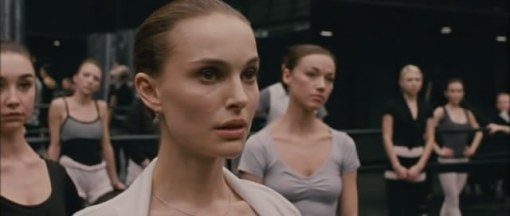
For all the acclaim “Black Swan” is receiving now, it seems silly that anyone WOULDN’T want to pour money into making the movie.  Yet according to director Darren Aronfosky, the movie was a surprisingly hard sell to production companies even with Natalie Portman and the rest of the cast all lined up.  When financing finally lined up, Aronofsky was forced to make the movie on $15 million, which was $10 million less than what he had hoped to have.  This meant a streamlined shooting schedule; for example, each act of the “Swan Lake” ballet shown at the end of the movie was shot in one day.

Maybe you’ve heard the mutterings that “Black Swan” was once the same movie as “The Wrestler.”  They are true. Director Darren Aronofsky brought it up once, and ever since, he’s been carefully clarifying exactly what he meant by that.  The movies originated out of the same idea: two performers whose craft drives them to physical and emotional extremes.  The end results are entirely different, but the two work together nicely as companion pieces.

A lot has been made of Nina’s sanity in the movie.  Is she ever sane?  When does she lose her mind?  Darren Aronofsky, in an interview with Cinema Blend said that “the only time she’s normal is right at the beginning of the film when she’s dancing before the demon shows up. That very first shot, she’s clear.”

We’ve all heard about Natalie Portman’s year of training to get ready for the role of Nina Sayers.  You’ve probably heard that she worked five hours a day doing swimming and ballet for eleven months and then a shocking eight hours a day in the final month.  She lost over 20 pounds practically starving herself to slim down.  But ballerinas have a long, lanky physique that’s hard to simply tone into.  So how did Portman overcome this challenge?  She had people pull on her arms and legs every day to stretch her out!

There was more to Natalie Portman’s physical commitment to “Black Swan” than her training.  While filming the movie, Portman broke a rib during a lift.  The film’s tight budget meant no on-screen doctor to help her, and the tight filming schedule didn’t exactly allow for much recovery time.  So how did they work around it?  They simply readjusted the lift.

And there’s even more commitment on Natalie Portman’s part than just physically embodying a ballerina.  She has been attached to “Black Swan” since 2000 when she met Darren Aronofsky in Times Square and said she wanted in on the project.   She claims Aronofsky had most of the movie laid out then.  Many other members of the crew have been committed to the movie for multiple years as well.

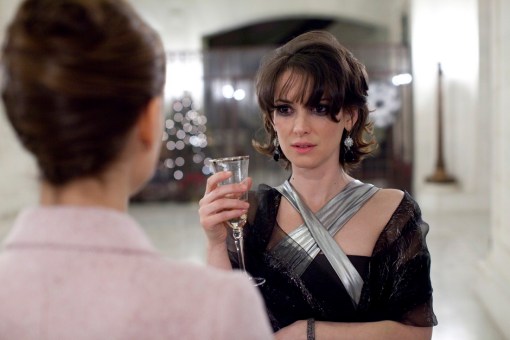
Did you see Winona Ryder in “Black Swan” and go “Woah, haven’t seen her in a while!”  According to Darren Aronofsky, Ryder was cast in the role of Beth because it echoes her career.  The “metacasting,” as he calls it, was crucial because the audience would likely feel more impacted by Beth if someone largely at the same point in their artistic life was playing her.

The movie could have been impossible to make as the acting qualifications were just as vital to the movie as the ability to dance ballet were.  Luckily, Natalie Portman took ballet from age 4 to 13, ultimately stopping to pursue only her acting career.  Thus, when she was needed to tap back into her ballet skills to prepare for “Black Swan,” the groundwork was already laid.

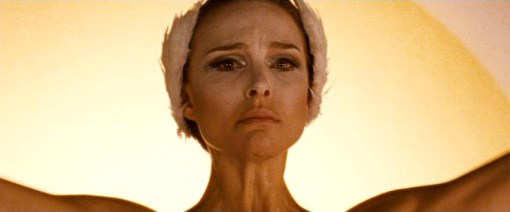
What was the hardest part of the movie to get right?  According to the choreographer, it was Natalie Portman’s undulating arms at the end of the movie that gave them such a hard time.

In case you haven’t heard, Portman is pregnant and engaged to Benjamin Millepied.  He was the film’s choreographer, and the two met on set.  Millepied also had a role in the film as pretty much the only male other than Vincent Cassel to speak in the movie – the lead dancer that drops Portman on opening night.  Portman referenced an ironic line he’s asked in the movie – “Would you f*** that girl?”

Check back on February 1 as the KNOW YOUR NOMINEES series continues with “The Fighter.”